The Double Life: Living with Coercive Control and Finding Freedom
Christine Dillard is a director at Microsoft and author of the powerful memoir, 'The Truth She Showed Me.' Christine's story is a journey through coercive control, gaslighting, and the arduous path back to self-identity. The irony of leading teams in high-stakes environments while grappling with a second life filled with fear and hyper-vigilance is a reminder of the silent battles many endure. This episode unpacks Christine's realization that the signs of her emotional turmoil were present long before she acknowledged them. From sleepless nights to physical health issues, her body was a messenger, revealing truths that her mind was reluctant to confront. As she shares her journey, she emphasizes the importance of recognizing micro-abusive behaviors that, over time, can erode one's sense of self.
Takeaways:
- The podcast dives into the complexities of coercive control, revealing how subtle behaviors can reshape your identity over time.
- Christine Dillard's book, 'The Truth She Showed Me,' explores the journey of reclaiming one's identity after experiencing gaslighting and emotional abuse.
- Creating safe spaces for open conversations about abuse is crucial for healing and empowerment, allowing individuals to share their truths without judgment.
- Recognizing the early signs of emotional manipulation can help prevent escalation in abusive situations, making awareness a powerful tool for change.
- It's essential to foster discussions about respect and humanity to raise the next generation better, ensuring they understand and recognize healthy relationships.
Companies mentioned in this episode:
- Ignite Voice, Inc.
- Microsoft
Transcript
Your voice is your superpower. Use it. Welcome to Ignite My Voice Becoming Unstoppable powered by Ignite Voice, Inc. The podcast where voice meets purpose and stories ignite change.
Deep conversations with amazing guests, storytellers, speakers and change makers.
Guest Christine Dillard:Don't you feel like you've carried that long enough? Like that's not your burden to carry anymore?
And I don't know what it was about that statement, but it was one of those, like, really freeing moments.
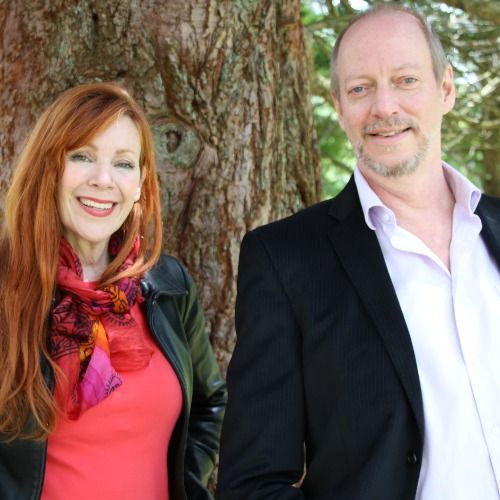
Co-Host Kat Stewart:Today's guest Smith speaks about something many women live through but often don't have the language for.
Co-Host Kevin Ribble:Christine Dillard is the author of the Truth She Showed Me. It's a powerful memoir about coercive control, gaslighting, identity loss, and the long journey back to yourself.
Co-Host Kat Stewart:Outwardly, she was successful, respected, and leading at a high level professionally while privately.
Co-Host Kevin Ribble:Living a second life shaped by fear, hypervigilance, and emotional control.
Co-Host Kat Stewart:And what makes coercive control so difficult to recognize is that the behaviors often seem small when viewed individually.
Co-Host Kevin Ribble:But over time, those micro behaviors slowly reshape your identity, your nervous system, and.
Co-Host Kat Stewart:Even your sense of reality.
Co-Host Kevin Ribble:Christine speaks openly about motherhood, shame, healing, self, love, and why the body often knows long before the mind is ready to accept the truth.
Co-Host Kat Stewart:Here's Christine Dillard.
Guest Christine Dillard:I am currently a director at Microsoft. I lead a company customer success team in AI.
I spent like 10 years in the tech space, the last 10 anyway, and I spent most of that time in leadership functions, leading teams, leading boardrooms, all the things. And during that time I also was very quietly living a second life in my private marriage and in the home that I was living in.
I was experiencing coercive control and abuse in my relationship. And as I've kind of come forward and released the book I've written around this and the transformation journey and all the healing along the way.
The most common thing people keep saying is I can't understand this. Like, I know who you are in real life and outside of your home. I don't understand how you ever got yourself in that position.
And so it's been one of those things where I'm just like, I wonder how common this really is.
And the more I've spoken about it, the more common it seems to be that this double life is lived with people and there's shame and embarrassment associated with the life that you live and then kind of coming forward and then talking about it. So anyway, I released a book in the last month.
I released it on the 2nd of April, and it's a book that talks about that journey that I had as I was married, the awakening to the abuse that I was living and the acknowledgment and then coming forward with that story and working through the healing along the way. And it speaks to three different people in that book. Throughout the book it talks to people who are currently living in an abusive relationship.
It talks to the woman who's thinking about leaving and then the woman who's left, male or female I just happens to speak to. It continually references her. Because when I started writing the book, the title of the book was the Lies She Told Me.
And I was, I was angry at myself. I was angry because I, I didn't see the things that I should have seen as clearly as I should have seen them.
And as I worked through the healing journey and the wr, the book slowly adapted to the truth she showed me. Because I realized it was there all along.
It was in the sleepless nights, it was in the body aches and pains, it was in the weight, the inflammation in the autoimmune diseases, the high blood pressure. All of those things. The signs were there. She was telling me. So, yeah, that's a little about me now.
Co-Host Kevin Ribble:How long was that period of time from when you were leading that life and you started to realize and you went through to the transition? What kind of time was that?
Guest Christine Dillard:I was married 17 years. I didn't recognize it for what it was until about three years before I left. I have two children.
So there was some logistics and some planning that had to take place to make sure that I could leave and protect them in the process. And I had to make sure they were old enough that they would have a voice in court if it came to that.
And then I wanted to make sure that when I left that there would be no need for child support because I didn't want to have to be dependent on him for anything. And I didn't want the kids indebted to him.
And I wanted to frame it in a way where we wouldn't have to do 50, 50 custody because I didn't want to leave them with him.
Co-Host Kat Stewart:Yeah, it takes time.
And I mean the disconnect between yourself and your reality, yourself being this beautiful, high powered woman making change in the world and then going home and being in this abusive relationship. And you said it earlier, you said, how did I get myself here? What happened? How did you get yourself there?
Guest Christine Dillard:I'm not sure I have that completely figured out yet. I can tell you that I've like along this journey, what I've figured out is that I definitely had some self confidence issues when I was younger.
We were 23 when I got married or when we got married and I was already pregnant with my first at that time. We didn't date long. We were together a total of three months before we were married, so not long at all.
And with coercive control, it gets really easy to excuse or explain away the micro behaviors. So you know, he name calls, he talks bad to me, he is mean today.
All of those little things, like when you start to look at them individually, they, they're little, they're, you know, like you can very easily, especially when you're ashamed, explain those away. You can be like, oh, he had a bad day.
Oh, if I would have just done this differently, if I would have had the kids, you for bed when he got home, he wouldn't have gotten upset because they would have been in bed and wouldn't have been grumpy. So you start to pivot and you start to change your behavior to accommodate his. And so you start to assume all of the responsibility.
Your entire Persona changes. Frankly, by the, by the end, I didn't even know who I was anymore.
I couldn't have told you my favorite color, what my favorite food was like, none of that. So my entire identity kind of got wrapped up into this.
The other identity I had was the woman at work, which was another, almost an entirely different person. She was confident, she was respected in her work environments, in the community. She was just totally a different person.
And the book has allowed me to very publicly become the same person. And I love feels so good.
Co-Host Kat Stewart:That's amazing.
Co-Host Kevin Ribble:I'm wondering if. Yeah, like you mentioned, some self esteem issues are the root of it, that in your personal life the self esteem was still low.
You know, do I deserve a really good relationship? Am I good enough? I better do whatever I can to adjust to this guy because I'm lucky to have him.
It sounds like your personal life was stuck at that low self esteem level, huh?
Guest Christine Dillard:Yes, it absolutely was.
And okay, so you start the relationship and it's already low and then it just continues to get lower and lower and lower over time and there's, there's a lack of awareness. You know, I'm 42 years old now. When I was growing up, the Internet was like we were just getting aol, right? Dial up was just becoming a thing.
We didn't talk about coercive control. We didn't talk about what abuse looked like except for when it was broken bones and bruises and things like that.
So there was a level of Education missing as well.
And that's really, really what I'm hoping to do with the book is if I can just talk about the things that I experienced, not because they might be somebody else's experiences, but, but to just shed light on how again, these micro behaviors, when you start looking at them holistically, you identify patterns, they don't quit, they get worse, they get bigger, they escalate over time. But if you can recognize them sooner, you might be able to prevent some of the things that happen later on where it does escalate.
Co-Host Kat Stewart:I really relate to you because I had a very similar experience in my marriage, so I'm sure there's a lot of other women. And I remember somebody saying to me afterwards, well, why didn't you just get out? And. And I said, you know, I didn't realize the signs.
If he had hit me and I had bruises, I would have recognized those signs. But he didn't. It was all communication warfare to undermine everything that I did or said. And I lived the dual life just like you.
I had high profile job and was going home and being undermined at home and the same situation I didn't leave for my kids, et cetera, et cetera. But I'm not the, and you are not the only two that have gone through this.
And so it just strikes me that we understand abuse as physical but not necessarily mental. So opening that door through your book is, must have just opened up your whole Persona. How are you feeling now? Like lighter. How is your life?
How are the interactions with other women?
Guest Christine Dillard:I was terrified about making it public, especially for my professional life. Personally, my circle's small. By the time I had written the book, a lot of my friends and family at least had some context, right?
But now, like I, on the 2nd of April, I went and posted publicly on my LinkedIn profile and the outpouring of support was phenomenal. And it's not in a hey, yay, you, you wrote a book kind of way. It was these pride, it was very private messages about, hey, I had no idea.
I wish I would have known because I would have loved to have been there for you.
Or the one that was more common was, I'm so proud of you because I don't know if I could have done that and I have a story and then hundreds of people sharing their stories, men, women. It's just, it's been a little mind blowing and heartbreaking that there's so many people impacted in this way.
Co-Host Kat Stewart:And it's very brave what you did because I can understand the fear that you've had in writing your book and releasing it, has there been any blowback from your X?
Guest Christine Dillard:There's been a little. He's.
He's not been happy with me, you know, so the one thing I did do in the book was I was very intentional about making sure that I made it, that I wrote it in a way that was relatable, no matter who was reading it. So when I reference him, he is my ex or he in some sections, because of timing. He was my husband, and that's how he's referenced.
I don't describe him physically. I don't name him. I do the same thing with my children. They're both in it, but it's my son, my daughter all the way through.
And it allows people to kind of put themselves and picture their own person all the way throughout the book. So it becomes a really immersive experience that is relatable for a lot of. Sadly a lot of people.
He, very publicly, when I posted on LinkedIn, called himself out, named himself. Luckily, I saw it pretty quickly, so I was able to shut it down.
But, you know, he hadn't obviously read it, so I think he thought I had probably named him and I hadn't obviously. But, yeah, it's been an interesting month of some backlash, but I'm in a different place and fear is different now. I'm stronger than I was.
My support system's different.
Co-Host Kevin Ribble:And through all this growth, you must have some interesting reflections on society, because what we're exposing here is just how common the kind of incidents like this are, how much this trauma happens everywhere. You must have some thoughts on greater society and how we've managed to get here. Huh.
Guest Christine Dillard:I'm not sure I can figure out all of how we got here, but I know that there is change needed. In the back section of the book, there is actually letters to legislators, to police officers.
You know, we don't have the right type of training to be able to even recognize these situations because they're so complex and sophisticated. And they change, they evolve. And there are countries that are a little further ahead of us.
Australia and the UK are significantly further ahead of us from a legislation standpoint and how they punish those that are in coercive, that are coercive abusers. But when you think about our, you know, the thing that I mentioned about my children and the.
The sharing of custody, there's no protections, like if you don't call the cops and there's no proof of physical abuse, nothing gets. Yeah, they will. They might Protect you.
They might give you a protection order, but they're not going to protect the kids as a, as a secondary measure.
And that's, that was my, that is why I had to stay like, because the alternative was 50% of the time my kids would have to go live with him and I couldn't see them. I couldn't control that. I could not be, I could not supervise. So, yeah, there's, there's gaps in, in where we're at today.
And I think the more we talk about it, the, the scarier it's going to become because the, the number of women and there are women I've known for 30 years that have reached out and I didn't know they had stories and they had stories and they were bad stories. That's, that is terrifying. And that's my small network.
I can't imagine if we really talked broadly about this and people felt safe enough to come forward and knew that they could be protected and supported. I can't imagine what that would, the door that, that would open.
Co-Host Kevin Ribble:Now you're in the U.S. correct?
Guest Christine Dillard:I am, yes.
Co-Host Kevin Ribble:Yeah, yeah, we're just reflecting on this end. We're in Canada and the laws and protections are very different than the US and even childcare in general. So that's interesting for us to hear.
Co-Host Kat Stewart:And I'm just thinking, you know, men, men can be abused as well in coercive relationships, but primarily has been kind of females that have undergone that. And so how do we raise our young women? How do we inoculate them? Like, my parents never had these discussions, so I too have had self esteem issues.
How do we raise our daughters to be proud of themselves and to recognize the signs and to never get into these in the first place?
Guest Christine Dillard:I feel like that's a million dollar question. I think it's really easy to say because again, we didn't have that knowledge.
We didn't have our parents didn't know the things we know because they didn't have access to the information we had. And I think it's really important and I'm doing this with my daughter, so I'm not being quite as open about the entire past.
Like, my children have not read the book. They've each read the chapter that has a pretty significant scene about both of them in it.
But I haven't exposed them to the entire book and it's their choice. If they want to read it someday they can. But whatever, it's a choice of theirs.
So as I'm kind of working through now this new life and this evolution and new relationships and things like that. I'm being very open and honest about, like, anything that is coming up. We're talking about relationships, even with friends and family.
If you feel guilty or someone makes you feel guilty for saying no, that's not on you. That's actually on them. So let them deal with their emotions. Let them process that. You don't need to absorb that.
But we have to be open to talking about those things. We have to be able to share that with these kids, boys and girls.
The more information I think that they have access to, the more that they see people speaking up. Because that is the number one thing. Right. Even with all the information, we still have to make it safe for them to talk about it.
And we have to create communities where they can do that safely and can be protected when they do. And that's. We're not there yet. And there are places where that's a safe place, but we're not there yet.
Co-Host Kat Stewart:Collectively, it's creating openness where people can go through their fear and get over their shame. Right. Because shame is a big one. You experienced that. You didn't talk about it.
Guest Christine Dillard:Yeah, I did not talk about it till the day I got divorced. Well, excuse me. The day I filed and gave him. Sorry. It was the day I handed him the papers is the day that everybody else found out.
My parents didn't know, my siblings, my friends, no one knew. So that entire time, I felt I was living this life alone.
And the more I've talked about the book, the more I realized, I mean, there are millions of us out there, and if we all just knew that, we might have talked to somebody. Because you. It's a lot easier to talk to somebody who's experienced it, because they're not going to.
In your mind, you're thinking, they're not going to question whether or not it was bad enough or whether or not I should have left or why I left. They'll never ask that question. You know, I had a social worker reach out the other day, and she.
She was from Canada, and she said, somewhere in the book, I actually say we never ask the right questions. No one ever asked the right questions because you go to the doctor and they say, hey, are you being abused at home? Is anybody hurting you?
We're not going to answer that question. Not truthfully, but the reality is, I didn't know that. That's what I would call it later. Right.
I hadn't even gotten to the point where I was calling it that. So what we need to be doing is giving people the tools to figure it out.
Because if you would have said, hey, you're being abused, you would have alienated me and I would have walked away and we'd have been done because I was still too embarrassed and too ashamed to admit it.
But if, as I learned and as I got more information and as I got stronger, I started to acknowledge it for what it was and then I could start talking about it openly. But I had to get there. I had to be ready for that. And that takes time. It started with my hair, didn't grow for the entire time I was married.
Now it never got below shoulder length. It always was the same length the entire time we were married. That wasn't a red flag to me, not at the time.
But now that it's, you know, halfway down my back two years later, there are some things, you know, I wasn't sleeping. I didn't sleep more than a couple of hours every night.
The entire time we were married, my body was telling me that it wasn't safe to be sleeping in that same bed. If we can teach ourselves to start recognizing some of these things. You know, I had cystic acne all the time.
I had, I had developed a couple of autoimmune diseases during the marriage. I had high blood pressure and I had never had those things before.
And they were all a result of being hyper vigilant in every scenario, trying to get in front of every problem before it was one. I mean, I was always on alert. You just never shut off. So did I sit and watch a movie ever? Absolutely not. Like I would if he was watching a movie.
I was doing something else to make sure I was busy. It just, there were so many little signs like that weight gain inflammation, like my older pictures, you can.
Like my face was so puffy you could barely see my eyes.
And at that three year mark when I started, when I'd made the decision to leave, I decided every ounce of energy that I had been investing in him to fix things, I was going to start investing that time in me.
So I set the stage with myself and I was like, if you can't sleep and it's 2 o' clock in the morning, you're going to get up and walk, get up and do something, do something for you. Get, get that time. You know, some mornings I would get up and walk three or four hours and I'd put 10, 12 miles in.
But that was my time and that was, I spent so much time with myself that you, you know, it was dark Out. There were a lot of mornings I spent crying in the dark by myself.
But it was my time to process and to work through and acknowledge some of the things that I hadn't been ready to before. My part in all of this, my enabling of some of the behavior that he had, my ignoring some of those behaviors, all of those things.
I found a lot of healing in those hours.
Co-Host Kevin Ribble:You know what's fascinating, Darcy, is it's pretty gender neutral because I can tell you I went through exactly the same thing.
Guest Christine Dillard:Oh, wow.
Co-Host Kevin Ribble:I can tell you that I was in a difficult marriage and I took on a lot of the blame and I couldn't see like you couldn't see. And eventually my body, like Kat said, stopped me before my mind did. Or my mind had all these excuses, right?
And my body just didn't care about the excuses. I couldn't sleep in the same room. Eventually, even though I wanted to, my body just would not do it. I had to move to another room.
And I had many of the same reactions that you did.
I would go out late at night and I would go for a four hour drive at midnight just because, like you said, it was just my time and I got to process and I got away from the issues and it took a while to get to the place where you did, where you end up putting the blame where it belongs. But that's, That's a, that's a hard leap, isn't it?
Guest Christine Dillard:It really is.
It really is probably one of the most profound things my therapist said to me because I was feeling really guilty not that long ago, just about, you know, I wish, I wish I would have known sooner. You go through that, right? Like any. And sometimes that doesn't go away. Like kids have a bad day and you're like, oh, this is my fault. I did this.
Co-Host Kat Stewart:My fault.
Guest Christine Dillard:Yeah. And so.
Co-Host Kat Stewart:Right.
Guest Christine Dillard:Yeah. And so I'm. I'm having this conversation with my therapist one day and she's like, okay, wait, don't you feel like you've carried that long enough?
Like that's not your burden to carry anymore. And I don't know what it was about that statement, but it was one of those, like, really freeing moments. The guilt comes back. Don't get me wrong.
But in that moment, those were the things that I kind of needed to hear. And I was just like, okay, wait, you're right. That's on him.
Like his relate relationship with his kids and the fact that he doesn't have one and that, that it's fractured. That is not my fault. And is not mine to fix.
As much as I might want to make sure that, you know, it doesn't have long term impacts on them, the reality is I can't control that boy.
Co-Host Kat Stewart:And that's. That's so hard to get there, isn't there? That's a lot of work, a lot of processing and it's hard work, isn't it?
Guest Christine Dillard:Yes, it is. I don't. Did you guys do therapy and all the things, too?
Co-Host Kat Stewart:You know, I didn't. You know, my therapy was going to the gym. I worked out so hard and I would cry. I would lift weights and cry.
I would go to the pool and swim because I could cry and nobody could see the tears. It took me, yeah, a long time to process the thoughts. And then I did some counseling a little bit later.
But I still hold a lot of, you know, shame and guilt for breaking up the family. But it, you know, wasn't necessarily me. But you work through it, right?
Co-Host Kevin Ribble:Yeah. For me, I went like you did. I ended up going through a lot of therapy to kind of restructure the way my brain worked.
Co-Host Kat Stewart:Right.
Co-Host Kevin Ribble:I needed to see and interpret things differently. I needed to drop the radar. You know, you talk about. I forgot how you word it exactly.
You know, just being always aware and alert to your partner's feelings.
Co-Host Kat Stewart:Hyper vigilance.
Co-Host Kevin Ribble:And I learned. I didn't understand that at first. I learned my radar was up exceptionally high, and most people that are functioning well don't have that.
And it took me a while to work through how that worked in my own head and to drop the radar. Yeah. So it took me a long time to see the world a bit differently. And since then, I've been remarried with the right partner.
Guest Christine Dillard:Good.
Co-Host Kevin Ribble:And I notice, like you, I function entirely differently, you know, and it does two things. One, I'm much healthier. Two, I realize I was right. My body was right, you know, it wasn't me.
But for so long, I felt that I was at least 50, if not 90% responsible.
Guest Christine Dillard:You know, one of the. I wasn't quite ready for, like, to be honest, in therapy, because I was like, I hadn't even told my.
I mean, I was barely telling my friends and family. The details. Right.
And to go in and tell a stranger the details, it just like, I struggled real hard because I was still working to admit some of those things. And the place that I found early solace outside of my morning walks was in. I had started seeing a Reiki massage therapist.
And so she did some energy work.
And I. I absolutely loved that Space because I was relaxed enough that I was processing things mentally, but it was in a room that I felt safe enough in that I could just cry. And she'd never asked me a question and I never had to explain. I never had to talk about it. Like nothing. She just let it happen.
She let me cry, she let me get it out. And then over time, I got more comfortable meeting with my therapist and being more honest about the things that were happening.
Co-Host Kevin Ribble:Yeah, that safe space matters, doesn't it?
Safe enough to actually touch the pain and let happens what's going to happen instead of keeping it buried and running from it and excusing it or whatever.
Co-Host Kevin Ribble:Right.
Co-Host Kat Stewart:And occurs to me that having people to listen without judgment, without trying to fix, without trying to. Well, here's a. Here's the way you should have done it. That listening space is so important to give it and to receive it, isn't it?
Guest Christine Dillard:Yeah, it totally is. And that was probably the. One of the biggest reasons I didn't. It's not that I didn't trust my friends with the information or my family. It was.
I was scared that they would treat him differently and he would know then that I was talking about it. And my fear was if they treated him differently, it would be worse for me and me and the kids.
And so I just, I just didn't talk about it because I always wanted them to treat him the same. Which you're protected. Not how it worked out in the end, but yeah. Because nobody goes into a marriage wanting to get divorced.
You don't go in with that. You don't want to go in, in any of these situations and you definitely don't want to break up the family.
I, you mentioned the breaking of the family and I. That resonates big time. The one question that you asked earlier though, like, how can we teach these kids?
We can let them see us loved, whether we're. Whether that's love from me to me or like good healthy love. And that's, I think been really cool to see my kids kind of evolve through.
Maybe because it did start with me like we. I'm perfectly content being alone, doing my thing. I won't be alone. I have, I have friends, I have family. I am. I won't be alone.
I have me and I have them. But I think if, I think I originally back in the day had a fear of being alone, especially as a pregnant 23 year old. Right. There's a stigma.
At least it was less common, maybe back in those days. But that's not. I Didn't want to be a single mom. The way we talk to ourselves, that was probably the hardest shift. Right.
Just getting into the mentality of looking in the mirror and just thinking different thoughts and, you know, catching myself replaying some of the things he said to me and not questioning my judgment. And every turn, the learning to trust myself again, all of those things kind of helped that evolution back to self love. But I. It was.
It's been a process, and it's not over. Right. Like, I don't think. I don't know if it ever ends. I kind of hope it doesn't because I like the evolution that's taking place.
I like that the trauma component of it. So is less overbearing, I guess, overwhelming at least some form of peace with what has happened.
And I love that I can take that and now find purpose in it elsewhere.
Co-Host Kat Stewart:And that's acceptance. And that acceptance leads to purpose.
And I always look back and I think, not that I would want to ever experience that myself or for you or for Kevin, but when you look back, it's shaped who you are now. And I'm a far better person now. I'm more humble, I'm more empathetic, I'm more giving, I'm more kind. And I got there.
Co-Host Kevin Ribble:Oh, it's a driving force. It's a purpose. Yeah. And, you know, I was just thinking, listening. Part of what this podcast is about is how we present ourselves to the world.
And what's interesting in this is there's so much underlying trauma in so many of us, you know, that is having a high impact on how we're interacting with others, on how we present ourselves to the world.
And a lot of the self help initially is about, you know, dressing nicer or changing your voice a little or better makeup or whatever, but really, that's not getting at anything, is it? This is deep stuff that everybody. Everybody needs help or a lot of people need help with.
Co-Host Kat Stewart:Yeah.
Guest Christine Dillard:And it is not fun work. The reward is worth the work. In the end.
There was some TikTok thing or something one day, and it was, ask your kid what one word they'd use to describe you. And she's 15, she's sitting next to me, and I said, what word would you use to describe me? She goes, hang on a second.
She pulls up her phone and she comes back and she's like, okay, yeah, I just wanted to make sure it was the right word. And she said, tranquil. And I looked at her and I was like, you have got to be kidding me. Nobody uses that word when they're talking about me.
And she goes, yeah, but the person you used to be was anxiety af. Okay, okay, so tranquil is a good one. Okay, we'll keep that one. But it was just mind blowing to me that they can see, that they can feel it.
You know, one of those, like, one of the best moments in the last couple of years was in the course of, like, six months, both kids had, like, walked into the house and they're like, you know, it just. It feels good in here. And because we still live in the house that they grew up in, and they were just like, it feels so peaceful. It feels this.
And I'm just like, oh, my goodness. Their friends started coming around again, and they started inviting their friends around again for sleepovers.
And those little moments that you just. You didn't. You didn't know that they were also adjusting for.
Co-Host Kevin Ribble:Mm.
Guest Christine Dillard:Yeah.
Co-Host Kat Stewart:And those little moments sometimes we. We take for granted too, right?
Guest Christine Dillard:Like, it wasn't.
Co-Host Kat Stewart:You didn't recognize that it wasn't happening. Now you recognize that it's happening. You don't take it for granted because it's such a.
It's powerful in your life and it's such a privilege to talk to you because, you know, as Kevin said, this podcast is really about making an impact on helping people look at their narrative and change the world and make a positive impact.
And each of us has had some kind of trauma that filters through our personality and shapes us in maybe negative ways that we hadn't anticipated and positive ways that we also hadn't anticipated. And for you, what a privilege it is to talk to women and share your story and help other people.
Guest Christine Dillard:So it's just.
Co-Host Kat Stewart:It's so wonderful to talk to you.
Guest Christine Dillard:I love it.
I love what you're doing because I think being able to give people the space to share the things that they maybe would have hidden or to hear people sharing the things that they would have hidden. Because like you said, we don't know where they come from. We don't know.
I mean, I had three people on my team when I did the LinkedIn post that reached out and had stories. And I'm like, I work with these people every single day, real close. And I feel like I really know them. And I was blown away. I just.
You just don't know. And I think if we have a little more grace and we accepted the things that we give people the freedom to just be themselves.
Like I said, it was so freeing. It was nerve wracking. As I'll get out to release the book. But also, I don't have to hide anymore. That's all one woman now. It's all the same person.
She is who she is. And it's freeing.
So if you're acting and emotions are heightened right now, the best place to start might be just in that discovery of, you know, like, when's the last time that you felt. Like when you felt joy, when's the last time you smiled without thinking first?
Or when's the last time maybe you felt ashamed or cried because of something the other person said or did? And if you start to kind of work through those questions, that's a little easier because again, you're doing that, discover yourself.
You're looking to uncover what you're experiencing. And maybe it's the same, maybe it's not.
Again, this is super sophisticated stuff and it's evolving, I feel like daily and by every relationship and by every personality. For me, a big turning point was actually doing a list of the things in the last 18 months. That was my mission. Right before I filed, I wrote a list.
The things in the last 18 months that he did that made me feel small, that he made, that made me cry, that made me feel worthless. All these things. And it was very specific examples. Again, they were small things, they looked like small things, or one off, they were no big deal.
Two pages later, you look at the list as a collective and you're like, oh my God, this is 18 months now. There was 17 years. So you just, you don't, you don't realize until you start looking at it. And then I called that my insurance policy.
The whole time I said, I had one accountability partner. I said, here's my list. If I ever say I'm thinking about not doing this, you hand me this list back and you say you're doing this.
I never looked at that list again.
Co-Host Kat Stewart:Those are wise strategies. Those are really helpful strategies. Tell us the name of your book again.
Guest Christine Dillard:The Truth She Showed Me. And it's available on Amazon today.
Co-Host Kevin Ribble:In the final segment of our podcast, we often look for advice from the guest. So how I like to frame it is, Christine, you are now appointed queen of the world.
Guest Christine Dillard:Woo hoo.
Co-Host Kevin Ribble:Yup, I like it. You are able to change some policy or enact some rules that you think will change the world. And you're going, okay, you have the power now.
What would you do?
Guest Christine Dillard:There's this unwritten rule. Maybe it's a written rule. I can't really, I don't know for sure, but it's innocent until Proven guilty.
Let's assume that the victim is telling the truth until it's proven otherwise. Because I think that's where things get hung up often.
And that's where the fear comes in of if I report this, then, you know, maybe they won't believe me. I had one little scenario I'll tell you about because you mentioned the hitting. If he would have just hit me. I had a rule.
If he would hit me, I was out. Like that's physical abuse. Because I knew that and that was my marker.
The one time that I remember that happening, my head hit a wall like a door frame. And I have an eight hour blank space. I don't have any memory from the time my head hit that wall. I mean, thinking, oh God, that hurt.
To the next morning when I woke up in bed. And I don't know how I got there. What am I going to do? I can't call the cops. I can't tell them what happened. I don't know what happened.
I know I hit my head, but I don't know how. I don't know if he pushed me. I don't know if he hit me. I don't know. I know he was there. I know that we were arguing.
I know he stepped at me, but I don't know what happened. Who's gonna believe me?
Co-Host Kat Stewart:Yeah.
Guest Christine Dillard:And I think if we can't.
If we can't assume that they're telling the truth, I don't know how we'll ever get to a point where people feel safe enough to say something and they need to know they're gonna be protected. So as queen, we're gonna assume they're telling the truth. And we're gon until we know that they're not.
And at that point, we'll deal with what we need to deal with. Hmm.
Co-Host Kevin Ribble:That sounds a good place to start. Yep. Anything else you would do to make the world a little better around this?
Guest Christine Dillard:I want to be a magical queen. And we're just going to get rid of all of it.
Co-Host Kevin Ribble:You go ahead, you be magical.
Guest Christine Dillard:Magical. Get rid of all of it. We need to raise our kids better. We need to raise men better. We need to raise women better.
Like the respect for humanity needs to be reinstated. We need to restore general respect for humanity and for people. Because that would extend a lot further than just domestic violence. Right.
We have a lot of challenges in our lives these days, and that would if we just had greater respect.
Co-Host Kevin Ribble:That's awesome. But, you know, that brings up something for me, and that is you said at the beginning that you work in the AI world.
Guest Christine Dillard:Yes.
Co-Host Kevin Ribble:Now, part of me is curious of the contradiction, Christine, that brings up a little bit working in the AI world versus supporting human spirit better. You see my contradiction?
Guest Christine Dillard:Yes. Yes, I totally do. Yeah. The reality is I'm not sure computers can ever replace a human interaction.
They can replace human tasks potentially, but the human to human connection is something that, that you feel. You know, we feel it in our video interactions we're having here, in the conversation we're having in the related experiences. AI didn't get abused.
AI cannot give the testimony or the feel or the camaraderie and community of someone else who's been abused. It can speak to other people's experiences. But that's not the same. That's just like a therapist that hasn't been through it talking to you.
And it's different. You trust people differently based on whether or not they've been in the scenario and you trust their advice based on that.
And that's something AI can't get.
Co-Host Kat Stewart:One of our last guests said, hey, show me that AI gets married and divorced and then I'll believe it.
Guest Christine Dillard:I love it.
Co-Host Kat Stewart:Yeah.
Guest Christine Dillard:Yes. They don't have kids to protect. They don't have the feelings about the shame in their careers and that double life. They just can't relate.
Co-Host Kevin Ribble:Abuse doesn't always leave bruises, but the.
Co-Host Kat Stewart:Body still carries the stress, the fear and the hyper vigilance.
Co-Host Kevin Ribble:And Christine realized when someone slowly disconnects you from yourself, it can take place so quietly you don't even realize it's happening.
Co-Host Kat Stewart:Until one day you look up and.
Co-Host Kat Stewart:You realize you don't even know who you are anymore. But Christine's story is also about reclaiming identity, reclaiming voice and self trust.
Co-Host Kevin Ribble:Maybe most importantly, it's about community, creating safe spaces where people can finally speak honestly without shame.
Co-Host Kat Stewart:Healing starts when we feel safe enough to tell the truth about what we're carrying.
Co-Host Kevin Ribble:Never forget, your voice matters.
Co-Host Kat Stewart:When we stop hiding, real freedom can begin.
Co-Host Kevin Ribble:Stay connected with us@ignitemyvoice.com.
Show Intro Announcer:Ignite my voice. Becoming unstoppable. Your voice is your superpower. Use it.