Breaking Generational Chains: How to Transform Pain into Purpose!
This episode is all about harnessing your power to break free from the chains of trauma and chaos. Darcy Burch, the host of the podcast 'School of Hard Knocks', and she's got stories that’ll make your heart race and your spirit soar. From navigating foster care to caregiving for her father post-trauma, Darcy’s journey is raw, real, and inspiring. She’s all about smashing those generational patterns that keep us stuck and reminding us that healing isn’t about perfection—it’s about being real and feeling every bit of the journey.
Takeaways:
- Healing isn't about achieving perfection; it's about embracing authenticity and being real.
- Deep conversations can reveal that even the strongest looking individuals carry hidden wounds.
- Breaking generational patterns requires slowing down to truly feel and connect with oneself.
Companies mentioned in this episode:
- Ignite Voice, Inc.
- School of Hard Knocks
- Unapologetically Me
- Empower her
Transcript
Your voice is your superpower.
Show Intro Announcer:Use it.
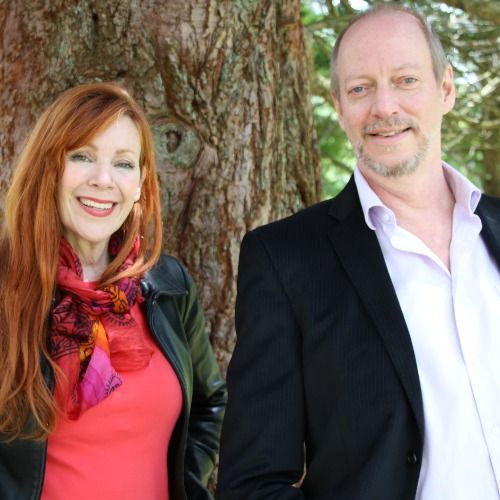
Show Intro Announcer:Welcome to Ignite My Voice Becoming Unstoppable.
Show Intro Announcer:Powered by Ignite Voice, Inc.
Show Intro Announcer:The podcast where voice meets purpose and stories ignite change.
Guest Darcy Birch:Deep conversations with amazing guests, storytellers, speakers and change makers.
Because if I have to start healing, I'm not really superwoman, then this cape that I've been wearing this whole entire time is just this big facade and. And it's not really who I am. So I had to come to terms with that and humbling myself.
Co-Host Kat Stewart:Sometimes the people who look the strongest on the outside are carrying the deepest wounds underneath. Today's guest knows that firsthand.
Co-Host Kevin Ribble:Darcy Burch is the host of the School of Hard Knocks, a neuro linguistic programming practitioner, speaker and author of Unapologetically Me.
Co-Host Kat Stewart:Finally, her story moves through trauma, foster care, caregiving, grief, ultimately healing. She's raw, she's unapologetically honest. Darcy talks about surviving chaos for so long that peace actually felt foreign.
Co-Host Kevin Ribble:And how learning to regulate herself completely changed the way she communicates loves and lives. This episode is about breaking generational patterns, slowing down long enough to actually feel.
Co-Host Kat Stewart:Your life, and realizing healing isn't about being perfect, it's about becoming real. If you've ever felt stuck in old pain, overwhelmed by life, or disconnected from.
Co-Host Kevin Ribble:Yourself, this conversation is going to hit home. Here's our chat with Darci Burch.
Guest Darcy Birch: ,:He unfortunately was still a 24 hour care person.
st of:And I started to really feel like I needed like singular breaks, not just going somewhere with my husband, which we very rarely got a break from doing this.
It was 24 hours all day long getting my dad up, showering him, feeding him, changing him, pt, ot, speech, taking him to venues and events like we, my husband and I did 98% of this on our own without help from anybody. So I needed some time. Like dang, that was a lot of work, you know.
So I started going for walks, like really long walks early in the morning sometimes before my dad was even up four Miles every morning. And I'm walking through this pathway, and I just start getting like this. I need to start talking to people about the stuff I've been through.
Like, people know what I'm going through now because I've been, you know, on social media for a decade already. So they know about my dad shooting and things like that, but they don't know everything I've gone through in my life to get to this point.
And I really want to talk about it. But first of all, I don't want to take my parents off because they're going to be like, oh, man, she's letting all that stuff out from her childhood.
And then I'm the oldest of nine. I have eight siblings.
Co-Host Kat Stewart:Wow.
Guest Darcy Birch:From the same parents. We're all the same.
And I thought, man, I'm going to let some of this stuff out, and then they're going to start getting ticked off, you know, like, that's not true. That's not what we were told. That's not really what happened. And the more I thought about it, I thought, it doesn't matter. This is my journey.
This is my story. This is my. I need to start healing myself.
I'm 45 years old at this time, and I've taken the stuff around like Dora the Non Explorer, carrying this heavy backpack around with me everywhere with all of this stuff in it that I've gone through and just holding it, not letting it out. So I thought, Jesus, kind of like, I've really lived through the school of hard knocks. I mean, for real. It's just.
And I thought, oh, oh, maybe a podcast. Like, that would be kind of cool. I don't even listen to podcasts, so I don't know what to do.
Co-Host Kevin Ribble:Oh, that's a good podcast name, though, huh?
Guest Darcy Birch:Yeah. So I'm, like, super jacked up about it.
I come home and I start researching it, and I'm like, yeah, no, this is, like, way too much work for where I am in my life right now. Like, there's no way I can do this. Well, then I bought eight, nine, ten months later, my husband and I went on a lake house retreat.
And at that time, I was writing a chapter and a collaborative book that I had done, Empower her. And I brought my notebook with me because I was like, oh, we're going to be at a lake house. I'm going to finish this and be so great.
And then I didn't realize how nurturing that this lake house was going to be.
This retreat, the work that we were going to do, the Time we were going to spend the disconnecting from our devices and being present in the grass with butterflies and trees and water and sunsets and sunrises. Good people. And I'm like, okay, so we're not doing that.
And I just soaked in and I started thinking, man, I totally forgot what it was like to feel nurtured, because my childhood was not like that. And so I've always been this, like, alpha, you know, Like, I can do everything. My superwoman cape. Nobody needs to help me with anything.
I've got everything all of the time. And I went home the next day, and I wrote the whole entire chapter for the book in one day. It just poured out in me like a faucet got turned on.
And then the very next day, I hit record and I posted my trailer to the podcast. Wow. And I was like, huh, maybe that wasn't really that hard. And it actually felt kind of good, like writing and talking about stuff.
th of: Co-Host Kevin Ribble:What was the chapter about that you wrote?
Guest Darcy Birch:Oh, boy. It was about my childhood. A lot of it.
I mean, the beginning part of it starts out with my first memory, which is at the age of four, of watching my dad almost take my mom's life. And then I kind of carry us through my parents divorce. My mom met a man that didn't have any interest in being with a woman who had nine children.
So she dispersed my siblings out to my dad's family, which my dad was the abusive man he was a lot because of how he was raised. So now all my siblings are living, but I got to stay.
And then I put myself into foster care because I didn't know what I was supposed to be doing in life. Nobody had really taught me about being an adult. Like, how do you get an apartment? How do you pay bills?
I often, when I'm speaking about this, I say, I don't know if you've ever seen the movie Stepbrothers, but there's this part when Will Ferrell is standing on the stairs or he's talking to his therapist and go, so what do I do to be an adult? Do I, like, take my diploma with me everywhere? What do you do? So I didn't know. So I went into foster care. The first one was not good.
Went to a second one. That one was amazing. But it was too weird for me because that is not how I grew up. Let's all eat around a table and ask how your day Was.
And if you have schoolwork and if you need help, I'm like, what is this?
Co-Host Kevin Ribble:How old were you then?
Guest Darcy Birch:17. So then I decided to emancipate myself. So I was paying bills and going to school before I was old enough to vote. So it takes you through.
I mean, this chapter is very compact and very short, but there's so much things in it about my life, you know, not every single detail, but a very good overview of it.
Co-Host Kevin Ribble:Wow. School of hard knocks is the right term.
Guest Darcy Birch:Yes.
Co-Host Kevin Ribble:That's you. And you're quite a storyteller. Oh, you're packing a lot in here.
Guest Darcy Birch:Thank you.
Co-Host Kevin Ribble:My brain is still catching up.
Guest Darcy Birch:Yeah.
Co-Host Kat Stewart:I'm just curious. How did your siblings react to all of this, the fear that you had about your siblings and your parents?
Guest Darcy Birch:Well, through the grapevine, I heard that some of them were ticked off, and my mom was definitely very upset about it. My dad. I could have chose to not even let him know anything about it because of the brain injury. He would have never seen the book.
But I'm a very honest person. So I. You sat with them and him in his wheelchair and said, I have to read this to you.
And you're probably not gonna like the beginning part of it, dad, but, you know, it is what it is, and I'm not mad at you for anything anymore. Like, you used to have to say that all the time. It's over.
I've healed through that, you know, Otherwise, I wouldn't have been able to take care of my dad in the. In the capacity that we did. Right. So healing had to go into allowing that to happen.
Co-Host Kat Stewart:You're 17. You're emancipated. How did you learn how to heal?
Guest Darcy Birch:Well, that just happened 10 months ago, so. Yeah, I mean, healing is hard. It is hard for so many people and for so many different reasons. I mean, coming to terms with it, first of all. Right.
Because if I have to start healing, I'm not really superwoman, then this cape that I've been wearing this whole entire time is just this big facade, and it's not really who I am, you know? So I had to come to terms with that and humbling myself.
So my journey into healing really started with my faith and pouring myself into God and that relationship with him to make me not feel so alone. Because a lot in my life, I felt alone. I felt unrelatable. Who can relate to a lot of the hard things that I've gone through in my life?
Maybe some people, but nobody's really talking about it because we're so embarrassed or we don't. Like I said, we don't want to hurt our family. We don't want our parents to know we remember this stuff or our siblings or whoever it is.
And so we just act like it's not happening.
But 10 months ago, you know, I really think what took it off for me was going to that lake house retreat and for the first time as a full grown adult woman, feeling nurtured, feeling seen, feeling heard, was like, it almost felt like an addiction then. Like now I want that. I want that feeling.
I don't want to feel what I've been feeling, which has been pretty numb for my whole entire life, or pissed for a lot of my life. Just mad, just an angry person. Just I'm. Walls that were so high. Good luck. Just good luck with it.
Because I've been hurt by so many people in the duration of my younger years. And then it went into my adult life, you know, corporate betrayal and burnout and really realizing that you're just a number.
A lot of times in corporate. I mean, it's just like this whole mind blowing experience for me. And then I go to a retreat and I'm like, oh boy, this is so lovely.
This is how every day should be, right?
Co-Host Kat Stewart:It was just great wearing that cloak and that mask. It's such a burden. You're carrying around something that's a facade and you're not letting anybody see who you really are.
And you're two different people, one on the outside, one on the inside. That takes a lot. It's exhausting.
Guest Darcy Birch:Yeah, it was exhausting and it really devalued even the little bit of time and work that I had put into my life to be a decent person up to that point. I mean, now these last 10 months, really self loving myself. Because when people say, well, because you asked, right, how did you. What does self love?
Or how. What does healing look like? How do you do that?
Well, you got to love yourself first, you know, Like I could walk into anybody's home and I bet you I could find at least three self help books, self love books, motivation, all of this stuff. And that's so great, but we're not going to apply any of those learnings if we don't love ourself. None of that even matters.
If you're not loving yourself, you're not going to apply it. And if you do apply it, you're not applying it for longevity, you're applying it as a bandage.
A lot of us go through life just putting bandages on These wounds, thinking that they're going to heal. And some of them may heal, but it looks like one nasty scar that is very obvious to every single person around you.
You like, I just, I just talked about this. If you were to cut your leg open and go to the doctor and get stitched up, it would still be there.
You may even have to tell people, did you realize that I really cut myself and I was swimming that one time versus this big gaping, purple, bold scar because you just kept putting little bandages over thinking it was going to eventually go away. You know, when you are a non healed person, not everybody wants to say it, but it's very evident.
It's very evident by the way you carry yourself, the verbiage that you use, how you react and respond to situations, situations around you. I mean, it's. We may think, you know, because for the longest time I thought, wow, I'm doing a really great job.
Well, nope, you weren't because you were really burning and fizzling out and everybody around you knew it. The problem was, is my circle wasn't good enough to try to save me.
My circle wasn't good enough to try to throw in like a life preserver, like, hey friend, you're going down.
And it's quite obvious it was just a bunch of people in my life that, well, let's, let's watch this shit show fizzle itself out, you know, and you find, you find that when you're healed too, like you will surround yourself with better people than if you're slipping even a little bit or something's wrong, what's going on, you need to talk about it. Because they're so aware and so attentive to what's going on. There's that nurturing piece that I had lacked my whole entire life.
Co-Host Kevin Ribble:Yeah, I'm surprised that you ever trusted anybody that given your background and you know, you didn't have anybody close to you that you could trust. So how did you learn? How?
Guest Darcy Birch:Well, the first person like here on earth that I probably really trusted was my pastor that I had met about 10 years ago. And I didn't even trust him initially until he started being very open about his faith walk and how he found God and his imperfect self.
He had drug addiction before he found the Lord and all, you know, all of the things. He was so open. There was no veil, there was no covering anything. This is real raw me. This is how I got to hear.
And I thought, geez, if he can stand on the stage every, you know, so often and pouring to people Every weekend, but every so often, be so open about himself. That's something I want to be a part of.
So Pastor Charlie is the first person that I really started to kind of trust with some things and let him into my life. And then it started with, you know, the congregation at church, and then I just started to see people around me that don't align anymore with me.
eft one of my best friends in:So if you're telling people, hey, stop doing the thing, and they keep doing the thing, and then you ask them, you know, one or two more times, and they're not going to conform, and they just can't be a part of it anymore.
Because now my, like, sole purpose is protecting my peace, because I hadn't experienced peace pretty much my whole entire life, and now that I know what it is and that it's obtainable, I'm gonna protect it.
Co-Host Kevin Ribble:That's fascinating to listen to. I mean, we work with people as well, and we do it more. You know, you.
You look at your personal narrative, the story you tell about yourself and life, and if it was difficult in your youth, like, for you, there's probably stuff in there that's not healthy. And so we go back and we try to help people rewrite their personal narrative, retell their story, so they have a healthy outlook.
I'm interested, though, we also bring neuroscience into this, and. And I would think that given everything you went through at such an early age, your brain would be organized around chaos.
You know, you would be structured to be at home with chaos. And you're a fascinating story that you've managed to break out of that chaos, that structure and see life differently. That's fascinating.
Guest Darcy Birch:Yeah, I mean, I actually really experienced, excelled in chaos.
I mean, man, if you give me, like, a deadline, I'm, like, right in there, like, I don't care if you tell me I can't do something, I'm going to do it, like, five times better, you know? And that's one thing I used to pride myself on. I can carry on 10 conversations at the same time.
I used to run an office with eight different women, and I could be focused on one question and hear the other five that were going on and be like, okay, well, you should do this, this, this, and this. And it was like, oh, my gosh, she's got like, guys, every is so great. She's so amazing. That sucks. That sucks.
Co-Host Kevin Ribble:Somebody like that. Peace would be so foreign, right? Peace would be uncomfortable, wouldn't it?
Guest Darcy Birch:Yeah. Yeah. However, when I had the first like taste of it, that's the thing.
If we don't give ourself the opportunity to even try it, I mean, I was uncomfortable.
I was like, oh my gosh, we're gonna go to a retreat with like strangers and they weren't supposed to talk to me about like ourselves and possibly because it's nlp, that's what it was. So I'm like, this is gonna be so weird. And it wasn't. And I would have never known that if I did it.
Co-Host Kat Stewart:Programming, right? Neuro linguistics programming.
Guest Darcy Birch:Yeah. Yeah. So I actually enjoyed it so much that I became an NLP practitioner in February.
Co-Host Kevin Ribble:Can you, can you summarize NLP from your perspective for us?
Guest Darcy Birch:Nlp, okay, so NLP is neuro linguistic programming. And it's a really great way to connect your subconscious mind to your conscious mind. Our subconscious mind is recording all day long.
You don't have to think about blinking, you just do. You don't have to think about breathing, you just do.
There's many times for me, I don't know if you've experienced it before, but I've driven somewhere and I've been like, oh my gosh, how did I even get here? I don't even remember driving here normally. I remember always passing that. I didn't see it.
While our subconscious is keeping us safe, you know, like your car didn't just be like, Kevin's not paying attention, I'm just gonna drive. That's not happening. It's your subconscious. So it's such a cool way to work with people. So I work with people. I'm simply a guide. I'm a guide.
Your subconscious knows what you desire, what you want. It, knows it. We just stuff it so far back there because we're so busy trying to keep up with the Joneses.
We're so busy living in like fast paced life. Our attention spans are just not. They're just not. You know, we're on social media, scrolling every three seconds. We just don't have it.
When you're able to sit down with somebody who can just ask you the simplest of questions and then use your own verbiage to connect your subconscious to your conscious mind, the changes are amazing. I mean, I've worked with women who view themselves as, you know, one woman said she felt like she was a monster mom.
So we were able to reconnect who she wants to be and have her swap out the version that she sees herself now, you know, working with people who have anger issues, they don't know how to control their anger. Swapping out that vision because we're always playing a scary movie in our head. Nobody really sees themselves for who they really are.
And everything is always like the scary movie that we play. So it's swapping. It's called a swish.
It's a swish technique where you're swishing how they're viewing them themselves into who they want to view themselves as. You know, there's tons of different programs that I mean, and it's not just an emotional thing.
I can work with people who want to stop eating carbs, stop drinking soda, stop smoking, you know, things like that too. It's very interesting when you start using your own verbiage as a way to change something, how powerful that that is.
Co-Host Kat Stewart:How do you learn to self love? Does that come from the NLP practice? Does it come from a book? Does it come from. Just figure it out. It floats in the air. Where is that?
Guest Darcy Birch:I love that question so much because a lot of women that I talk to in particular feel like self love is. Well, I do love myself. I go in and get my hair done and I get my nails done and I go tanning. No, friend, that's maintenance.
There is a difference between loving yourself and like keeping up your temple. That there's a difference there. So then they say, well, what do you do? Like, how did you start loving yourself?
Well, the first thing that I did that I knew I needed was I needed to slow down. I needed to slow down. I needed to stop waking up in the morning. Like the coffee is already sitting there, that my husband sat there.
I'm already on my device, like, okay, what emails? Like, my eyes aren't even open yet. What's the race? What are we racing towards? So many of us feel like we're racing towards something.
We're not enjoying the journey at all. If we stop for a second and just take a look around, there's so much beauty down here.
But this mountaintop goal that so many of us have, which is great, there's more than enough room to make it to the top of the mountain from everybody. But the mountain is beautiful on the way up. Enjoy it. So my first thing was slow down, give myself grace.
I mean, my dad passed away seven months ago and three days into it, I found myself in the garage having a moment that I was like, you're fine, you're fine. No, you're not. Fine. Your dad just died 3. Would you tell that to somebody? Of course you wouldn't. So why are you saying that to yourself?
You know, the way we talk to ourselves, the way that we, the things that we say inside of our minds and just to ourselves is so. It's just poignant in how we survive life and what life throws at us. I would be a fool to think that my dad passing away in this whole situation.
That's it. I'm not gonna. Nothing bad's ever gonna happen. Oh no, it's going to. That's how life is. Nobody gets out of here unscathed from anything.
How are you gonna deal with it though? You know, are you gonna stay down or are you gonna be like Rocky and get up after being knocked down 50 times and still stand up?
Because that's what we have to do in this life. That's another self loving thing. We allow this world to beat us down. Everything is so scary right now. We don't know what's going to happen.
Who cares if we did know what was going to happen? That's going to change how you treat yourself. I mean, take a deep breath, settle down, relax. What's your. What do you feel like you need? That's not.
Ask somebody. Well, how do I self love myself? If I had a platter here of a whole bunch of different things, what's the first thing you would grab for that?
You're like, oh, I need that. Well good, let's start there. Is it longer showers? Is it a drive by yourself? Is it a walk?
Is it like a Sunday morning where you cuddle with your dog for two hours? What is it? Because that's where we're going to start. Is that one thing that your brain goes.
Yep, that's what's going to start it rolling and that's how you keep going and then you're going to eventually see, oh, I've got really good at that now. I give myself time in the morning now. I want to try this one, you know, the Sabbath. I don't work on a Sunday anymore ever. And I would have worked.
I work seven days a week my whole career in corporate or America. Nope, not anymore. That's a self love thing.
Co-Host Kat Stewart:Yeah, that really resonates with me. That one thing just is. That felt like just a warm blanket.
And that's so easy to do but so easy to forget as well because a lot of us, especially women, are outwardly focused. How can I help? How can I do this? How can I take care of that? How can I Take care of that person. We forget our own needs.
So I really like how you said that. Just look at one thing. What would you take off of that? First thing that came to my mind was chocolate, but other than that.
Guest Darcy Birch:And that's not a bad thing either. You know, like, we're gonna punish ourselves because something gives us enjoyment.
I mean, that doesn't mean that you should go all Willy Wonka, you know, but it does mean. I mean, give yourself something.
But I would encourage you, if that's the one thing that would bring you joy, is to do it in a joyful, joyful moment, you know, not to use it as, oh, now this is my crutch. This is my tool to get out of something bad that's happening. So if it's something good, you're like, huh, I'm gonna have, like, a little thing.
Go ahead and have that little thing and enjoy the moment, because that's what we need to be doing is enjoying the moment.
Co-Host Kat Stewart:Yeah, you're right. There's a balance between denying ourselves something and then over, you know, just overdoing it. Right. There's a healthy balance there.
Co-Host Kevin Ribble:You're such a story of hope, and you had a lot of cards dealt to you that were not hopeful, that were very, very challenging. And your story breaks the family tradition, I think, of molding the next generation to have the same problems as the previous.
And it kind of just keeps going right generation to generation. Somehow you stopped it.
And I'm guessing you're the only one of your group of siblings that has been so strong in your different approach to life, would you say?
Guest Darcy Birch:Well, the interesting thing is eight out of nine of us are productive parts of society. Not everybody has the same drive to be healed. Actually, I had a really bad Mother's Day yesterday going over to my little sister's house.
Because what I have found is the deeper and in my healing that I get, the more awkward that I feel around unhealed people. And then you start to see, like, who. And that doesn't mean I'm going to, you know, shun all of my siblings.
But we're not going to talk about the same negative jargon. We're not going to have the same conversations. I don't want that. I'll be participatory as being, like, in the room.
But when I want to, I want to talk about positive things. What are we doing? What's. What do you have going on this week that's so exciting? What have you done that you've accomplished? What have your kids done?
That you have accomplished. What are you and your husband. There's so many things that we could be talking about.
We don't have to talk about all these negative things, but my family's used to living in that negative place, and now they see this, like, person, this I, man, Darcy's really doing it. And then it puts the light on them, right? Like, well, I mean, do you want to do it? Because if you want to do it, you can see that it can be done.
Or are you just happy being stuck where you are? That's why on the podcast we talk about, this is the place we become unstuck from trauma and grounded in healing.
And I'm never going to be a healed person. When you go through this level of trauma, you're not like, oh, everything's just great. I mean, I'm never going to heal from losing my dad.
This is the hardest walk of my entire life right now, and it's been seven months, and the pain of it is just crazy, ridiculous. But I use my tools. I've created something I call a trauma toolbox. And I use the tools inside my toolbox to realign my brain with.
We can have a moment, but it doesn't have to be the whole day. It doesn't have to be the weekend, a week, a month, a year, forever. You know, one thing that my podcast kind of lays it out there the way that it is.
Some things hurt. And if it hurts, it probably means you need accountability. But there is no time limit on healing, and there's no time limit on grief.
But there is a time limit on our life. And I know for me that I don't want to spend my whole entire life crying over something that God's never going to say.
Man, I didn't realize, you know, taking Darcy's dad was going to hurt her like that. Let's put Bill back. Like, that's never going to happen.
That doesn't mean that I can't feel these emotional feelings that I feel in a moment, you know, like, I'm not stretching this out. So I've created this toolbox so when certain things are arising, I allow myself to have the moment. There's my grace, there's my self love.
But when I feel like, oh, this moment's taking a long time, let's pull out a tool. So I call it my reboot time. I'm able to realign myself in 15 minutes or less. And we're just going. And this used to be when my dad was first shot.
Covid happened a couple months after so all the facilities shut down.
Co-Host Kevin Ribble:Wow.
Guest Darcy Birch:So I couldn't even go and be with my dad. So here, he's like infant in his brain. We're getting all. I mean, he had to relearn every single thing, and I couldn't even get to him.
So there were times I remember laying on my sofa for two or three days straight. My husband would go to work and I would literally just stare at the ceiling because I was in such a. This is not real, right?
Like, this is really what's happening. I cannot even understand how this is happening. And it would go on for days.
So the work that I put into this to get to, you know, about 15 minutes, and we're just trucking right. Right on through. If your dad was a part of your school of hard knocks, how were you able to take care of him the way that you were? Right?
Because so many people wonder that.
And at first, when I would get asked that question, I go, well, I'm not pissed off about it because I'd be like, how dare you ask me about my dad like that? Because he's still dad. Right? But it's a common question. Of course.
People are like, well, how did you get from, you know, your dad beating you the way he used to beat you? I mean, I remember one time he tried breaking wicker furniture with my body. You know, wicker furniture doesn't just break.
You know, I remember one time he, like, choked me until I threw up because I didn't know multiplication at the age of six.
Co-Host Kevin Ribble:Yeah. So I'd hate my dad. How did you move off that? Why did you move off?
Guest Darcy Birch:Well, because, first of all, I'm not who my dad was. So there's, you know, we're breaking generational curses. I'm not who my dad was. I. I'm who my dad.
I know desire to be, but back in, you know, the 70s, 80s, even 90s, we didn't all walk around with these boxes in our hands where you can literally ask it, hey, so and so, can you take me to the nearest place for mental health? Hey, so and so, can you tell me what it is that I need to read? Look at Take do to become mentally better. First of all, you had.
You would have had to humble yourself, right? My dad would have had to humble him himself to admit that there was a problem. He would have to love himself in order to even do that. So when aa.
When they're like, oh, the first problem is admitting there's a problem, or the first step. No, the first step is loving Yourself, so you can even admit that there's a problem. So my dad would have had to admit that he had a problem.
He would have had to humble himself, to call in, open a phone book, go to the yellow pages, find the place, call the place, wait for the appointment, keep that energy up, walk in and get the help. It doesn't excuse what my dad did to my family in our childhood, but there's a reasoning behind it. He was beat terribly when he was a child.
His parents used to have him and his brothers fight for their friends, entertainment. I mean, it was a very horrible childhood that my dad did not have the strength to stop, you know, and now this generation has.
And we don't do that to our children. We don't do that to our spouses. But my dad worked very hard when I was an adult to be a great part of my life.
He admitted to the wrongs, he apologized for the wrongs. He showed up for me every time I needed him to show up for me. He was an incredible dad for the 26 years that I had him as an adult.
As a kid, we had some good memories. Over 80% of it was lifetime movie type of stuff. So, you know, I'm not who he was. I'm who he should have been. And I just.
It wouldn't have been right in my soul if I would have just left him. That wouldn't have made me feel any type of. Well, that's what he gets. I'm not built that way. Even before I started healing, I'm not built that way.
Co-Host Kevin Ribble:Boy, fate's a funny thing too. He works so hard in trying to become that person that he couldn't be as a kid, and then he gets shot.
Guest Darcy Birch:Yeah, I know.
Co-Host Kevin Ribble:Not fair, is it?
Co-Host Kat Stewart:Yeah. You talked about, you know, relationships changing and how it's changed with your father. Did it change with your husband?
Guest Darcy Birch:Did my relationship change with my husband.
Co-Host Kat Stewart:As you grew and you had self love? Because a lot of times when women change, their partner doesn't appreciate that or like that.
It wasn't the person that they married or it scares them. And so relationships can grow distant. I'm just curious.
Guest Darcy Birch:Yeah, that's a very interesting question. Because our relationship, I don't know if it's changed, but there's definitely a level of awareness. There is definitely.
He hears me talking about the people that I am letting go from my life, and him and I have had very real conversations. You know, I'm not going back. That's not gonna happen. This person that you're talking to Where I am grounded in my healing.
I deal with things rationally. I can have an adult conversation without it going completely off the rails. There's none of this happening anymore.
It's caused him to have to take an inner look at himself, which I'm happy about, because I want him to not change anything, but mirror my level of action and growth. We should all be evolving. You know, I shouldn't be the same person I was in my 20s that I am now in my 40s.
You know, it's when hopefully God gives me to 60. I'm not. Hopefully, I'm not this same woman. I should evolve. Evolve.
So if your partner is evolving, this isn't the time to make them feel like crap about it. This isn't the time to say, well, this isn't what I thought you were going to become. This calm broad.
Like, I liked it when you were all scrappy and stuff. Like, well, that's just too bad. That's not gonna happen. I'm still a very fun, bubbly person, but my soul has aligned differently.
You know, so many people have been talking about. About the spiritual awakening, awakening. And the way that they're describing it is I hear God saying these things to me.
Why have none of that happening? I just feel like a heart pull. Like, this is the direction that I think I need to go.
And I want to help people, not just women, but people in particular, just to feel good and feel happy and feel that they can be healed and they're deserving of all of these good things. This is where my heart has been being pulled now, and I have to be a calm, aligned person for myself.
But how can I, you know, help Catherine feel good about eating chocolate? I'm like, listen, ma', am, this is what we need to do. Like, that's so aggressive. Like, calm down. Holy cow. So, yeah, like, my.
My husband now, he's very. I had gotten into an argument with a friend of mine during Christmas time. We are Christmas fanatics. We put up, like, 15 Christmas trees.
Trees in our house. We're known as the Griswolds. We're crazy like that. But she came on glued and, like, started just yelling at me.
And my husband was in the kitchen doing dishes. And I just stared at her the whole time because I was like, for. I'm just not engaging.
But when she walked out, he came in and he looked around like, what are you doing? And he's like, I don't know how in the hell our Christmas tree is still standing. Because the way she was talking to you.
I thought it was gonna go down. And I was like, like, yeah, me previous, not me now. I don't need to match that energy. I love who I am now, and I love this calm.
It makes people so squeamish. Instead of, like, coming on gluten, being like, listen, jerk, you want to have a conversation now? You're like, you know what, Kevin?
That really offended me, what you said. I don't know if you meant it intentionally, but I kind of want to talk about that a little bit because I didn't really appreciate it.
They're like, what? What is happening? It's scary when people come at you calm and collected, especially if they see you a different way.
But even strangers, they're like, oh, I thought that was really going to set her off. And she's super chill about. Makes me feel good because it shows other people we don't have to have these aggressive conversations with each other.
Let's just have a conversation. You know, I value how you feel. I want you to value how I feel.
Co-Host Kevin Ribble:You're good at conflict resolution, and you're good at handling conflict on the fly. That's wonderful. And you're such a good storyteller, you turn everything into a story.
Guest Darcy Birch:I do love stories.
Co-Host Kevin Ribble:You do?
Co-Host Kat Stewart:We need more Darcy's in our life.
Co-Host Kevin Ribble:I would say you epitomize story in all its positives, from the personal narrative and the story you tell yourself to telling stories to connect with others, to sharing positive views through story. Wow. Story is. Story is very powerful in Darcy's life, huh?
Guest Darcy Birch:Yep. Very much.
Co-Host Kevin Ribble:The other thing I was thinking, too, is you kind of counter where it seems our society is pushing hard towards using technology, social media, AI. I mean, there's so much stuff that one could argue is moving against authenticity, against peace, grounding all the stuff you're talking about.
We see me moving in the other direction in many ways, don't we, as a greater society?
Guest Darcy Birch:Yeah. And I'm definitely not moving in that direction.
I mean, it's so interesting because I'm just getting my practice officially set up now that I'm NLP certified. And I decided to call it Authentically you because I know that that's what we're missing in this world is we're missing authenticity.
We scroll through social media and see all of these highlight reels. None of this stuff is real. It's not. There is no woman. And if you are, God bless you. But your house is not always clean.
Your kids do not always run around with all peanut butter on their face. Your car is not always that well put together. I don't care. It's just not. This is real life.
So I have been live and recording because for when I'm having a moment, letting my followers see me regulate myself. You know, my husband decided a couple weeks ago it was a great idea to make a dentist appointment on a Thursday.
When I record all of my podcasts and we have three dogs, you're like, why would you do that? You have, like, three other days. Like, what's okay. Yeah, okay, whatever. So he did that.
So I was kind of mad about it because I knew how the morning was going to go. I'm showering, I'm getting makeup, I'm doing the thing things. My dogs are doing their barking things, like, you know, the.
The enemies outside, and it's just crazy town. And I came and sat here and I regulated myself within 15 minutes because what am I supposed to do?
Call them at the dentist office and be like, I don't care what they're doing. You better just come home right now. Like, you know, we have to, like, use our head.
We're in a situation, so where's your power at how you react and respond to it? It's just the reality of it. So just react to respond better. That's it.
Co-Host Kat Stewart:Being accountable.
Co-Host Kevin Ribble:That emotional regulation is hard for a lot of people. Let me ask you this. I'm going to appoint you queen, Darcy. You have all the power, all the control, and you're going to make society better.
So now you can change some rules. With the way our society is headed and what's going on, what would Darcy change?
Guest Darcy Birch:I would change, first of all, the lack of connection between humans. I think that if you walk into a restaurant, your cell phone should be left at the front door.
I think that when you come home from work and your kids come home from school, all devices should be turned off. I think that a lot of children in their formative years are feeling like their parents are present, but they're not available.
And I think it's damaging to how kids are growing up with getting desensitized.
They're on these devices, and they're so desensitized to murder and hate and, you know, all of these things that are going on because you're just seeing it all day long. We don't spend enough time just being real and being with each other, you know, And I think.
I think money really takes priority over people's happiness and joy. I think, you know, my rule would be slow down. You know, you don't take any of this stuff. When you die, you leave memories behind. It's so important.
We're all trying to keep up with the Joneses. It's not bad to have goals. I have goals. I have a goal house. I have a goal vehicle. I want to go to Paris.
I wanted to go to Paris since I was in high school. I took French when I was in high school. Remember, like, three things. Because life happened.
I'm not mad about it because if I would have went in my 20s, I probably wouldn't even remembered it because I used to like to drink, you know? So let's. Let's enjoy maybe some things in life get put on hold for the better goods that you're able to actually enjoy it, not just say you did it.
We're never in the moment anymore. The only thing we're in the moment is flipping through TikToks at an alarming fast rate.
Co-Host Kevin Ribble:Wow.
Guest Darcy Birch:Nobody gives anybody a chance. We gotta give each other a chance and an opportunity to just connect.
Co-Host Kevin Ribble:Kat, I love this woman.
Co-Host Kat Stewart:And that's why we're here. I know.
Co-Host Kevin Ribble:You know. You know. You know what makes me laugh, Darcy? As.
As a Canadian looking down at the US I do have to confess your president does not seem to be representing anything you're talking about right now.
Guest Darcy Birch:He doesn't even represent the skin tone that I like. So, no, we're. Him and I are very far off on life.
Co-Host Kevin Ribble:Yep. Okay. Well, that's. That's good. That's good for us Canadians to hear.
Guest Darcy Birch:Yes.
Co-Host Kevin Ribble:Although it must be hard for you too, to be stuck where you are.
Guest Darcy Birch:Yeah, it's definitely not awesome.
But, you know, that's the other thing is I've really learned is, like, on my platforms, very rarely do I ever talk about it because people don't know how to talk about it. That's the thing. We can't even have a conversation. So, again, protecting my peace is my biggest objective right now.
If somebody wants to have a conversation about it and hear my opinion about it, I won't vote for anybody until Jesus is running because to me, everybody is crooked and they're all going to do the same thing.
And it's just been over and over and over of getting raked over the coals and people, you know, wanting to hurt each other and cultural differences, and it's just crazy insane to me. We should just all be loving each other. I don't understand this. We all say we want peace, but nobody wants to step up and actually do it.
So I'm going to choose to stay in my little peace bubble and hope that people are like, that is a cool looking bubble. I want to get in there too. Come on. If you want to be happy at peaceful, come on along. And I'm fine with that. But yeah, it's crazy here for sure.
Co-Host Kevin Ribble:Healing doesn't happen in one giant breakthrough moment. It happens in small choices over and over again.
Co-Host Kat Stewart:Yeah, and Darcy said something really powerful that peace used to feel unfamiliar because she had spent so much of her life excelling in chaos. I think a lot of us are going to recognize ourselves in that she's.
Co-Host Kevin Ribble:Lived through trauma, grief, burnout, caregiving, and she's turned those experiences into purpose instead of staying trapped inside them.
Co-Host Kat Stewart:The way we speak to ourselves shapes how we survive life. That's such an Ignite My Voice conversation right there.
Co-Host Kevin Ribble:Connect with Dark through the School of Hard Knocks podcast or grab her upcoming book, Unapologetically Me.
Co-Host Kat Stewart:Finally, if this episode resonated with you, share it with someone you feel may need this reminder that they're not stuck and that they're not alone.
Co-Host Kevin Ribble:And thanks to our listeners in India, Denmark, and Kenya. Ignitemyvoice.com.
Show Intro Announcer:Ignite My Voice Becoming Unstoppable Your.
Show Intro Announcer:Your voice is your superpower. Use it.