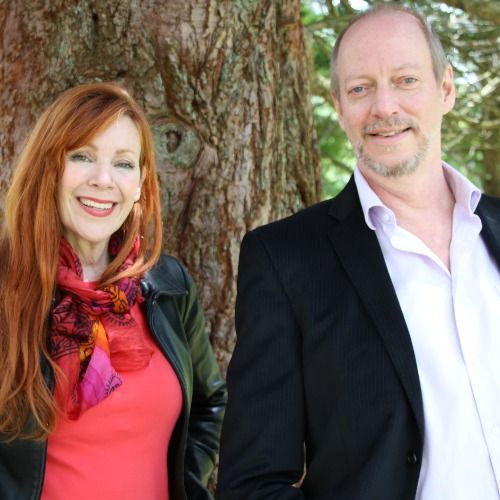
Living with Purpose: Lessons from Jamie Campbell
Hosts Kat and Kevin engage Jamie Campbell in a discussion that probes the often-overlooked aspects of men's vulnerability, particularly within the high-pressure context of sports broadcasting. Jamie's experiences serve as a crucial reminder that behind the polished façade of professional success lies a complex tapestry of personal challenges and the necessity for introspection. His commitment to using his platform to reach out to those in need during the pandemic illustrates a profound shift from self-centered ambition to a life dedicated to uplifting others.
The discussion circles back to the idea of appreciation and gratitude as essential components of a life well-lived. Jamie's reflections on the privilege of his upbringing juxtaposed with the stark realities faced by many serves to deepen the dialogue surrounding social responsibility and the role of individuals in fostering community. By sharing their stories and shining light on others, we can collectively contribute to a more compassionate and connected society, reminding us all that our voices, indeed, hold transformative power.
Takeaways:
- Authenticity and vulnerability are essential elements in fostering genuine connections among individuals.
- The discussion highlights the importance of presence over ego, particularly in interpersonal interactions.
- Listeners are encouraged to recognize privilege and use their resources to uplift others in the community.
- The episode illustrates that self-reflection can lead to deeper gratitude and a desire to help others, enhancing personal fulfillment.
Companies mentioned in this episode:
- Ignite Voice Inc.
- Sportsnet
- Blue Jays
Transcript
Your voice is your superpower. Use it.
Welcome to Ignite My voice Becoming unstoppable, powered by Ignite Voice Inc. The podcast where voice meets purpose and stories ignite change. Deep conversations with amazing guests, storytellers, speakers and change makers.
Guest Jamie Campbell:And I realized in that moment, I realized, Holy smokes, I'm 32 years old and I have never, never done anything for anybody other than me.
Co-Host Kat Stewart:Hi, I'm Kat. And today's conversation is one that goes straight to the heart of what we courage, connection, and the power of speaking your truth.
Co-Host Kevin Ribble:Hi, I'm Kevin. You know, our guest is someone who has lived all that in real time.
Canadian sportscaster Jamie Campbell opened the door to his own vulnerability after his leukemia.
Co-Host Kat Stewart:Diagnosis, turning fear into connection. And Genu. His story reminds us that one person's story can change another's world.
Co-Host Kevin Ribble:What will strike you about Jamie is not just about his career in broadcasting, but the inward journey he's taken from early success at sportsnet to battling depression to asking himself really hard questions.
Co-Host Kat Stewart:He's chosen presence over ego, and he's learned that giving creates more meaning than any spotlight ever could. Jamie is now a symbol of hope for so many, and today he shares what it truly means to live with perspective, empathy, and purpose.
Co-Host Kevin Ribble:Enjoy this fascinating convo with Jamie Campbell.
Guest Jamie Campbell:Now, presence is important. I recently got back from a trip to Hawaii and I think I have one photograph, maybe two.
So the desire to not pull out a phone every time there's an occasion that requires an imprint has been with me for a long time. Probably predates my diagnosis of leukemia, too.
I just feel, and I don't know where I adopted this position is that I want to see this world and this existence with my own eyes and take it in as I would, not as some piece of technology would.
I find it very distracting when I'm in conversation with a group of people and every two minutes someone's either looking at their phone or digging out their phone to Google something that's just come up in conversation. So instead of exploring the conversation, the immediate reaction is to find an answer. And Cat, isn't that kind of.
The beauty of conversation is let's discover the answer ourselves and then we can back check it later if we have to. So I don't know if that's a long winded explanation for that reaction to Andrew pulling out his camera, but that's probably as thorough as I can be.
Co-Host Kat Stewart:And I think it's about connection, isn't it? You're looking to create a connection with somebody, to get deeper into that conversation. And that's where all the juicy bits are, right?
Guest Jamie Campbell:They are. So many people are afraid to do that or they're just unwilling to be that way. And I've never been unwilling. I've always found people fascinating.
I've found people to be therapeutic because, you know, you can see me dressed in a nice suit and coiffed hair, broadcasting baseball on a sunny day at a packed stadium. But that doesn't mean my life has always been without conflict and without sorrow and at various stages without severe depression.
So I just choose to make sure that I see people and hear people and connect with people. Just last night I had a conversation with my 17 year old son and my goodness, he's constantly trying to forecast what his future is like.
And a lot of it has to do with achievement.
And I said, you know, when you get to my age, which is 58, you realize that the greatest thing we have in this existence is the connection with other people, is the friendships, the relationships that we develop. Nothing else really matters.
You know, when they bury us, they can throw as many things into the casket as they want in terms of physical treasures, but we're not going to know they're there.
I just want to know that when my time is coming to an end, I can look back and say my ability to connect with the important people in my life, and you're one of them.
Co-Host Kat Stewart:Thank you.
Guest Jamie Campbell:Was thoroughly, thoroughly investigated and cherished and as complete as I could make it.
Co-Host Kat Stewart:And you do that all the time. I mean, I've seen you. You're writing to people that you've never met to help them get over some of the things that they've gone through.
And you started that in Covid, right?
Guest Jamie Campbell:Yes. Yes, I did.
Co-Host Kat Stewart:How did that come about?
Guest Jamie Campbell:It started when I realized that I have this incredible platform as a broadcaster for the Blue Jays. And that is that when people turn on their TVs every night of the baseball season, they welcome me into their homes and there's a privilege there.
And if I show up on their televisions enough, it might be that I feel to them almost like a family member. And as much as we haven't met, if I'm helping present their Blue Jays broadcast every night, it might feel to them like we're kin in some way.
So I felt during the pandemic that if all of us were squared away in our homes and keeping a distance from each other outside and wearing masks, as much as a younger generation could survive, that there's an older generation of people who just don't physically have the capability to get out and ride their bike even during a pandemic. Right. Safely, or jump in the car and go and visit a loved one from a distance.
Maybe they're old enough that they don't even have their driver's license anymore.
And I figured there's a large portion of the population in this country that will be really stricken by this pandemic, and they'll be, you know, loneliness associated with it and isolation.
And my thinking was, put out a note on social media, generate as many phone calls or phone numbers as I could of people who may have felt that loneliness and that isolation. And I would keep a list, as I did. And at my peak, I was trying to call between 25 and 30 people every day.
Co-Host Kat Stewart:Holy crow.
Guest Jamie Campbell:Jamie of the pandemic. And I was keeping track. I have my log books upstairs in my bedroom, and I'm never going to get rid of them because I look back on them so fondly.
And, Kat, the connections that I made with people who I didn't know previously was incredible. And in some cases, I still communicate with them. In some cases, I'll drop in on people who I introduced myself to by phone six years ago.
Co-Host Kat Stewart:Wow.
Guest Jamie Campbell:Yeah.
Co-Host Kat Stewart:That's remarkable. I mean, you talk about the power of the platform that you have, and you have used that platform to be vulnerable, to be authentic.
You have shared your story. You've had a story through your leukemia and. And the skin cancer. Like, you've shared that with people. That's incredible.
Guest Jamie Campbell:It's also very important. I don't want people to think that they're alone in whatever battle they're personally waging.
that I was diagnosed with in:And I had no idea in the moment what I was up against, because I didn't have a steady hand to even reach for my phone. And Google what that.
ple recall as the hero of the: Co-Host Kat Stewart:Really?
Guest Jamie Campbell:And, yeah.
And I had the occasion to go to his house about a month and a half ago, had a great conversation, and I was able to tell him, without knowing him, just how helpful he was in getting me through those first few agonizing days of trying to figure out what the hell CLL was. And just by him being alive made me feel good. And so when I decided to publicize my own treatment, it's with that in mind.
So that if you're watching a Blue Jays broadcast and suddenly some doctor calls you and says your blood tests show very high white blood cells and you may have cll, maybe in a second you'll think of me sitting up there on a sunny day in our broadcast studio, looking awfully healthy, but carrying this thing around like luggage. And maybe you won't be so afraid. And that's why I publicized it.
Co-Host Kat Stewart:Impressive, Jamie.
It's interesting because you're in this male sports culture, testosterone driven kind of career, and yet we don't often think of men opening up and being vulnerable and sharing in that manner. And you had the courage enough to do that. That's remarkable in and of itself. So that must be helping a lot.
You must be getting a lot of feedback from men and women who have been touched by your story and your ability to give back.
Guest Jamie Campbell:I have received many notes from people. The beauty of sitting at an open set at the Rogers center every day is that people can approach me personally.
And to hear of people having dealt with something like this after I went public with it, and to hear that they didn't struggle with it quite as much as maybe they thought.
And even in those five minutes that we get together before I have to go back to the broadcast, I can make some suggestions to them, not so much with regard to treatment, but to how to process, how to proceed, how to maybe not miss the shining lights of your life as we know it now, I'm grateful and I'm touched by people who decide they need to stop by and share their own personal struggles with me. It's quite a position to be in.
Co-Host Kat Stewart:You give and you get back just as much as you give. Right?
Guest Jamie Campbell:Isn't that crazy? It's amazing. It is amazing. You know, I went through some. Some very, very difficult times the first year or two years of the existence of sportsnet.
Ottawa and then eventually in:And the first two years of being part of that brand new network were probably the two worst years of my life. And I sunk into the deepest, darkest place. I was working until 3 o' clock in the morning every single day. I had no social life.
My friends couldn't find the right time to spend any time with me. I was an absolutely lost human being. And one day, I swear I looked at myself in the mirror. I'll withhold the obscenity here.
I looked at myself in the mirror and I said, what the f. Have you ever done for anybody but yourself? And I realized in that moment I realized, Holy smokes, I'm 32 years old and I have never, never done anything for anyone, anybody other than me.
In other words, this, this striving to achieve this lifelong professional ambition, though maybe I've arrived at a particular point, was done without ever stopping to see how anybody else was doing along the way. So the very next day I picked up the phone, I called the hospital for sick children here in Toronto. I don't know why I just picked them.
I said, is there anything I can do for you guys? And they sent me off to their library and said, hey, every Thursday we have guests come in and read to our patients, which are kids, obviously.
Would you be interested in reading to the kids this Thursday? And I said, I'll be there.
And every Thursday for about a year I would go in and I'd read stories from picture books to kids who were at the hospital getting treatment. And in the back their parents would sit watching these kids listen to whatever story I was reading.
And these kids had pick lines coming up through nighties and pajamas. And I decided right there and then that, that I would never, never again look past people.
And it was time to stop being so selfish with who I was in this grand scheme of trying to achieve something as hollow as a television career. Now it's fulfilling, but my goodness, you know, nobody's ever gonna remember me for what I do on tv. So it's only a means of making a living.
And I just decided, I decided from that moment I would do whatever I had to do and use my platform to do it to make other people's lives better.
Co-Host Kevin Ribble:You're quite counterculture in, you know, where we've gone in society with the phone, with social media, with our own little bubbles of people who think exactly like us. And very self centered, really. We've moved in that direction and you've gone in the opposite direction. That's interesting. Do you.
Why do you suppose that was? Was it the health realization, mortality, or what?
Guest Jamie Campbell:Oh boy. That's a great question, Kevin. I don't know. I came from a set of incredible parents who never made. This is strange. I lived.
I grew up in one of the richest neighborhoods in the country. I grew up on the east side of Oakville. And if you've ever been to the east side of Oakville, it is filled with monstrous homes and vast properties.
And yet my parents made enough money every year just to get by. And for some reason they chose to rent the back end of a monster home. I don't know why. To situate their kids in this leafy, beautiful neighborhood.
I have no idea. I never asked my dad before he passed. I'm not going to bother my mom with it now. But why we lived in that neighborhood is beyond me.
Because those two scrapped a living together. Believe me, I came out of it with good friends, loving parents, siblings I adore, and a chance, you know, a chance to chart my own path.
And I did a pretty good job of that.
Co-Host Kat Stewart:So maybe you've done a great job of that. Come on.
Guest Jamie Campbell:Thank you. Maybe it's just appreciation. Maybe that's all it is. Maybe I've never really had to deal with hardship. I've never had to. I've never had to go hungry.
I've never not had a place to sleep. And in this city, as in the one you guys live in, every day I walk down the street, I see somebody sleeping on the corner.
Co-Host Kat Stewart:Yeah.
Guest Jamie Campbell:And that's never been me. So I'm a white man with privilege. Right? At this point, given the political climate, that resonates with me.
There are so many people that don't have the privileges that I have based purely on the color of my skin. And that does not sit well with me. But that's the age we live in. So I'm a grateful human being. I appreciate what my parents did for me.
I appreciate the people who support me. And maybe that's just all it is. It's just good old fashioned appreciation.
And I am prepared to do whatever I have to do to empower and better the lives of the people around me.
Co-Host Kat Stewart:I think though, it's the self reflection that you've had that allows you to look at your situation and recognize the gratitude and the privilege that you have. And I don't know that other people find that self reflection to find that gratitude.
When you do find that gratitude, your world opens because then you can give more.
Guest Jamie Campbell:Don't you think it does. And you've hit on something there, Kat, that I think is important for, say, other people to think about. And that is that I find.
And very recently, I had the privilege of taking my 19 year old son on the road with me for the World Series. You know, as many Canadians know, the Blue Jays played the World Series this year.
They lost in seven games for the three games that were played in Los Angeles. My 19 year old son was there with me the whole time.
Co-Host Kat Stewart:Amazing.
Guest Jamie Campbell:And, and I look at privileges like that right now. That's an earned privilege. I worked hard to get to that point. I worked hard to get to the point where I could have him with me.
But I walk away from an experience like that feeling completely blessed to have had that experience with me. And what it does is it makes me turn outward and say, okay, I got that gift. What do I now need to do to give a gift elsewhere?
What do I now need to do to make sure somebody else's life is improved in the manner in which I just enjoy it with my healthy 19 year old son? And I think that's what it is.
As long as I'm sort of constantly being fed this, this, you know, enjoyable life, a rich, rewarding, loving life, even with leukemia, I will always feel the need to walk out the door every day and in some way make sure somebody else is feeling a better, better about their lives too. Someone in many respects that I don't even know.
Co-Host Kevin Ribble:I hear you living your life as a true world citizen, and I don't know that that gets a lot of support in our modern society. I don't know. The media emphasizes that, you know, we're just consumers meant to purchase things until we die. I don't know.
The citizenship side of things comes out all that strong. And a lot of the messages we receive. It'd be nice, Kat, if we could kind of bottle Jamie up and then distribute it somehow.
His approach to the world to counter the other message that we're hearing.
So much so part of what Kat and I do here is with our podcast and our company, we try to make the world a better place, much like what you've done with your life.
Guest Jamie Campbell:I'm glad you guys exist.
Co-Host Kevin Ribble:Kevin, my question for you would be, what else can we do? What, you know, you talked about, you know, people not talking to each other, polarization. How do we fix that? Jamie?
Co-Host Kat Stewart:Right.
Co-Host Kevin Ribble:I have easy questions for you. See?
Guest Jamie Campbell:Yeah, that's a heavy one. I'll answer it this Way. My youngest son, who's on the autistic spectrum, asks the same question every single day.
He is so concerned with the state of the world. And every now and then he asked me, how do we fix this? He asked the same question, Kevin, that you did.
And I have told him, quite frankly, you are powerless to change the world. But what you do have the power to do is shine a light on the people around you. You have that capability.
So my thinking is, if you've ever been in a stadium, I don't know, before a concert, and the lights go down and it's dark, and then everybody flips up the lights on their iPhones and how great that looks, and I see the world that way. My thinking is, if we all did that right, as opposed to all of us deciding that it's my turn to save the world, here's how I'm going to do it.
Focused on the people around you. Make their lives better. Encourage them to go out and spread that a little bit. And, you know, maybe things will change.
But let's be honest and let's acknowledge that not everybody is in the same economic position. Some of us might be. I've made a good living doing what I'm doing. I live in a really nice neighborhood.
There are some people that just don't have some of the advantages, the privileges that someone like me has. And it makes it harder for them to shine that light. Right.
They're too busy trying to find a way to survive, trying to feed their family at a time when costs are skyrocketing, when people don't seem to trust one another, when violence seems to be on the rise. They're just trying to get by.
So maybe they don't have the pathway to going out and enriching people's lives the way I like to, or you two might like to each day. It's a lot to ask. I understand. But that's on you, Kevin, for asking such a heavy question.
Co-Host Kat Stewart:I think if we support each other and if we recognize when someone needs a helping hand or a hand up, and we take that moment to just look someone in the eye like you talk about kindly and say hello and see them and recognize them, that small action can make a world of difference to somebody that you walk by.
Guest Jamie Campbell:Yeah. And it doesn't have to be someone like me who you might have watched on TV the night before. Right. It can be anybody.
I love seeing just simple acts of courtesy on the street by people holding a door open for, you know, a woman with a dog and a Baby in a carriage, making sure an elderly person gets across the street before the light goes yellow. Like little tiny things like that. They're not hard to do. It's just you have to be off your phone.
You have to have your eyes open, and you have to be aware that they're happening around you.
Co-Host Kevin Ribble:Yeah, it's true. Random acts of kindness need attention. You have to be present as you. As we started the whole conversation off. Right.
Co-Host Kat Stewart:Sometimes that smile just can make the world of difference in somebody's life. Simple as that.
Guest Jamie Campbell:Right. People are afraid to look at each other in the eyes.
Co-Host Kevin Ribble:Yeah.
Guest Jamie Campbell:You know, it's misinterpreted so often, it's strange.
We used to do it a lot, but now we have technology that seems to be taking our attention away from the connections that we're supposed to have as human beings. And it's a little bit alarming.
Co-Host Kevin Ribble:Yeah. You're talking our language in our books that we center everything back to connection to a great extent and a reduction in connection.
And you're saying the same thing. We need to increase that connection, don't we?
Guest Jamie Campbell:Yes, we do. This has been fascinating for me, guys. We're not talking at all about baseball, and I'm enjoying this immensely.
Co-Host Kat Stewart:One of the things that occurs to me is when we're talking about, you know, helping make a change in the world, when we look inside ourselves, we say, well, who am I? And we have that imposter syndrome. Has that ever happened to you in your head? We go, well, who am I? Like, I'm just, you know, I'm nobody.
Even though you are somebody.
Guest Jamie Campbell:Well, you have to be a happy person in order to be able to publicly spread goodwill. I think it's like this notion that you can't love anybody.
If we're talking about personal and intimate relationships, for example, you're probably not that well to love, well suited to love somebody else, unless you know how to love yourself first. Right.
So somewhere along the line, maybe after I had realized that all those little dreams I chased when I was so young were actually, in part achieved, maybe I really learned to appreciate me. And I don't say that in a selfish way. I say that it was a revelation. I can't tell you when it happened, but I'm sure it did.
And so, you know, mature me, then gets to walk around the world feeling conviction, personal satisfaction, and is therefore strong and willing to support other people. Right. Because I'm no longer trying to serve myself. I'm trying to serve other people. And you think about how imperative that is in.
In personal relationships alone, as to how you really need to be able to love yourself before you can ever really truly offer yourself up to somebody else. So not everybody gets to reach that point.
Co-Host Kevin Ribble:Right.
Guest Jamie Campbell:Not everybody is assured of themselves, and that's a tough place to get.
Co-Host Kevin Ribble:I'm listening to Jamie, and I'm thinking of a short speech I heard from Donald Trump last night. And I'm comparing the two approaches to life, and it's just kind of sad.
Co-Host Kat Stewart:Well, what Jamie's talking about is selflessness. It's not selfishness. You know, and in your selflessness, you actually are gaining something, too. That's not selfish. I love the fact about you.
Guest Jamie Campbell:Oh, thank you, Ken. But you're the same way. Thank you.
Have this endearing quality of whenever people get into your circle, it's warm and inviting and accepting, and it's what makes you special.
Co-Host Kat Stewart:Thank you. And this is why I adore you.
And I adore this because we get to have these conversations that we might not never have had, and we get to share it with other people, and we can help other people open a door to their own selflessness and to their own way of being that can give back to other people and really help and create this dialogue. And Kevin and I always talk about making the world a better place. Well, you're helping us help the world, help each other.
Guest Jamie Campbell:Yeah.
Co-Host Kat Stewart:That's important.
Guest Jamie Campbell:It's a massive challenge, though, and not one that I think could ever be firmly completed, because there are just so many other people in this world that by way of circumstance, they can probably never reach the point of doing anything but serving their own personal needs.
You know, greed is rampant, and maybe it's rampant because people are so afraid of being left with need, nothing, that they try to acquire everything and save it all for themselves.
Co-Host Kat Stewart:But maybe I'm a Pollyanna. Maybe. I think it's just that one drop, and it sends out a ripple effect into the world. And just keeping that one drop and keeping it going.
Keeping it going. Certainly at some point in time, we can embrace everyone and we can build this community that is supportive of each other.
And even those people that can't help themselves due to their circumstances. Am I being a polyamorous?
Co-Host Kevin Ribble:I think.
I think it helps to have empathy, like Jamie's explaining, for the people that aren't there instead of hating, because hate is so big to other groups. Instead of that, the approach is, you know, there's probably reasons they become the way they are, and I empathize with them.
And instead, if we shine A light on better thinking. If we shine a light on better morality, on better ethics, that can counter the light that is being shone on those other people. And we guide people.
Can you do it perfectly? No. And like Jamie says, maybe our job.
Guest Jamie Campbell:Is to guide forever or guide within a circle in which we're capable of guiding, because, my goodness, if we're taking a worldview, I mean, none of us live in the Middle east and understand the tension of existing within some of those borders.
None of us live in, you know, various countries, notably, say, in Africa, that, you know, have trouble just feeding their own people with, you know, dictators, militaristic dictators running all over the place. You know, the world's a bit of a mess.
Co-Host Kevin Ribble:I'm thinking of in remote Africa doing a workshop as we were, and having a lot of empathy and realizing that we're all the same. And I think that's where we can work together anywhere.
Guest Jamie Campbell:Yes, I agree. I agree. Impact where you can.
Co-Host Kat Stewart:And I'll tell you, some of the kindest people I've ever met were in India, and they had nothing, and they gave me everything, which was kind of culture, you know, to what we have here. Right. We want to keep everything to ourselves. So.
Guest Jamie Campbell:Yeah, right, Right.
Co-Host Kat Stewart:Kind people are everywhere. And you're right, we can't help everybody. But if we can spread the message, those that can help in other places can help.
Guest Jamie Campbell:Yeah. I'd like to think we're all born kind.
It's just that, you know, the machinations of this life, depending on geography, circumstance, economic ability, just. It causes us to go in various directions. Parental impact. Right.
Let's not mistake how important it is for anybody who's going to decide to raise a child or more than one, how important the impression they're going to ultimately make on those kids will be for the impression that those kids eventually make, too.
Co-Host Kevin Ribble:Mm.
Co-Host Kat Stewart:Our kids are our legacy. We empower them to empower the world, too.
Co-Host Kevin Ribble:Well, you should probably empower parents better to do that job.
Co-Host Kat Stewart:That's a whole other podcast.
Co-Host Kevin Ribble:Do that Job Better.
Co-Host Kat Stewart:Jamie reminds us that authenticity isn't just a concept, it's a practice. His willingness to be seen in his most human moments has given countless others the courage to do the same.
He's quite an inspiration for how we can contribute.
Co-Host Kevin Ribble:The way he speaks about privilege, presence, and connection is powerful. It's a powerful call to look up from our screens, meet people in the eyes, and remember that we're here to impact each other. Right.
When we stop chasing and start appreciating.
Co-Host Kat Stewart:Oh, people like our families, our communities, our opportunities. Our world expands. Jamie shows us that strength isn't about being invincible.
It's about showing up for others, shining light where you can, and living as a true global citizen.
Co-Host Kevin Ribble:Thank you for listening.
Guest Jamie Campbell:Keep speaking.
Co-Host Kat Stewart:Keep connecting, and keep igniting your voice. Ignite my voice.
Show Intro Announcer:Ignite my voice. Voice becoming unstoppable. Your voice is your superpower.
Show Intro Announcer:Use it.