The Science of Healing: Neuroplasticity and Personal Growth
In this insightful episode, we chat with Erica Bearss, a multifaceted individual whose expertise traverses acting, academia, and authorship, all framed within her personal experiences with neurotrauma. The discussion centers around her commitment to understanding the brain's adaptability and its implications for personal healing. We dissect the concept of neuroplasticity, illustrating how the brain's capacity to reorganize itself can be leveraged to overcome cognitive and emotional challenges. Erica shares her story of resilience, emphasizing the importance of community support and the cultivation of a positive mindset. We also explore the dynamics of public speaking and personal narratives, clarifying how the fears associated with these experiences can be transformed into powerful storytelling tools.
Takeaways:
- The podcast emphasizes the significance of mindfulness in bridging the gap between mind and body.
- Neuroscience reveals that we have the capacity to rewire our brains through intentional practice and learning.
- Building a supportive community is crucial for overcoming personal challenges and fostering resilience.
Companies mentioned in this episode:
- Ignite Voice, Inc.
- Erica Behrs
- B.C. Psychiatry
- Team Canada
- Chic Retreats
- She Thrives
Transcript
Your voice is your superpower.
Show Intro Announcer:Use it.
Show Intro Announcer:Welcome to Ignite My Voice Becoming unstoppable, powered by Ignite Voice, Inc. The podcast where voice meets purpose and stories ignite change. Deep conversations with amazing guests, storytellers, speakers, and change makers.
Guest Erica Bearss:How do you get through this stuff so quickly? And how do you feel so happy all the time? I said, well, I work at it, I do exercise, I think about it, I read about it. I'm constantly learning.
So that's the other piece, the learning piece.
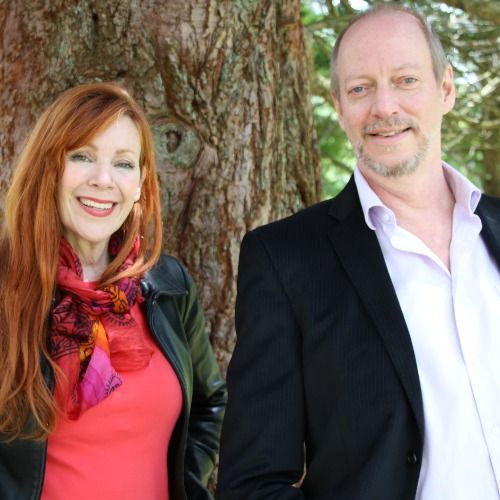
Co-Host Kevin Ribble:Today on the Ignite My Voice podcast, we're stepping into the world of brain power, personal narrative, and the science of becoming who you're meant to be. Our guest is someone that lives at the intersection of creativity, resilience, and neuroscience.
Co-Host Kat Stewart:We're talking with Erica Behrs, actor, professor, author, and someone who has spent more than a decade studying how our minds, emotions and bodies work together to shape our lives. Her journey into neuroscience began after a traumatic brain injury.
Co-Host Kevin Ribble:An injury no one could see, but one that changed everything. And instead of falling into isolation, she turned that moment into purpose, dedicating herself to understanding the brain and how we heal.
Co-Host Kat Stewart:She walks us through the deep connection between mindset and neuroscience. How the brain and mind are separate, but how mindfulness allows us to bridge the two. We chat about rewriting personal narratives, navigating.
Co-Host Kevin Ribble:Imposter syndrome, using nervousness as fuel, and learning to sit in vulnerability so you can connect on a human level. Erica believes what you give emotionally is what you get back.
Co-Host Kat Stewart:And her stories prove it.
Guest Erica Bearss:Treating our brain like a muscle.
So if you were to break your arm or anything, an ailment, you would go through physio, you would go see doctors, you might take it easy, you might rest, you might, you know, and with a brain injury, there's many things you do. Limit the lighting, limit the computer use, take rest when you need rest, take things slower. Communicate and engage with people.
So actually, one of the things is that when you do have a brain injury, you can fall into depression and you can end up isolating yourself. It's the worst thing you can do. So you have to sort of build your village and go and see people, even if it feels uncomfortable.
Cause your brain is telling you that you're not in the right place or the right space. So these are all little tips and tool that when you go through tbis that you can apply. But neuroplasticity will also help.
So all the things that we talk about, if we can apply that to those that have had concussions or bike injuries or car Accidents or any brain trauma, but even the trauma from emotional, you know, if you've gone through a big grief session or, you know, cancer treatments or. I'm just trying to think of other abuse. Abuse, yes. Right. We need to understand that we can actually rebuild those neurons.
You know, we wake up with at least 7 to 1,000 new neurons every day. Like, what are you gonna do with that? It's really good news. I think it's fabulous news.
And it all goes in there, and you get a chance to decide on where those go.
So there's, you know, I talked to you about the global structure where I thought, you know, I mentioned that the world was flat and it became round through science. The other way you can look at it is because we're in the era of digitization as a computer piece. So.
So you have a system like a phone, where it keeps your memory and it keeps your data, and you can keep downloading software. So in my chapter, I talk about rewiring the brain, because that's essentially what we're doing.
If the paths are not working for you, then rewire them. But there are ways you can bring in elements to try to support that rewiring.
So you have to make that centerpiece really strong, that hippocampus, you know, as.
Co-Host Kat Stewart:You'Re talking, I'm thinking about aging.
Guest Erica Bearss:Yes.
Co-Host Kat Stewart:So a lot of things happen when we age.
Guest Erica Bearss:Absolutely.
Co-Host Kat Stewart:Especially for women, hormonally, et cetera, and we lose some capacity. How do we regain that capacity? Alzheimer's, dementia, find that quite fascinating. Knowing that our brains have this ability to regenerate.
Why aren't we working with that more?
Guest Erica Bearss:So there are people using neuroplasticity on dementia and Alzheimer's. So that is being applied currently in the world.
Now, if it's hereditary or disease, then it's difficult for us to say that this is the pill to take for it. But there are certainly ways that you can mitigate, slow down, or support. Those health issues. Now, as far as this is a funny.
I'm glad you brought this up. So I was asked at the. I just did a conference book Launch on the 17th.
Co-Host Kat Stewart:Congratulations.
Guest Erica Bearss:Thank you so much. Yeah, it was a beautiful, beautiful experience.
And we were on a panel, and the first panel was the author panel, and the second panel was the diversity panel, but the author panel, somebody asked, well, what do we do when we hit menopause? Because menopause is one of those hormonal movements that women go through.
Co-Host Kat Stewart:I'm there right now.
Guest Erica Bearss:And one of the things that I have not had it yet, but my understanding, and I'm not preaching that I know what to do, but I certainly have some tools in my toolkit now that when and if I hit that, I'll be able to bring these into the equation. So our brain also is how our internal temperature works, right.
So how we build those temperatures, so you might get hot flashes or your temperature changes, and with neuroplasticity, if you build the strength in that, all the things like your hormonal imbalances, these things can help you to mitigate those. Those fluctuations or those. Those elements. Now, not 100%, but it's certainly. It's a support. It's a support.
It's one other thing you can do to support your healthy living and make it not so difficult to move through those changes.
Co-Host Kevin Ribble:I'm thinking about our books and our podcast, Ignite your voice.
Guest Erica Bearss:Oh, yes.
Co-Host Kevin Ribble:And I'm thinking, you know, we talk when we work with people quite a bit about rewriting your personal narrative, because in terms of public speaking, you know, we have a very different approach to how you present yourself to the world. We tend to put things upside down when we work with people. You know, we're not going to teach you to public speak.
Matter of fact, we're all about the death of public speaking. We're about you take one person on at a time. No matter if it's two people in front of you or it's 10,000, doesn't matter.
You never public speak because we're not really built for that. So a lot of people carry trauma with them, really, about public speaking. They carry anxiety, and we're trying to help them with that.
And some of the events that happened in their life get built in their personal narrative.
Guest Erica Bearss:Definitely.
Co-Host Kevin Ribble:Right. And it's how they're nervous and how they present themselves.
And we found over time, we have to work with people to help pretty well delete that line from their personal narrative. Otherwise, it's a habit. It sticks with you forever.
And so we're kind of curious, in terms of neuroplasticity or neuroscience, of that relationship between what's in your personal narrative, what's a habit, what you think, how it embeds in your body that whole little world there.
Guest Erica Bearss:Your body or your mind?
Co-Host Kevin Ribble:Well, both, really.
Co-Host Kat Stewart:Really, because it affects each other.
Guest Erica Bearss:Definitely. And that's the thing. So, you know, I talk about this also in this particular chapter.
There's many things that I integrate in my every single day life to enhance this ability to recreate the neurons. But when you talked about the public speaking Part. Can you elaborate what you mean? Like, so when I.
Co-Host Kat Stewart:Well, you know, being a speaker yourself.
Guest Erica Bearss:Yes.
Co-Host Kat Stewart:When you go stand up at the conference, what happened to your body? And you had maybe a little heart palpitations, you feel a little bit nervous. You're not sure what exactly you're going to say.
And if you stay in that sympathetic fight or flight, that's going to impact you from being able to open and speak authentically.
Guest Erica Bearss:So. But the thing is, sometimes you can use that as your authenticity. So I would say you can use it to your advantage.
But I understand that you're saying if it's the first time you've done it and the first time you're going up there. So I might give an example. My first. My second book was called let's Not Sugarcoat It. I loved it.
I will say that the first time, and I'll tell you a journey that will actually answer this question. First book was the Culture Revolution. That one was. I don't know if I want to sit in my story. I don't know if I want to exude that to the world.
My brand might get tainted. People might think I'm stupid. What if they think I was a traumatic brain injury? They think, can I educate all these.
These insecurities that pop into your head? So I thought, oh, I'll just do a business book. And the business book, I know. Cause that is my jam.
Co-Host Kat Stewart:It's very safe.
Guest Erica Bearss:Yeah, I'm gonna do it. Okay. So then I do this, and it goes really well. And then I get. This is a different conversation. Another woman, Alex and Isabel, came to me about.
Let's not sugarcoat it. They also have a podcast, but it's very different podcast. And I joined this book and this one was to tell my story. Like, really tell my story.
What happened about the car crash and going through a windshield. I was in Thailand and I just finished my Ironman and lots of things happened. So it's a very big, impactful story.
But I also had to fly to Kelowna and do a talk for a half an hour about my story. And I was terrified.
And I stand in front of students all the time educating on stuff that I know and the knowledge that I have about something and don't feel nervous. I feel excited to share my story. So I think we're gonna get to an answer here soon.
Co-Host Kevin Ribble:So I'm hearing vulnerability. Yes.
Guest Erica Bearss:Oh, yeah, vulnerability. But also. Like, sitting in it and realizing its impact after you do it. So there's two. There's two ways of looking at one, it's super cathartic.
So it helps you to sort of get whatever that story is out of your system, but it also helps you share on a totally different level. And when you do do is incredible what you get back. Like, I'm getting goosebumps talking about it right now. So my body feels this. And so during this.
Let's not sugarcoat it talk, I spent ages putting together my speech and how I was gonna do it. And I dressed up in a business suit with gold sneakers. I had to think about what I was gonna wear. Cause that was really important.
Co-Host Kat Stewart:It is important.
Guest Erica Bearss:It is. And then I thought, should I bring my Team Canada outfit? Because the journey was. And I'll do it really fast.
But I basically did an ironman in Thailand on my way home, the taxi driver fell asleep at the wheel and I went through the windshield of the car. And so it caused a lot of. I broke all my thorax, I broke my ribs, I had nerve damage in my arm.
And I suffered a traumatic brain injury from the experience. Now this is years and years ago, but. And then, see, look at me.
I'm second guess, you know, you got to tell like, it was years ago, so it's still okay. So there's that vulnerability piece. And I thought, should I bring the Team Canada outfit that I wore after the brain injury?
So after the brain injury, which, you know, you've probably felt this, you're not sure what to do with yourself. You don't really feel like you know what goals to achieve. And you. You've lost like a lot of yourself.
You've lost some of your memory, you've lost some of the energy that you have. You don't even know where you fit in. And so I had won a opportunity to be a competitor for a triathlon in London.
And I had won that before the brain injury. And so I thought, there's no way. There's no way I could do this. I couldn't do a triathlon right now.
But then after a little bit of time of sitting in my health, I said, well, why not? Am I doing it to win courageous, or am I doing it to just have a goal? So I decided to do it. And I flew to London and I competed for Team Canada.
And I finished the race amazing. Now I was one of the four, but hey, I didn't matter. And it's those things that help you through it.
And then when I said the speech for let's not sugarcoat it, although I was nervous, my nervous energy became excitement. So if you've all felt the feeling of nervousness and excitement. They feel exactly the same.
So if you can kind of navigate those two into the right direction, into positivity, and learn that your story is. Is valid, learn that your story, whatever it may be, we are all human beings and we all have things that have happened to us.
And then from that experience, I cried during my speech, and I didn't want to. I said no. And I'm saying that's what we talked about, that authenticity piece. It's okay.
And nobody, everybody just hugged me at the end, thought this was amazing. And from that more has come. So from opening it, I guess I would say be courageous. I would say sit in your vulnerability.
And I would say if you can see the world as human beings and that we all are going through struggles that that could support the element of what you're talking about is moving through that presentation of who you are and being able to speak with confidence about what's going on for you. So I realized I didn't bring neuroplasticity into it, but we could in the sense. Do you want to go there or do you want to go next?
Co-Host Kevin Ribble:Well, I was thinking a couple of things, if I could, and then let's bring it back to neuroplasticity. Let's.
Guest Erica Bearss:Okay, sure.
Co-Host Kevin Ribble:The piece about authenticity. And when you really open up, you're never sure what emotion's gonna come out of it. I remember us talking in remote Africa at a conference.
We were doing a workshop, and at the very end of the workshop, saying goodbye and everybody.
Co-Host Kat Stewart:And he cried, I cried, he cried, and that made me cry. And then everybody's crying.
Guest Erica Bearss:But how beautiful was that?
Co-Host Kevin Ribble:Oh, it was wonderful. You've got to be vulnerable and see yourself crying in front of a group of people you didn't expect to be. Right. So there's interesting things there.
And the other thing I was thinking was, you know, you talked about being really excited. Kind of equivalent to that fear of getting on stage or whatever. The one wedge I'm seeing is shame. That there's a shame component.
Shame, guilt comes in. That's not in the excitement part. Right. That's in the other part, in the fear of. Speaking. And that shame is so crushing.
But when I'm excited, I don't feel it at all. So I hear you kind of saying, if you can drop the shame, you can turn that vulnerable moment into a.
Co-Host Kat Stewart:Passion that drops fear.
Co-Host Kevin Ribble:But it's probably pretty tricky to walk away from the self shaming or self loathing that comes out right Definite.
Guest Erica Bearss:But there's, there's. I mean, there's books on this, like, let them. Let it be, let it go. Like all that stuff. It is a practice.
And I would never say live on this podcast that it's something that's gonna happen in five minutes. You actually have to work through it. I think writing helps, I think theater helps.
Co-Host Kat Stewart:And you're a performer.
Guest Erica Bearss:I think I'm a performer.
But I mean, I'm saying, like getting the emotion out, maybe talking, like you just said, talking one on one first to tell your story to someone and say, like, what do you think? How does that land for you?
And starting that way, because it's not something that immediately you're going to feel comfortable talking about with everybody in an open presentation space. I didn't get here, you know, in one year. I got here in 10 years.
So, you know, it took me time to get through the injury, but also to learn who I was, what I was about and build my own brand and what that looks like. But your brand has to be authentic and from the real you. Otherwise people can see through that.
One of the biggest things that damages people or kills people is worry. Right, that worry piece, that worry and anxiety can actually wreak havoc on your, on your body and your health.
And another piece I just wanna bring in there is the anxiety, because you just brought that up. I usually take it as nervousness. So when I was little, I never knew what anxiety was. Did you? I had no idea.
Co-Host Kevin Ribble:Oh, no.
Guest Erica Bearss:I didn't know what color was. I was. I didn't know what socialism was. I didn't know what, you know. I didn't know any of this stuff. And I all certainly didn't know what anxiety was.
And when I went to school, we didn't talk. Like that wasn't even a term. It was like, oh, you're just nervous. Go, just do it and just be.
So these are, you know, thank whomever, my parents, I guess, for giving me the strength to work through nervousness. But for that, for that shame piece. We've all had it, we've all felt it, we all know it exists.
Co-Host Kat Stewart:But every single guest comes on and says the same thing.
Guest Erica Bearss:Yeah.
Co-Host Kat Stewart:And it's, it's. What's that word? Imposter syndrome.
Guest Erica Bearss:Yes, imposter syndrome. Am I good enough? Am I doing the right thing? Blah, blah, blah.
Co-Host Kevin Ribble:That there's tools that you're driving at that we do too. What do you do about it? Well, there's some tools you can learn and you can acquire those tools, make it A practice and change it.
Guest Erica Bearss:Definitely, definitely. But the tools are. You have to put in the time and you have to put in the work.
Co-Host Kat Stewart:It's a conscious effort.
Guest Erica Bearss:So like I mentioned earlier, the muscle piece is important because if you want to get ripped and you want to have big biceps or you want to have a flat tummy or if you want to go and compete for an ironman, you're not just going to go and compete for an ironman. You need to put in four, five, six hours a day.
You need to bike, you need to run, you need to swim, you need to meet with your coaches, you need to eat the right food, you need to take the right nutrition.
Co-Host Kevin Ribble:Erica, you're killing me.
Guest Erica Bearss:I'm sorry. I'm sorry.
Co-Host Kat Stewart:No, this is all, everything we talked about.
Co-Host Kevin Ribble:We're going against the grain here a little bit. This is showing that it's hard work. I know. Also it involves expertise.
Guest Erica Bearss:It's good, it's good.
Co-Host Kevin Ribble:There's a book, Nichols, what's his first name, I forgot. Who wrote a book about the death of expertise. That we're in a place in society.
It seems right now that we don't value expertise, we don't value academics.
Guest Erica Bearss:I see what you're saying.
Co-Host Kevin Ribble:We don't value.
Guest Erica Bearss:I see where we're going here. Yeah, it's like what's happening? Did I say something wrong?
Co-Host Kat Stewart:No, you're saying something wrong.
Guest Erica Bearss:Ok, good. Yes.
Co-Host Kevin Ribble:Sorry. My sense of humor sometimes I love it.
Guest Erica Bearss:It's our first time meeting, so now I'm getting it. I'll get the witness.
Co-Host Kevin Ribble:What I'm driving at is that it's a little bit counterculture right now. You know, a belief in expertise, a belief in working hard at something, seeing the long term benefits.
Do you get a sense that you have to work against the stream a little bit here?
Guest Erica Bearss:Definitely. I mean, long term strategy is something we teach even in the business concept. Right.
In building your own business and your strategy for your business, you know, your body is your business. Right. So you still have to consider what are the long term ramifications and how do I get to where I want to go and when we. 100%.
So I guess I'll just say yes, I agree. We definitely need support to move through whatever it is we're trying to achieve. We need goals, we need people to support us through those goals.
So I would say we're so socialized.
Co-Host Kat Stewart:For a quick fix though, aren't we? You know, advertising. Just get it now. You deserve it.
Guest Erica Bearss:But that's the world we're living In. Right.
That's the sort of social media Internet, the access to, you know, if I just ask medicine md, then it's gonna tell me what I should do and I solve it. Yeah.
Co-Host Kevin Ribble:Erica, just give me a pill, okay? Give me a pill I can take.
Guest Erica Bearss:Well, and that's one thing I'd love to bring up is that I have never taken any drugs. And that has been really important to me. I mean, other than maybe a Tylenol or something if you had a headache or. But in the sense of trying to.
Support my mind, my brain with pills to help it, I've steer and clear. So everything I've done is through holistic organic approaches. And these are all available to anyone, anytime they want, without a fee.
Co-Host Kat Stewart:But it does take effort.
Guest Erica Bearss:Like you said, effort. But that's you effort, practice. And I would say, okay, so the fees might come in if you need counseling, because I did need counseling.
And you might want to meet with nutritionists to support you on food intake, these things you can find online. But I would agree it takes a lot of time, like for myself, I would say two years at minimum after brain injury just to kind of recover.
And then you can start to work on all the pillars that you need to rebuild your brain. And I went through B.C. psychiatry, so one of my father's best friends was the head of BC Psychiatry. Thank you. Derek Smith.
He is amazing and he supported me huge after my tbi and I was able to meet with neuroscience specialists and really understand how to navigate this process. And I think those things will help. And we definitely need time and support through it.
Co-Host Kat Stewart:We come at it from looking at how you present yourself to the world. And we've identified a holistic system mind. How you look at your mind and control the self esteem issues.
Anxiety leads to, how you perform in your body leads to opening up to be authentic into your heart. And then that leads to spirit and charisma and speaking. And you are an amazing speaker.
Guest Erica Bearss:Thank you.
Co-Host Kat Stewart:So you've worked through that hierarchy without even recognizing what it is that you were doing. You've come by this naturally, but you've also worked through understanding neuroplasticity, plasticity and hormones.
And it's quite an adventure that you've been on and you're sharing that.
Guest Erica Bearss:Yes. And there's a lot of things that can attribute to that as well. So I'm gonna say a few things when you were talking about that is I learned self talk.
So I literally write on my mirror and I read it every morning depending on what's Happening that week, this week. I have. I am.
Co-Host Kat Stewart:Strong affirmations.
Guest Erica Bearss:Yes. All the time. Write it. Yeah. I put quotes on my phone, I read quotes. I try to.
I don't know if anyone does this, but every email I write and when I speak, I try with, you know, I try to always create positive words. So I try to mitigate anything that says should. Anything that says not anything that says can't. I eliminate it.
So I can't believe I just said all those three things, but I try to eliminate those from even my emails, from even when I speak, because even positive talk when you're out, even out to other people, it actually matters because that helps the connection between other people. And I want to be a support for other people. I want to be a part of the happy movement.
And without trying to be, you know, without trying to be, you know, la, la, la. My brother always laughs at me and always says, oh, it's rainbows and sunshines, Erica. But it really feels like that for me. And it.
And people go, how do you get through this stuff so quickly? And how do you feel so happy all the time? I said, well, I work at it, you know, I meditate, I do exercise, I think about it, I read about it.
I'm constantly learning. So that's the other piece, the learning piece.
Once you give up on that and you've decided, oh, this is what I'm doing and this is who I am and this is it, then where are you going to go from there? It's just going to go down. Your health's going to go down. Your image of the world's going to go down. Your image of you is going to go down.
So there's so many things you need to keep at it, and you need to do it on a daily. It needs to be a daily practice.
Co-Host Kat Stewart:It comes from within. Right. You've made a conscious choice to make a ripple effect by being positive. And it's so easy to fall into the negative.
And we see that all the time with social media, how people talk to each other. Well, that's not what I know, and I know this, and you know, you're stupid. We don't need to participate in that.
Guest Erica Bearss:We do not.
Co-Host Kat Stewart:We can consciously control our own narrative and our own dialogue. We can and you are.
Guest Erica Bearss:We are in control of our body and our mind and in many cases our brain. So we are in control of how we wire it, how we wake up in the morning, how we look at each other around us.
Now, some support mechanisms for that is who you hang around with. I mean, we talk about this stuff also.
So the communities that you're involved with, who you hang around with, the people you surround yourself, those also matter. So when I talk about in my book, it's us for sure.
It's what we do and how we position ourselves and the things we do for our body and our minds, but it's also where we surround ourselves. Which doesn't mean you can't go into terrible situations and navigate your way through them, because you've built the inside strength. Right?
So if you've built the inside strength of your mind, body and brain, then you can also be great in adapting through positive or negative situations that you go in. But you mentioned having something on your shoulder.
So these are the people that love you, and these are the people that you could, like your kids or your wife or your husband or your partner or, you know, friends that you hang around with. My cat. Your cat, Whatever that is, whatever that is.
Those can be part of your process that you put together to start supporting the strength within your hippocampus, just to start strengthening you internally, your confidence, all those pieces and parts.
Co-Host Kat Stewart:You are so inspiring me. Thank you. And you will inspire others just by being here and sharing your story and the book that you've created. It's fascinating.
And I know the book is really for women about women, but it also has a really good connection for men, too.
Guest Erica Bearss:I think so, too. And it's interesting because on the panel, one of the question was, how can we bring men to be involved in this process?
And it was a tough question to answer because in the sense, it was a number of women there talking to women. But this is for everybody. This is for everybody and anybody that wants to thrive.
Like, there are some sections that maybe men might not want to read about what do I doing during menopause, but.
Co-Host Kat Stewart:They still help their partner.
Guest Erica Bearss:They can help their. That's right. Exactly, Kat. That they can help their partner. But also hormonal changes are hormonal changes.
So, for example, one of my dear friends got pancreatic cancer. And through the medicine that they were taking, their levels of testosterone came down.
So their elevation on estrogen came up, which affected their hormones. So they had to put into practice different things to support them. Exactly. So it doesn't matter what sex we are, that this can help with all of that.
And I do wanna make sure that I plug that the women in this book are all phenomenal, and there's different practices that are there to support in addition to the neuroplasticity plasticity that I talk about. There's chiropractic work, like how you sit and how you structure your body. Oh, that's big important. It's also really cool.
Like, there's many, many different. I ordered it. Did you? Oh, yay. Thank you.
Co-Host Kevin Ribble:Oh, we could talk to you for hours. It's just great. We're a little stuck in time. So I did have a couple of questions for you.
Guest Erica Bearss:Of course.
Co-Host Kevin Ribble:One was, did we cover the neuroplasticity component that you were mentioning earlier that you thought you hadn't quite touched on? Have we got that?
Guest Erica Bearss:We've talked about a lot of stuff. I think the key takeaways are that we can rewire that we regenerate neurons.
And we have the ability to try to strengthen the center of our brain, which is our learning and our adaptation part of our brain. And by doing so, we are strengthening sort of the big part of who we are as human beings is our brain is what tells us what to do.
It kind of supports our emotions, it supports our temperatures, it supports the way we see the world around us.
So if we can bring in different features to strengthen that center part of our brains, then we can start to make neurons that are gonna work best for us. And we can also strengthen the ones that are already there that have been damaged.
So I wanna share that even if they're damaged, they can be repaired. Cause they can be moved to different places. Like they move around. Right. So our brain is like a bunch of wires.
And how they're moving around, like if you've ever looked at. In a petri dish or whatever. What do you call those things on a microscope? You see them all moving around, so they're doing something.
Co-Host Kevin Ribble:Where's our power? What can we do to fight? You know, let's look on the political side. Bullies right now that seem to have so much power.
Guest Erica Bearss:Oh, my gosh.
Co-Host Kevin Ribble:And you know, the news is hard to take. There's. There's lots of stuff going on right now.
Co-Host Kat Stewart:Overwhelming.
Guest Erica Bearss:Don't watch the news. No, I'm kidding, I'm kidding, I'm kidding.
Co-Host Kat Stewart:I've stopped.
Guest Erica Bearss:Okay.
Co-Host Kat Stewart:I'm so sensitive.
Guest Erica Bearss:But we also need to know what's going on because we're educators and we're in business, and we sort of do still need to know. But I. I mean, that could be one step, but at the other step is through education. So that's going to be our tip number one.
Because if we are educating the younger generation to see things from a global perspective, to understand the why? To understand what power is and what it means. Like in our business courses we always talk about the different types of power, reverent power.
There's the different types of power. So we talk about that. And what does that mean and what does authority mean?
We can talk about how they actually communicate on social media platforms and what they're saying and what the ramifications of what they're saying is doing. So you mentioned earlier the ripple effect. Every person needs to play their role in what is happening with this negative piece.
And I think we touched a little bit on the fact that my movement is to just be a positive person and look at things from multiple angles and have an open perspective to see why it is the way it is as opposed to just determining that that's it. And that's what I need to just jump on that wagon. So we need to mitigate the wagon jumping. We need to get better people in power.
We need to teach leadership and what it means and how to be strong leaders and how to be authentic leaders and how to be leaders that actually have an education and knowledge of what's going on in the world around them as opposed to more narrow minded and single mindsets. Because the leaders of the world are the ones that are going to make the difference. Right.
And so if we don't educate at the younger level what it is to be a strong leader and how to be authentic and how to care and we may have just somebody that knows about money and profit and that's all they care about. Leading people that have emotions and that have, you know, cultural differences and different values and different systems, where's the empathy?
And then we don't have any of that and none of that's there. So I think education would be my number one.
And on just doing things like you're doing right here, having the conversation about it, that's always the starting point. Educating in school and making sure that the younger generation understands like what that means, but not from an opinion perspective.
Like I try to talk to my children like, what is religion? Like, let's just go. I don't, I know it's a hard one to go to, but it's okay.
When my father was, was with us, he was a diplomat for Canada, the High commissioner for Canada. And two of the things we were never allowed to talk about were politics and religion. Those are the two things.
It was like, Scott, Erica, no religion, no politics. So when I was younger, those were off the table, was like, how's your family?
Co-Host Kevin Ribble:That's kind of Hard because politics and religion is embedded in almost everything.
Guest Erica Bearss:And it wasn't because he didn't want us to learn. It was because it was a contentious, conflicting conversation.
Co-Host Kevin Ribble:Judgment.
Guest Erica Bearss:Exactly. And also at these diplomatic celebrations or it was very. You wanted to be very careful on what you said and how you said it.
So you didn't want to cause turmoil in these big events that my father was hosting.
Anyhow, I digress a little bit, but when I talk to my children, I give them the whole breadth as opposed to just saying what I think and I believe like it's allowing people to make their choice and decide what they think and feel.
But even if they want to express what they think and feel, you know, do it in a way that's not going to hurt other people, that's not going to, you know, there's, there's a way of sort of communicating that out or sharing what that feeling or that, that that opinion is.
Co-Host Kevin Ribble:It's. It's tricky though, isn't it? Because I'm thinking. That I want to talk to my kids in a reasonably judgment free way if I can.
I mean, I'm from a bit of a unique background there, that my ex wife is Muslim, I'm not. And so there's always two very different approaches to the world that my kids, which are half and half, we've got to handle. Right.
The other part of it is it's tempting to be careful when you do that and like your father not wanting to disrupt the room in any way. When we're too careful, we also don't really, I think, get to where we need to be, you know.
Okay, so that's trying not to be too judgmental, but also not too careful. Those are difficult balances, aren't they?
Guest Erica Bearss:They are difficult to balance.
And I think in terms like when you said to manage it, I was thinking more about sharing it because there are two different elements there that are kind of cool and interesting for your children to see and you know, explaining and educating and allowing them to sort of decide and be okay with that. So there's a couple of little elements there. It's sharing it and then allowing the other person to make the choice that they want to make.
So I think, and yes, that is hard because maybe it's not your choice, but in the world that we live in, if we want to live in a harmonious society where people can be authentic and can be themselves, we need to be able to allow that to happen.
I think in terms of just having those conversations about things like, you know, how you feel or your opinion on something or even just your political view. Right. That's a tough one. That is a very tough one because some people are afraid to even say what they. What they think, and it brings up something.
Co-Host Kat Stewart:As I'm listening to all of us chat. Listening is such an important skill because when you listen, you can learn.
Definitely when you listen, you can hear rather than just be ready to speak. If you're in that mode, you're not open to hearing other people's perspectives. And perspective is so important.
Guest Erica Bearss:So important. Yeah, yeah. I don't know if you talk about it in your courses, but we talk about that surface level and that deep level diversity.
Did you talk about that? It's kind of an iceberg or a tree or an onion, however you want to look at it.
But really listening to someone, if I see somebody I might know, potentially their age, I might know their sex, but until I really ask them the right questions to understand their values and their beliefs and the depths of them, I don't really know them, and I'm not giving that a chance. So I agree 100%. Listening, understanding.
And I guess going back to your question on one of the things we could do is allow our minds to be open to learning, which is one of the things that helps neuroplasticity, just FYI.
So learning new languages can really help because it helps you to work different spaces, but also helps you to understand the different cultures and creates that openness to diversity. So that's also an amazing thing. So I think there's so many things we could be doing.
Co-Host Kat Stewart:Travel.
Guest Erica Bearss:Travel. There's, you know, how do I create a global mindset? Yes. I learn new languages. I embrace diversity. I travel the world. I write.
You know, all of us can do this. Like, it's just a way of.
Co-Host Kevin Ribble:It's wonderful. And we can band together. I feel like we need to band together.
Guest Erica Bearss:I would love to band together.
Co-Host Kevin Ribble:Well, and us, literally, but also all of us that think a little differently. I teach a policy course.
Guest Erica Bearss:Cool.
Co-Host Kevin Ribble:And it's difficult with young people right now because policy and rules are meant to be broken.
If I look at the leader to the country to the south of us, we're so fast throwing everything, all conventions, all rules out, that when I work with young people, they're kind of going, well, that's old school, Kevin. You don't need that stuff anymore. And it's hard to. Because you brought it up, rules and policies, they have a place.
Guest Erica Bearss:They definitely.
Co-Host Kevin Ribble:But that's not popular right now.
Guest Erica Bearss:No, but it's not a place where they are being made in a silo. They need to be made with the groups involved, any of the stakeholders.
So from a business perspective, we always talk about how do we succeed as a business and what is our vision, what is our mission, what is our values, blah, blah, blah. But then we also need policies and procedures around that.
But when we're building those policies and procedures, we ask all of the stakeholders what they think of these policies and procedures before we make the policies live. So I think that's not what's happening.
So what's happening is somebody's got an idea and deciding for other people what that policy means to them and that people need to fall in line. And that's not, I think, the best way of doing it. And I would say in that essence, we do need policy. I think it's a good thing.
I think it just needs to be led from a different space from talking.
Co-Host Kat Stewart:About the people who are affected by it. And isn't that listening? It is going back to that.
Guest Erica Bearss:It is listening.
Co-Host Kat Stewart:So being open.
Guest Erica Bearss:Yes, listening.
Being open, asking questions, understanding, taking all the information in, analyzing the information, finding the right solutions and then providing feedback, maybe even doing it a couple of times, that takes effort, that takes work.
Co-Host Kat Stewart:That's a lot harder than being a dictator.
Co-Host Kevin Ribble:There's a lot of tools built into that that a lot of people don't have. And we're all about trying to empower and give people the tools so we can all work together. Right.
Co-Host Kat Stewart:As are you.
Guest Erica Bearss:Yes. Empowerment is big. I love it. And that's part of the movement that we're a part of too on she thrives. So on she thrives.
The movement is to band together. So many women in this particular piece are all, in essence, one of the questions was about competition.
And so what I like to call it and my colleague Amy Cohen from Chic Retreats, we call it co opetition, which is where you can still work together.
Co-Host Kevin Ribble:That's a good word.
Guest Erica Bearss:Still go after. Go after what you want. If you can see the world as. Yeah, I like it. I think it works.
Co-Host Kat Stewart:What an incredible conversation. Erica brought a science vulnerable vulnerability and humanity.
Co-Host Kevin Ribble:She showed us that neuroplasticity isn't just a buzzword. It's real, it's measurable.
Co-Host Kat Stewart:She reminds us that vulnerability doesn't weaken us, it connects us.
Co-Host Kevin Ribble:And maybe the biggest takeaway, what we feed our brain matters, Erica is living.
Co-Host Kat Stewart:Proof that you can rebuild, rewire and reimagine your entire narrative.
Co-Host Kevin Ribble:So until next time.
Guest Erica Bearss:Time.
Co-Host Kevin Ribble:Breathe deeply. Speak honestly and ignite your voice.
Co-Host Kat Stewart:And thanks to those of you listening in Malaysia, the US and Brazil, visit.
Co-Host Kevin Ribble:Us at ignitemyvoice.ca ignite my voice.
Show Intro Announcer:Becoming unstoppable. Your voice is your superpower.
Show Intro Announcer:Use it.