Lara St. John Breaks the Silence: The Dark Side of Classical Music Institutions
Today we sit at the intersection of power, silence, and the courage to speak out. Joining us is the magnificent Lara St. John, who’s not just a virtuoso violinist but also a filmmaker on a mission to shed light on the dark corners of classical music institutions. Her documentary 'Dear Lara' takes us behind the curtain to reveal unsettling truths and patterns of abuse that have long been ignored.
As we unpack Lara’s journey, we explore the insidious nature of silence and complicity in institutions that are supposed to protect and nurture young talent. Lara’s candid storytelling is both heartbreaking and empowering, demonstrating that speaking out is a radical act of bravery. It’s not just about her story; it’s about creating a collective movement where voices unite for change. As we explore the ramifications, we’re also celebrating the power of community and the importance of standing together.
Takeaways:
- Lara St. John's documentary sheds light on the abuse patterns within classical music institutions, making you question everything.
- Speaking out against powerful institutions can be daunting, yet it’s essential for sparking real change.
- The importance of collective voice and support in combating systemic issues cannot be overstated; we rise together!
- In this episode, we explore how silence can be just as dangerous as the actions that go unchallenged.
- The conversation emphasizes how courage can lead to empowerment, especially for those who've historically been silenced.
Companies mentioned in this episode:
- Ignite Voice, Inc.
- University of North Carolina School of the Arts
- University of Michigan
- Royal Conservatory of Music (RCM)
- Santa Barbara International Film Festival
Transcript
Your voice is your superpower. Use it. Welcome to Ignite My Voice Becoming unstoppable,.
Show Intro Announcer:Powered by Ignite Voice, Inc.
Show Intro Announcer:The podcast where voice meets purpose and stories ignite change.
Show Intro Announcer:Deep conversations with amazing guests, storytellers, speakers, and change makers.
Guest Lara St. John:So the schools, like will do everything to sweep everything under the carpet if that person ends up being a predator. And not only that, they don't seem to have done any background checks.
Co-Host Kevin Ribble:Today's conversation isn't easy, but it matters. It asks us to look at power and what happens when no one's watching.
Co-Host Kat Stewart:It also asks what happens when people finally decide to speak and refuse to stay silent any longer.
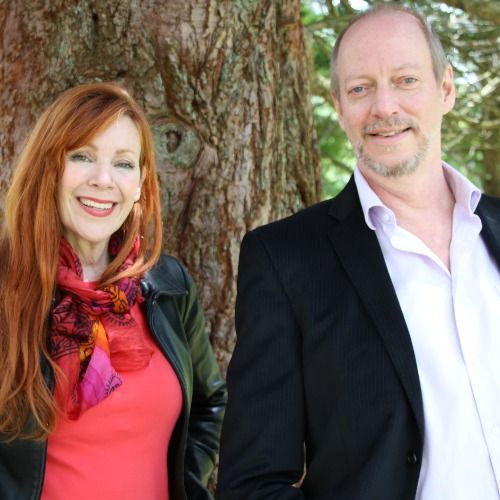
Co-Host Kevin Ribble:We're joined by Lara St. John, an internationally acclaimed violinist and now filmmaker.
Co-Host Kat Stewart:Her documentary Dear Lara premiered at the Santa Barbara International Film Festival and experienced exposes a pattern of abuse inside classical music institutions.
Co-Host Kevin Ribble:Young students, often children in private lessons,.
Co-Host Kat Stewart:With powerful mentors, closed rooms, no windows, and very little oversight.
Co-Host Kevin Ribble:Too much power in the wrong hands.
Co-Host Kat Stewart:And for years, a culture that protected itself through silence.
Co-Host Kevin Ribble:But now Lara speaks out, women speak.
Co-Host Kat Stewart:Out, and that takes courage, especially in a world where speaking out can cost everything. And yet to stay silent costs so much more.
Co-Host Kevin Ribble:This is why voice matters and why these conversations matter. Here's Lara St. John.
Guest Lara St. John:It's like, no, some teachers, privacy is not worth the student safety. Come on. It's not that hard to make these changes. And I don't know if it's classical music or what it is, but these schools are just.
They've got their feet planted into the ground and they refuse to move.
And so that's what I'm hoping that me and like, Kathryn Needleman, who does a lot about orchestral safety in the States, and I hope that we can be, you know, the little snowball that starts the avalanche so that. So that, you know, women and children can also have a happy and healthy career.
Co-Host Kevin Ribble:What is that? Is that misogyny built into the culture so that. So that they can't see it, or is it even darker they're protecting? What do you think?
Guest Lara St. John:I think there's a lot of complicity, especially institutional, because you have this like, sort of like Mr. Fancy Trumpet Horn teacher or something.
And that's the person who's bringing in the students to your school, and that's the person bringing in the money. So therefore, I mean, especially in the States, the money is intense. It's like 50, 80 grand a year for some of this stuff. I mean, it's so ridiculous.
And so the schools will do everything to sweep everything under the carpet if that Person ends up being a predator. And not only that, they don't seem to have done any background checks. Like in my film and in all my stuff. There's. There's countless.
Like, it's kind of like, you know, the Catholic Church, something went wrong at this parish, and so they just moved the priest. Right. And I call it predator whack a mole. Oh, my goodness. Yeah.
And there's tons of instances of this, of people just not picking up the phone to say, hey, how come this person left your school? So another 30 years of this happened.
Like, for example, Stephen Ships, he was at University of North Carolina School of the Arts and got fired from there and then went to the University of Michigan for the next 30 years and continued all the same stuff there. Jan Ruko was kicked out of the entire country of Holland and then went to England and was there for another 20 years until he got arrested last year.
So, you know, I mean, we could have just one phone call. Could have. How hard is it? People put windows and doors, take off the locks, do background checks, and do team teaching.
I mean, it's really those four things that could make a load of difference for women and children.
Co-Host Kevin Ribble:Like you said, though, money talks, doesn't it? Money.
Guest Lara St. John:Money's the rude.
Co-Host Kat Stewart:It's distressing to hear that because it could be so simple and we're not protecting the people that are vulnerable.
Guest Lara St. John:Well, and also, especially violin, piano and cello, these things have to be begun. It's kind of like, you know, gymnastics or skating. You can't just start when you're 15, you know.
Well, you can, but you're not going to be very good at it. And so because of that, it's. It's. There's a lot of children in this profession, you know, and it's.
It's men, given these messianic amounts of power and children in this incredibly vulnerable position.
And obviously, there's quite a lot of really decent, lovely concert masters, conductors, teachers, you know, out there that don't take advantage of this.
But then you've got people who abuse the system and the schools are right behind them to just kind of, you know, discard the women and children and keep them in place.
Co-Host Kat Stewart:And we've heard about this in the entertainment industry, you know, Harvey Weinstein and how he, you know, abused women in. And had that power over them to, you know, ditch their career at the height of their career. I don't understand how this happens.
Guest Lara St. John:Well, because. So I keep referencing the film, but in my film, everybody uses their own name and their own face. All of us are, you know, over the age of 45.
And that's the problem. Like, at this point, you know, Katherine Needleman has tenure. Luciana is my age, and just decided, that's it. It's time for me to talk about this.
r me, when I became public in:And so that's what I want to be able to happen is for. I know that this is happening right now to young women, even children and women in their 20s.
And they know that the backlash and the retribution will be so severe that if they talk about it, that's the end of their careers, which they've probably already spent 20 years in. You know, it's just.
And so that's what I want to change is the entire kind of foundation of classical music so that when this happens, people can speak out and there is help for them. There would have been no help for me 25 years ago. There was no help for me 40 years ago. When this happened, I actually. I talked to the dean.
He laughed at me.
Co-Host Kat Stewart:Oh, geez.
Guest Lara St. John:You know, When I was 15 years old, I went in with two witnesses, and the dean laughed at me. And nothing was ever done to my rapist. He taught till he died and died happily in his own bed. And later in my.
In my sort of, you know, investigations and stuff into all the people that reached out, I spoke to a woman who was in her 80s, and she said, oh, yeah, he raped me for a whole year when I was 15, and then threatened to kick me out of school when I told what I told another person about it. And she was in her 80s. So this was back in the 50s, 60s. So that's how long my rapists had been doing this. And everybody knew. Everybody always knew.
Co-Host Kat Stewart:Hmm, that's sobering. And, you know, as listening to you, I'm really angry. It happens to women all over the place.
I mean, I haven't been raped, but I had an employer pushed me up against the wall, one hand on either side of me, and wouldn't let me go until I had to do the old female, oh, ha, ha, ha, you're so funny, and slide down the wall to get out from underneath that. So we have, as women, we sidestep these things all the time and our activity.
Guest Lara St. John:Did you stay employed?
Co-Host Kat Stewart:I did, but I never. I never said anything about it. And now I would have a whole different reaction to that kind of.
Guest Lara St. John:Well, and hopefully that zeitgeist is changing. Like, you know, I'm. Sometimes it gives me hope that. So Sammy Sussman, who's one of the. He's brought out, like, all the stuff about Stephen Ships.
He brought out all that crap about the New York Philharmonic. He's a terrific young journalist, about 25, maybe 26 now. Like, totally different generation from me.
And he says that he has the feeling that, like, now the students don't want to be part of a school where that is allowed to happen to one of their classmates, as opposed to when I was a kid at Curtis. People knew something was wrong with me, but they just. They. They just kind of, like, treated me like a pariah and shunted me aside, you know?
So, like, it was like, well, okay, this bad stuff didn't happen to me, so I can still concentrate on my career and nothing will happen to me. Right. And so he thinks that. That that's changing with a new generation, which. Which gives me hope.
Co-Host Kat Stewart:Well, there's power in collective.
Guest Lara St. John:That's true. Yeah.
Co-Host Kat Stewart:And you were just on a march the other day. You feel that power, you know that power.
Guest Lara St. John: count the women's one back in:But, yeah, all of these marches that. It's just so fun to know that, like, everybody's out there for the same reason, which is, you know, basically love your fellow human.
And so, you know, if you bump into somebody or something like that, you know, it's like, oh, sorry. Oh, no, that's okay. You know, everybody's like, super, super kind now.
Co-Host Kevin Ribble:Now, that's the. That's the no Kings movement that. That you were at last, right?
Guest Lara St. John:Yeah. This one was the no Kings. Yeah. But, I mean, there's a lot of other reasons people are marching. You know, it's for women's rights, obviously. It's for.
I mean, the whole Iran debacle and. Oh, God.
Co-Host Kat Stewart:Anyway, Lara, you are a solo violinist. Classical. I see you as an activist. Do you see yourself that way?
Guest Lara St. John:Oh, my God.
It sounds kind of weird to say this, but I think the rest of my life is going to be much more about advocacy than it is about playing a box with strings on it. I've actually been working now for 50 years.
I played my first concerto with the Windsor Symphony when I was 4 years old, and I'm now 54, and I'm just kind of like, you know, the World doesn't need another Mendelssohn concerto here or there or, you know, another Tchaikovsky there. Like, I would much rather be traveling around now with my film and talking about this kind of thing.
I mean, you know how it is, like, as time goes on, you're like, well, you know, I want to make a difference. I want to help people.
And playing another concerto somewhere, yeah, it might make people happy for half an hour, but, you know, this is more now what I want to be doing.
Co-Host Kevin Ribble:Oh, that's finding your purpose.
Co-Host Kat Stewart:Purpose and passion. And it changes over the years, doesn't it?
Guest Lara St. John:It does.
Co-Host Kat Stewart:It transmutes. And you're becoming this beautiful light. I can see it in you.
And we're talking over teams, but you radiate beautiful energy, and I can see how purposeful you are, and that gives me hope, and I know it gives Kevin's hope, because this is what we're here to do. We're here to help people find their way, find their voice, find their passion, and contribute in a positive, meaningful way to society.
Because we all have a part to play in making something better, making it good, leaving a legacy for the children that will follow.
Guest Lara St. John:Right? Yeah. And I, you know, I don't myself have kids, but. And. And that's why sometimes I'm just staring at people going, like, why.
Why aren't you thinking about. About your progeny? You know, like, I'm the one that can just check out of here in however many years.
You know, you need to be thinking about this, that and the other. So, yeah, it was like the other day at the.
At the grocery store, I had, you know, my little canvas bags and all this kind of stuff, and this guy was, like, checking out.
And this is unusual for New York, actually, but I guess maybe he forgot his bags because he had all these kids and, you know, so he was there with like seven plastic bags. And then he just kind of looked at me and was like, oh, yeah, I guess I should be doing that, or something like that.
And I was like, well, your kid's not mine. You know, like, if you want to pollute the environment with a buttload of plastic bags you didn't need, then, you know, it's. People gotta do better.
And, like, if there's some way that I can help that, then I will. And, I mean, I think that I can make change in our tiny profession of classical music. I think I am doing that.
And maybe, you know, maybe it'll radiate.
Co-Host Kat Stewart:Outwards, and it's removing the self center, the self centeredness. You Know, when we stop focusing on ourselves, then we can look and support others and in that way we contribute. And that's what you're doing.
Guest Lara St. John:I guess so. I mean, I'm lucky now that I don't have to go play Tchaikovsky concertos to eat meals anymore.
You know, I've got, I sold my apartment for the documentary but got my fiddle. I got my husband, I've got, you know, I've been working for many, many years so I can in fact kind of retire, although I'm not retiring.
But you know, with film, as I'm learning, because this is my first documentary, the film festivals, they let you know basically maybe two months in advance, sometimes six weeks. I mean it's really, it's crazy how quick it is.
So I've had to just because I knew I was going to go around to festivals this year, which is back from was in Santa Barbara, that was our world premiere in February and now I'm doing Toronto premiere. That's a whole nother story.
But there's Toronto premiere coming up April 20th and I wouldn't be able to have my concert schedule and be able to travel with my film.
So I basically when I knew that we were going to have Final Cut like last October, I was like, I had been speaking to my managers and everything just saying okay, nothing after February. So I, you know, I'm doing like little things with friends and stuff like that. But I've cleared my entire concert schedule for this year for my phone.
Co-Host Kevin Ribble:And there's certain luxury to that, I guess, isn't there, to be able to dedicate like that. We're privileged and we feel the same way to an extent.
With the podcast we're able to try and get a message out to try to band together with people that are like minded, like you, like you, you know, what can we do?
But part of me is a little bit frustrated though, and listening to your story and as we battle in every front that we can, and that is, it's, you know, I want to be hopeful, but if I look at say the Me Too movement, if I look at how things seem to be moving kind of in the wrong direction these days, I wonder what is it we can do to tackle the forces that keep pushing against us as we want to make obvious change here that's needed, you know, what can we do? And do you face that frustration still?
Guest Lara St. John:Well, of course, look where I live.
I mean, sometimes I just have to not read the news, but yeah, I mean, I think it depends on the country that you're In I actually, believe it or not, I've been kind of impressed with the UK and their reaction to the Epstein files. Like they've actually arrested a bunch of people. Prince Andrew, which only arrested the woman.
So all of the big fancy men that were part of the Epstein files are still running around probably doing the same thing. So that's very frustrating. But I think that the public in general, I think that, what do you call that? The pendulum.
Yeah, the pendulum is starting to turn. You know, even, even Joe Q public is like, there's something wrong with this.
Why, why are they not putting this out, what is going on, et cetera, et cetera. And I think that they're going to lose patience pretty soon.
Co-Host Kat Stewart:What's your vision? What's your hope from sharing this story from going to different regions?
Guest Lara St. John:Well, I mean, at the moment it's kind of the festival circuit. Ideally I want this to be on screens everywhere, like in people's homes.
So I mean, that's getting, they tell me, harder and harder because now, you know, Netflix and Amazon and all those guys are making their own documentaries, right? So they don't necessarily want one from, from some upstart mostly violinist who, you know, it's her first director, the first time director.
But you know, we're going to keep trying on that and I think, you know, especially if I can, you know, show people the insane amount of interest, like especially in the classical music world, then, you know, hopefully it'll be seen worldwide and people will say, hey, this sucks. Enough of this, you know, and it's not just the classical music world.
What needs to happen is that the world at large knows about this sordid underbelly because the people who have seen it, like in Santa Barbara, all of the classical musicians come up to me and say, thank God, finally somebody's really doing something about this. And the non musicians are like, wow, I had no idea. They're so shocked.
There's this perception of classical musicians as sort of prancing around playing instruments from 300 years ago and music from 300 years ago, which is actually not, not untrue a lot of the time, but, but you know, so they just, nobody would ever guess like, oh, it's supposed to be so beautiful and so elite and so this and that. And nobody would ever guess that there's so much abuse within it. And so, I mean, hey, another trite thing, but sunlight is the best disinfectant.
So I do want to like shine a huge spotlight on this and just hopefully that'll make change and Force change. You gotta hit them where it hurts.
Co-Host Kevin Ribble:Sunlight. And sunlight helps for sure. Expose them and get them where it hurts. I find the hot docs thing fascinating in that there it is repeating itself again.
Right there is the core of the issues here.
Just freaking coming around again right when you're in the middle of it and it resurfaces again where there's that attempt to cover up or attempt to discard right when it's on the edge of being released. Like, I just, it blows my mind.
Guest Lara St. John:I can only guess at that. And I'm sure that, you know, hot docs would say, oh, no, that had nothing to do with our decision. You know, I don't know, I'm not going to ask them.
But I had no idea about this partnership until I started kind of looking into it and like noticing, you know, oh, aha.
Co-Host Kat Stewart:Well, there's fire.
Co-Host Kevin Ribble:You played a good journalist in the, you know, follow the money. Yeah, that's, that's, that's the root of.
Guest Lara St. John:And I don't even know if it's money. It might just be a partnership that they help each other or something like that, but something political. Yeah.
And hot dogs had some sort of upheaval that I don't know, like two years ago and they fired a whole bunch of people or something and they have financial worries. I mean, so they're probably going like, well, we can't afford to lose our partners at this point.
And so therefore they rejected a film that they should be showing. So. Well, whatever, that's their prerogative and it's my prerogative to do it myself. You bet. So damn it, I'm doing it.
Co-Host Kat Stewart:Concert violinist to activist to filmmaker. What have you learned by being a filmmaker?
Guest Lara St. John:It's pretty fascinating actually. It's a completely different profession, of course.
You know, I've been editing my own music videos for about 15 years because I got really annoyed with editors that couldn't synchronize violin playing. And so I thought, well, for God's sakes, if you want it done right, do it yourself.
But of course, editing a bunch of music videos is really, really different from a 93 minute full length documentary about very difficult subject. So I learned a lot like a backseat editor for this.
And you know, my, my editor was, was amazing at like just sort of pulling through the arc of all these stories. And just like, so from beginning to end, you. Well, you'll see it hopefully in May.
And it's just, you know, she, she did hundreds of hours of work on, on making sure that like the audience state that you stay with it throughout this whole arc. And it's not like a whole bunch of bumps of stories or whatever. There's like a.
A glue that keeps them all together, which is ostensibly me, because I'm. I'm everywhere and I'm talking to these people.
But also she did an at just like, making it so obvious that this is a worldwide problem, global problem. And that all of the reactions are almost identical. They basically just shove women to the curb and keep the big fancy man.
And the institutional complicity is astounding. And it's not just. We even go into the opera world and, of course, the orchestral world. It's not just education places, it's everywhere.
It's endemic in this field, and it's just. It's gotta get rooted out.
Co-Host Kevin Ribble:Well, yeah, it's endemic with humans, isn't it? It's built, in some ways, sadly, perhaps, into our DNA, and we have to put a guard against it, and we can't ever stop.
Likely it's one of the faults of humanity. And what are we gonna do? We've gotta have systems built in forever to prevent this from happening. I think is what I take away from this.
Co-Host Kat Stewart:And I also take that it's the art of storytelling. It's about opening up this world so people can hear and see and feel and make change in and of themselves and the people and the world around them.
So you are giving such an opportunity for people to learn and grow.
Guest Lara St. John:Right. And also, like a lot of times, people like Kevin just said, well, what can we do? What can I do?
So I don't know if you guys remember, but there is an Air Force One situation a couple months ago, and. And the Orange Menace. I'm sorry, I don't say president like.
Co-Host Kevin Ribble:Giant Cheeto, said the man whose name we won't repeat.
Guest Lara St. John:Yes, exactly. Said Quiet Piggy to a reporter. To a female reporter, the only one. And there were seven men there. And they all just stood there and they did nothing.
Co-Host Kat Stewart:Not one of them.
Guest Lara St. John:Not one of them. And so my answer to that is, don't be those men.
Co-Host Kevin Ribble:Yes.
Co-Host Kat Stewart:Be better than those.
Guest Lara St. John:When you see that sort of thing. Stand up. Do something. Stand up. Yeah. You know, people have to learn to stand up, even if it might hurt them a tiny bit, you know?
Co-Host Kevin Ribble:Well, a bit of that is finding your own voice, too, right? Which is what we're about, is we're helping people find their voice.
You've got to believe that you have the right to speak and you have something thoughtful and powerful to say. A lot of people aren't maybe in that position. We should help them get there and we should model that good behavior wherever we can, shouldn't we?
Co-Host Kat Stewart:And you are.
Co-Host Kevin Ribble:It's our responsibility. And, boy, you're taking that responsibility on fully, aren't you?
Co-Host Kat Stewart:Yeah.
Co-Host Kevin Ribble:You're going for it.
Guest Lara St. John:Yeah, yeah.
But I mean, also I'm, you know, as I keep referencing the film, but as I say in the film to Catherine Needleman, that's like something that bothers me a little bit. We don't have enough allies. Not yet. You know, like there's, for example, like she points out.
Okay, so, yeah, there's lots of women in orchestras now, but they're all in the second violin section, which is basically itself a subordinate position. In all the big orchestras. There's, there's. So it's now at last, two in 20 of the top 20 US orchestras that have a woman conductor. Wow.
So that's, you know, small numbers, 10% small numbers. Principals, concert masters, principal flute, principal oboe. There's not more than 12% in any of these orchestras.
And she goes and asks like, why, why, why is that? And it's because there's.
There's sort of a cabal of men who are the gatekeepers and they're not going to let in, you know, some upstart woman into their positions of power. And, you know, it's like, no king wants to give up their throne. Right.
Co-Host Kevin Ribble:Well, it's systemic on so many levels. And we've talked about this from some other directions, but same theme. It's difficult to force that change. And, you know, as one of the tools.
Dei, you know, is one of the tools saying, okay, we're going to represent the greater public in the top echelon. Somehow we're going to say, you know, 50 plus percent are going to be women. How do you force that? That's challenging.
Do you just suddenly say, we're only going to hire women into those positions until we equalize? But then that's got its own problems. You know, breaking those systems is hard.
Co-Host Kat Stewart:And there's backlash to that.
Guest Lara St. John:Yeah, but if you. Well, yeah, there is at the moment, but if you look at it the other way.
Well, in classical music, anyway, I have to talk about what I know because I don't know a lot about the professions, but I think we've basically, over the last 50 years, we've established that talent is gender equal. And so there, I mean, it's not exactly shot putting, you know, or weightlifting or whatever. It's. Talent is in the brain and it's gender equal.
So when you have, like, conducting, like being principal of an orchestra, like composition, I'm going to be kind and say that maybe it's 15% women. Right. Then if you have that idea that talent is gender equal, then that's actually.
That's a large amount of mediocre men who really have a vested interest in keeping women down. And that's what's happening. That's what we see over and over and over again.
Co-Host Kevin Ribble:Yeah, we see that everywhere. We see that in government. We see that, you know, all over the place in organizations, right?
Co-Host Kat Stewart:Yep. Entertainment, theater.
Co-Host Kevin Ribble:And how do we fix that? Well, I guess, like you would say, the first approach is to shine light on it. Right?
Guest Lara St. John:Let's put it up there. Yeah, let's put it out there. Let's like. I hate the words raise awareness because they're so overused now.
But that's basically what I'm trying to do, is make not only classical music, but the general public aware of what's going on. Yeah, it's the general public who buys tickets. Keep us alive.
Co-Host Kat Stewart:If they stop going, things have to change.
Guest Lara St. John:And also, like, a little bit classical music is losing its gravitational pull. You know, it's not what it was 50 years ago. It doesn't have that.
So there's a lot of these men who feel like, you know, life should have given them more and. And like. Like so. But at least I can get, you know, the woman I want, you know, or the man or the child I want. Like, so. I mean, a lot of that is. Is.
Is coming from actual frustration, I think, as well, because classical music is kind of. Well, it's not what it used to be. Right, right. It doesn't have the same elitism, but the cachet. And it's also. Yeah, it's just.
I don't know, but people have been saying for generations, oh, classical music is dying. It's dead. It's this. And, you know, it never does die. So it's been around a long time.
Co-Host Kat Stewart:Right?
Guest Lara St. John:It's been around a long time, but women in it have only been around for about, you know, four decades. So that being considered, like, I think that they should have an equal chance and agreed be allowed to do what they love happily and healthily.
And if something is going wrong, I want them to be able to speak at any age. And so that's kind of what. That's what I want to happen.
Co-Host Kevin Ribble:Maybe to make change. Things have to crash for a little while first.
Guest Lara St. John:Oh, I'd love to just burn it all down.
Co-Host Kevin Ribble:Yeah, yeah, yeah. Disrupt it. I mean, we saw that in legacy media.
We were with legacy media for a long time, and it had its own ton of issues similar to what you're describing. And, you know, it needed to crash and burn.
And we're trying to create something new now where we can create some rules that equalize, we can put things in place. And maybe that's the future.
Guest Lara St. John:Right.
Co-Host Kevin Ribble:Is to rebuild better and the Phoenix.
Co-Host Kat Stewart:Rises from the ashes, as they say. Right.
Co-Host Kevin Ribble:The house of cards that's built is built on poor policy. So we do have to go back and redo that policy and make that change a lot.
Guest Lara St. John:What happens a lot is people speak up and. And then the perpetrator sues them.
Co-Host Kat Stewart:Lovely.
Guest Lara St. John:You know, and then, like, generally, people don't have that kind of money to defend themselves. Right. Because it takes. Employers are expensive, so.
Co-Host Kat Stewart:Well, it takes emotional energy too, doesn't it?
Guest Lara St. John:It's very hard. Yeah. And one thing I want to do is, is create a foundation that will help people who are, you know, sued by their own perpetrators.
So eventually, you know, this is kind of now down the road a couple more years, but. And that's going to depend also on the lifting of the statute in Pennsylvania. But anyway, it's all.
It's all on my big helicopter going around my head, like, kind of looking down the road.
Co-Host Kat Stewart:It's amazing.
Co-Host Kevin Ribble:We have to share. I think an action plan in general, like you're creating is wonderful and we all need to do more of the same. Good for you.
Guest Lara St. John:Well, and I'm also, like, I'm always working on stuff behind the scenes a little bit, so just very recently in another part of Canada, I put some victims and. And basically witnesses together with journalists. So.
Co-Host Kat Stewart:Amazing.
Guest Lara St. John:That's going to come out quite soon, you know, so. Because I'm kind of in a position that I can now, like, people sort of know who I am or. Well, in my field they do, but it's a very small field. But.
But more or less because of the film, because of this, because of that. Yeah. So sometimes I'll just like, write the most ridiculous subject line. Like, hello, from Mars, St. John violinist, filmmaker, Order of Canada.
Like, I'll just put like, all of these ridiculous things so that they'll take me seriously. Right?
Co-Host Kat Stewart:Well, we take you seriously.
Guest Lara St. John:No, but I mean, people like, this is me cold, cold calling, like, yeah, somebody at the cbc, for example, you know, so it's like they don't know who I am necessarily. So I have to, like, put everything in the subject line and like, luckily, you know, some people have. Have responded.
And I've been able to say, listen, I really think you should talk to these people. And, you know, so these things are happening, and that's. That's really, like these. They take a long time.
I mean, my own article took nine months from beginning to end. But, you know, once I see that stuff come out in the. In the public, it's going to make me feel like. Like worthwhile.
Co-Host Kevin Ribble:And more of us need to do that. I think more of us need to take on that responsibility, make it a project and go for it. That's, That's. It's a wonderful story.
Guest Lara St. John:Well, it's also, it's, you know, as I know very well, you know, as a victim, survivor, whatever you want to call it, you feel very, very alone. And so I'm here now to make sure that people aren't alone.
So for this particular thing where I put people together with a journalist, it took me a few months to make sure that the survivor would be able to, like, you know, it took a lot of talking to her. It's scary. It's very scary.
Co-Host Kat Stewart:And that's why I said at the beginning, I so admire you, and I see this beautiful light, and I'm just so grateful that there are people out there in the world like you who are willing to stand up in face of that fear, in face of that judgment, in face of the institutions that push back and call you names and a liar, because that's hard to take. So everything that you're doing is incredibly brave, incredibly courageous.
Guest Lara St. John:It is. It is hard to take. Even if you know it's a lie. It's still when people, you know, when trolls come after you, it's just not fun.
Co-Host Kevin Ribble:Oh, it's hard.
Guest Lara St. John:It's hard.
Co-Host Kevin Ribble:It's hard to sleep at night. I mean, we know the feeling too, where you end up blaming yourself and you question, you know, yourself on so many levels.
Those are sleepless, impossible nights.
Co-Host Kat Stewart:Why am I doing this?
Co-Host Kevin Ribble:But we need to hear that we're all doing it, that we're feeling that. And support each other and get up the next day anyway, huh?
Guest Lara St. John:Yep. Just gotta be a weeble, I guess. Touch down, but get back up. Yeah.
Co-Host Kat Stewart:I'm struck by how brave Lara is. To speak out against powerful institutions is not easy. That's an understatement. Silence has a price.
Co-Host Kevin Ribble:And Lara breaks that silence. Her film connects the stories and reveals the pattern underneath. Speaking up also comes at a cost. Lara was very clear about that.
Co-Host Kat Stewart:Yet she and the women in this film chose to speak anyway. That's where real change begins. Not in comfort, but in truth.
Co-Host Kevin Ribble:And real change happens when we're willing to step forward and use our voice. And Lara leads by example.
Co-Host Kat Stewart:She inspires us to use our voice with clarity, courage, impact. That's what Ignite My Voice is here to do. To help you uncover your voice and your power.
Co-Host Kevin Ribble:So connect with one of our coaches through the talent developmenter program. Ignite my voice dot com.
Show Intro Announcer:Ignite my voice. Becoming unstoppable.
Show Intro Announcer:Your voice is your superpower. Use it.