AI, Ethics, and the Future: Can Machines Have Morals?
Who knew a chat about AI could feel like a wild journey through a sci-fi novel? Join us and Eric Westra as we unpack the tangled web of technology and humanity. Eric’s not just your average tech guru; he’s a storyteller with a knack for making the complex sound like a bedtime story. Our adventure takes us through the fiscal jungle of AI’s costs—$1 billion a month? We dive into the capabilities of AI, challenging the notion that it’s ‘intelligent’. The real kicker? We explore the moral dilemmas that AI presents, from autonomous vehicles making life-or-death choices to the potential loss of lower-tier jobs. We weave in the importance of community, empathy, and the need for regulations, because if we don’t steer this ship right, we might just crash into a future without humans.
Takeaways:
- AI is not intelligence; it's just a statistical analysis that predicts outcomes based on data—think of it as a fancy numbers game!
- The future of work is daunting yet exciting, raising ethical questions about AI's role in our lives and careers.
- Moral dilemmas in AI, like autonomous vehicle decisions, highlight the challenges faced when programming ethics into machines.
- To navigate the AI revolution, we must prioritize understanding and community over fear and isolation—let's keep our humanity intact!
Companies mentioned in this episode:
- Ignite Voice, Inc.
- ChatGPT
- Nvidia
- Hyundai
- Boston Dynamics
- Cfox
- CFNY
Transcript
Your voice is your superpower. Use it. Welcome to Ignite My Voice Becoming unstoppable. Powered by Ignite Voice, Inc. The podcast where voice meets purpose and stories ignite change.
Deep conversations with amazing guests, storytellers, speakers and change makers.
Guest Eric Westra:What is truth now? Truth is what people believe. It's not necessarily factual. You know, what's the old line? Don't tell me the facts, just tell me what I want to hear.
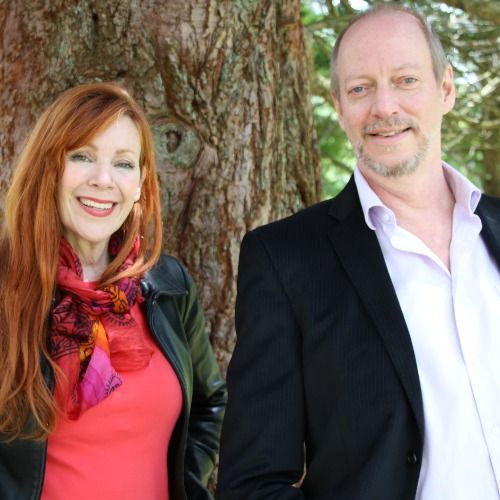
Co-Host Kevin Ribble:Today we're joined by a guy who's lived a few different lives.
Co-Host Kat Stewart:Broadcaster, storyteller, business mind, and now tech advisor, Eric Westra.
Co-Host Kevin Ribble:He has one of those backgrounds that makes for a great conversation. He spent time behind the mic in.
Co-Host Kat Stewart:Radio and today works with organizations, helping them navigate change, communication, and the growing world of AI.
Co-Host Kevin Ribble:And he's also just a genuinely nice guy, thoughtful, sharp, and someone who knows how to explain complicated things in a way real people can understand.
Co-Host Kat Stewart:We're talking AI careers, privacy, ethics, and what the future might look like for all of us. And that matters right now, because AI can feel exciting one minute and intimidating the next.
Co-Host Kevin Ribble:So today we're digging into the future of work, privacy, ethics, careers, and what all this rapid change means for us everyday people.
Co-Host Kat Stewart:And when Eric talks, you listen.
Co-Host Kevin Ribble:Here's Eric Westra.
Guest Eric Westra:You have to look at AI from really three lenses. The first would be the fiscal or financial piece. The second would be the functional or capability.
And then the third probably would be around the morality of it, because that's an important.
Co-Host Kat Stewart:That's a big one, isn't it?
Guest Eric Westra:Yeah.
So from the standpoint of the fiscal piece, ChatGPT, for example, is burning through a billion dollars a month, really a billion dollars a month to put together compute and storage and language models and train them. ChatGPT got to a point where they needed to really hyperscale.
So they went to Nvidia and they said, oh, we need all these chips, but we can't afford them. Nvidia said, no problem. We'll loan you the money to buy the chips from us.
Co-Host Kevin Ribble:We have all these chips to dump on the market.
Guest Eric Westra:So perfect marriage made in heaven. There are some concerns around what's going on fiscally on the investment side, and is it the right approach? So that's one piece.
Now, the second piece is the capability. I think to call it intelligence is really wrong. It's not intelligence.
Co-Host Kevin Ribble:What would you call it?
Guest Eric Westra:It's. It's really statistical analysis and probability theory.
So it's going to give an answer that it thinks is the likely answer, not because it thought it through based on Historical knowledge. I guess it's just a numbers game now.
There is a movement afoot now to move to what's called artificial general intelligence, which is a more human type of intelligence. But it's still not going to be there, and I can tell you why.
Co-Host Kevin Ribble:Okay, please.
Guest Eric Westra:Human intelligence involves being able to think creatively across multiple domains.
So the greatest inventions that we've come up with as a species, the greatest technology, have been for marrying things from one domain that may seem unrelated, but actually can play a role in another domain. I'll give you an example. Large language model can be trained to put together a very complex protein molecule.
And this is very important from a medical standpoint, pharmaceutical development. If you ask that same model to play a Sudoku puzzle and solve it, it'll fail miserably.
But then when you think about it, a molecule has a numerical equivalent of atomic weights that you can match. It has a spatial structure. Sudoku is numbers and spatial structures. Two dimensions, not three.
But, you know, so there may be some connectivity between solving a Sudoku puzzle and building a new protein molecule. So a human being can think in those terms because that's how ideas are generated in the mind. But artificial intelligence cannot do that.
Co-Host Kat Stewart:It just made me think of Einstein.
Guest Eric Westra:Right.
Co-Host Kat Stewart:Could there have been an Einstein AI? Like, how would Einstein and AI work together?
Guest Eric Westra:I think that's highly improb, you know?
Co-Host Kevin Ribble:Well, it's connections, isn't it? It's music and math.
Guest Eric Westra:Yeah, sure.
Co-Host Kevin Ribble:And the humans can make that leap and see the correlation and stuff. Yeah.
Co-Host Kat Stewart:That essence of creativity and intuition that AI will never, I don't think will.
Guest Eric Westra:Ever have that and the morality of it or emotion.
Co-Host Kevin Ribble:Right.
Guest Eric Westra:And as I said once before in another podcast, if you're not working on putting in place guardrails around artificial intelligence, you shouldn't be in the field. I mean, there's so much danger lurking with this stuff.
Co-Host Kat Stewart:Well, who's going to put in the guardrails, and what are those going to be? And who gets to choose?
Guest Eric Westra:Well, there is, I would say, a basic set of tenets that you have to instill in the intelligence in the algorithm. And even then, you may not be able to capture every situational nuance from a memorial standpoint.
And the story I like to use is the autonomous vehicle that's traveling down the road. This is a question that was put to a bunch of students, and I think it was McGill. They were talking about robotic ethics, roboethics.
And they were given a premise.
And the premise was this car, this autonomous car is Driving down the road, it's you with your wife and your two kids in the backseat, and the car is driving on a mountain road. It's very curvy and everything. And it's doing the speed limit, it's following the law.
And then all of a sudden, it comes around a corner, and for some strange reason, a small child darts out from behind a boulder in front of a tunnel entrance. And the car has to make a decision.
Co-Host Kevin Ribble:Whose life matters more?
Co-Host Kat Stewart:Oh, dear.
Guest Eric Westra:Right. Whose life matters more?
It can run over the child and probably save the lives of the people in the car, because otherwise, the car might go slamming into the face of the tunnel, or it can swerve and hope that the safety systems in the car are going to be able to save everyone in the car. It's one life versus four. So how do you make a rational judgment on that? Roboetics.
It's a very difficult thing to ask an algorithm to make moral decisions.
Co-Host Kat Stewart:Well, it's a difficult thing to ask people to make an ethical decision like that, too, because if I was driving the car, I'd still have a hard time. Yeah.
Guest Eric Westra:It was me behind. I'd grab the wheel, and I would swerve out of the way because I would know there are airbags in this car.
My kids are belted in, so I'm gonna take the chance. I'd rather not hit that small child. Now, when that question was put to this group of students, they were asked, well, what should the car do?
They said, well, the car should run over the child. The majority of them said that. And when asked, why, what's the child doing in the middle of nowhere in the mountains?
Co-Host Kevin Ribble:Make my kid pay the price. You were dumb enough to be on.
Guest Eric Westra:The road, kids, so that's just too wild of a scenario. So, yeah, those are the kinds of conundrums.
Co-Host Kat Stewart:And more and more of those are going to keep coming up, aren't they?
Co-Host Kevin Ribble:You know, what's interesting is I look at that case study, and I go, emotions. You know, I don't know that my brain works. And maybe I'm not nearly as smart as you two.
My brain doesn't work fast enough in that split second to go, oh, my wife and kids are with me.
Guest Eric Westra:Hmm.
Co-Host Kevin Ribble:I better protect their lives. I think my emotional response in a split second is, I don't want to kill the kid.
Guest Eric Westra:Yeah.
Co-Host Kevin Ribble:Like, I just don't go far enough down the road. So I swerve because emotionally, I don't want to kill the kid.
Guest Eric Westra:Yeah. So don't sell yourself short. Intellectually, that's probably the one call I would make too. And probably you too, Kat.
Co-Host Kat Stewart:Absolutely.
Guest Eric Westra:But you're asking the algorithm to make a decision, a life and death decision. And now agentic AI is doing things for people and they are completely out of the loop except for the instruction to do something.
So I don't know if you know this story, but there's the very first time this woman was trying to create a website, a wellness website down in the US to help people with grief. Okay. She was a counselor, a licensed counselor, but she felt that she could develop this tool online to help people and she created a company.
Co-Host Kat Stewart:Good intent, I'm sure.
Co-Host Kevin Ribble:Noble. Yeah, very, very good.
Guest Eric Westra:She didn't know how to build websites, she didn't know anything about technology. And so she decided to hire a bunch bunch of AI agents.
So she hired a web developer who was an AI agent, she hired a CFO who was an AI agent, she hired an operations manager who was an AI agent.
Co-Host Kat Stewart:Wow.
Guest Eric Westra:And she sold the company for $20 million. Wow. So they're okay then.
What we're waiting for now is the very first Silicon Valley unicorn that only has one company member, a human, one human company member, and the rest are all just AI agents.
Co-Host Kat Stewart:Is that really where we're going?
Co-Host Kevin Ribble:Yeah, it's a race to the first billion dollar one person job.
Co-Host Kat Stewart:I just got like a punch in my gut. That feeling of that makes me really uncomfortable and it makes me feel a little sick actually.
Guest Eric Westra:Yeah, it should.
If I was a person who was fresh out of bcit, let's say, and I was going out into the working world, I would be really concerned right now because all those lower level jobs that sort of are the door openers for getting into a career, they're going to go away. All this stuff that's going on in Ontario right now about the autoworkers.
Hyundai just scored a deal with Boston Dynamics, the biggest robotics research company in the world. And they developed together a robot called Atlas, which is a humanoid robot with a much greater range of motion.
Changes its own batteries when they die down. It has artificial intelligence built into it. So you show it what do and it'll do. Can lift 120 pounds.
It's going to be the robotic assembly line worker of the future.
Instead of the robots that are nailed down to the floor, these ones will be able to get into the car and do all that fiddly work like putting together the dashboard. And the stuff that humans do now, it'll be humanoids who do that work.
Co-Host Kat Stewart:Humanoid robots that Makes me think about education. Then where is education gonna go? If we have nowhere to place people who are being educated, what's for them, the younger generation? It'll collapse.
Guest Eric Westra:Yeah. Well, the argument is that there's the robot right there. Boston Dynamics Atlas.
Co-Host Kevin Ribble:Thanks. Our producer Dan is just pulling up.
Guest Eric Westra:On the screen, and this is the most advanced robot that Boston Dynamics has ever come up with, and it's married artificial intelligence. So, you know, it's pretty crazy what's happening now. Robotics and artificial intelligence together are coming together this year in a very fast way.
So care worker for an older person would be a robot.
Co-Host Kat Stewart:Oh, that doesn't sit well with me at all. Well, where's the comfort? Where's the kindness? Where's the human touch? Where's the warmth?
Co-Host Kevin Ribble:I'm wondering what. A couple things here, though. How much does that cost?
Co-Host Kat Stewart:Oh, my goodness.
Co-Host Kevin Ribble:Well, I mean, gonna be an enormous amount of money.
Guest Eric Westra:It starts off. I mean, it's economies of scale, right? So Hyundai, they went into a joint development agreement with the folks at Boston Dynamics.
So the first robot probably cost, what, 50 million? So now they'll start mass producing them.
Hyundai will manufacture them and then use them in their own plants, and Boston Dynamics will lead the charge on the research side. I would imagine the price will come down to several thousand dollars at some point.
Co-Host Kat Stewart:Just like, remember, TVs. Big TVs were thousands and thousands of dollars. What are they, a couple hundred now, right? Yeah. Oh, my goodness.
Guest Eric Westra:Yeah. And it's accelerating this pace, and it kind of harkens back to my radio days in one respect, and that is when musicscan came into being.
I used to remember when. I don't know if you ever worked in an AOR format like @cfox. Did you work on the air at Cfox?
Co-Host Kat Stewart:No, not @cfox.
Guest Eric Westra:@Cfny.cfny. So they used to have these different format systems, right? Sometimes it was.
It was called the Molecule, where you'd follow the dots around this board.
Co-Host Kat Stewart:I don't remember that one.
Guest Eric Westra:That was Doug Pringle's invention. And you would pick a different color album based on whatever dot you were sitting on in the molecule.
But at Seafox, what made it so interesting for me, I'm a frustrated musician, so for me, putting together the music sets was really, really critical. And we had a card system, so two boxes filled with different categories of cards.
Co-Host Kevin Ribble:A recipe card box.
Guest Eric Westra:That's right. A recipe card box. You remember, And. But you could dig a little in each of the categories, cheat the system a little.
Well, you weren't so much cheating. You were.
Co-Host Kevin Ribble:You're supposed to use the next card. Eric, what are you. You're told to use the next card.
Guest Eric Westra:Well, in the smaller categories, you were.
Co-Host Kat Stewart:Supposed to play by the rules.
Show Intro Announcer:Okay.
Guest Eric Westra:But no, you could dig a little and you know, I have a pretty good ear, so I was able to say, okay, what song is going to go with this one and keep people listening. How do I build an S curve of excitement and then back down again? Calmness. And then back up over a 25 or 30 minute cycle, over two quarter hours.
Co-Host Kevin Ribble:Like an artist building an album or a set live.
Co-Host Kat Stewart:So excited, like a dj.
Guest Eric Westra:But you had input into your main product, which, or an AR station is the music? I never really thought myself as the main product. I was just the guy in between the records, reading the weather, whatever. No, it was a lot of fun.
And then Musicscan came in and the computer started scheduling all the music and they could not do nearly as good a job as I could at putting together sets. So I looked at that and I went, well, if I can't beat you, I'm gonna join you.
Co-Host Kevin Ribble:There's the reason you made the switch. Okay. Yeah.
Guest Eric Westra:And it was the future too. You could see it coming.
Co-Host Kevin Ribble:Yeah, you could. So there's a lot of change coming.
Co-Host Kat Stewart:You're scaring me now.
Co-Host Kevin Ribble:I'm thinking this through from numerous sides. Okay, hear me out. I'm thinking about our friends to the south. I'm thinking about immigration.
I'm thinking about, well, just looking around Vancouver and any large city, what the privileged locals are willing to do for work. And I think a lot of, shall I dare say white privileged people see themselves above particular jobs, unwilling to take them. Right.
And the kind of jobs that I think are easily put into that robotic mode are repetitive action jobs that a lot of privileged people don't want to do. So interestingly, I'm thinking that through going, well, it's going to wipe out maybe a huge layer of the jobs that none of us want to do anyway.
Guest Eric Westra:That's the argument, right, is that if you really want to future proof your career, do something you can do with your hands, get a trade. The days of you getting out of high school with just a high school diploma and going to work on the assembly line at gm, they're gone.
It's not a job I would want to do anyway. So find something else.
Co-Host Kevin Ribble:And a lot of service industry jobs they're going to go. We see that happening in restaurants slowly right now, little robots running around. That's right, yep. So Those jobs go away.
Now, has this happened in history before? You know. Yes. Yes.
Guest Eric Westra:And the doomsayers were there at that time, you know, when electricity was first rolled out in major cities.
Co-Host Kat Stewart:All those candle makers went right out of business.
Guest Eric Westra:Well, and so. But people were saying, oh, it's the devil's work. It's going to cause all sorts of problems. And electricity, how would we live our lives without it?
Now, if the power goes out for 15 minutes, I'm at a loss. And then there was the Industrial Revolution, which. That would be another turning point in history where people said, this is not going to work out.
It needed to have some. It needed to have some refinement.
Co-Host Kevin Ribble:It may not work out in the long run as we destroy the environment, Eric. That's down the road.
Guest Eric Westra:It's not sustainable. We'll work on that.
Co-Host Kat Stewart:There's some positives in any movement and there's always going to be negatives. I mean, that's life. Right. It's the flip side of the coin.
Guest Eric Westra:That's right. But this is hard to get away from this particular impact, though. It's going to be quite scary, actually.
I think humans are going to have a tough time adapting. AI is natural in order to get people to use it. It's been built to be sycophantic. So when you talk to it. Oh, what a great question, Eric.
You're so smart.
Co-Host Kat Stewart:You're so smart.
Guest Eric Westra:You are so smart.
Co-Host Kat Stewart:It's so intelligent.
Guest Eric Westra:And, you know, let me tell you how I. Is there anything else I can fall for that? Right,.
Co-Host Kat Stewart:Darling, Sweetheart.
Co-Host Kevin Ribble:AI that's the perfect lover, isn't it?
Guest Eric Westra:It takes all the negatives out of the equation. Right?
Co-Host Kat Stewart:Yeah. We don't have to argue over who's going to cook dinner. I'm cooking it. What I get to eat for dinner, I get to choose it.
Guest Eric Westra:Y. You might miss a little bit of that human touch. But, you know, it's happening. People are.
And it's a bit scary, too, how quickly people are just diving into it. Cause it sounds so natural when you ask it something.
Co-Host Kat Stewart:Yeah.
Co-Host Kevin Ribble:And of course, the problem is it doesn't do emotion. And not only is not good at it, it doesn't do emotion. It's all. It's fake.
Co-Host Kat Stewart:Right.
Co-Host Kevin Ribble:It's artificial emotion from Gabor Matei and everybody else. That humans are social animals and. And when we isolate, we get sick. There's a direct connection.
Guest Eric Westra:Absolutely.
Co-Host Kevin Ribble:And so really, those people are isolating themselves from humans. Sickness is likely down the corner, you know, down the road. Right, right.
Co-Host Kat Stewart:And mental health Issues come up with that.
Co-Host Kevin Ribble:Okay, here's another big problem I have then is yes, it's a tool and yes, the tool can be used for advantages and it's double sided, all of that. But if I go back to your comment about Nvidia and where all this started, enormous amounts of money, enormous, poured.
Guest Eric Westra:Into this hyperscaling.
Co-Host Kevin Ribble:And the companies that put the money in need the money back.
Guest Eric Westra:Yes.
Co-Host Kevin Ribble:I mean, morals, schmorals, less capitalistic society, let's face it.
Guest Eric Westra:You mean the investors. Yeah, yeah, they need their money back.
Co-Host Kat Stewart:The stockholders.
Co-Host Kevin Ribble:Yes, we need us trillions of doll. I want.
Guest Eric Westra:The companies don't care, they just want to be first.
Co-Host Kevin Ribble:Yeah, exactly. And so guardrails are, I would kind of argue, impossible.
Guest Eric Westra:Well, the companies say they don't want regulation because it's going to hamper advancing the drilling.
Co-Host Kat Stewart:Of course. Right, of course.
Guest Eric Westra:I think they're wrong.
Co-Host Kat Stewart:I agree.
Guest Eric Westra:I think we need regulation now and I don't know, I mean the Europeans are way ahead of the US on this.
I think, I think as a country, Canada needs to adopt some of the same attitudes around it that Europe has because in the US it's a free for all right now. And the privacy implications are enormous.
Co-Host Kat Stewart:Well, that's what I wanted to ask you about. Putting personal information.
If people aren't aware of what that information is being used for and they're interacting with it and it feels comfortable and compelling, they might be putting in things there that are going to come back to bite them. How is that being used?
Guest Eric Westra:Yeah, and I mean the obvious stuff is you're adding your data, your personal data to the corpus, which is essentially the body of data that's being used to reference when it provides an answer. It says when I ask ChatGPT is my information, if I give you any personal information, is it kept personal? It'll say yes.
It may mean that in a certain context, but I don't completely believe it. And I'll tell you why. When I go on ChatGPT, I use the tool on a regular basis. And I bought a new hybrid. I wanted a hybrid car.
So I took the owner's manual, which was digitized, by the way. None of this would be possible if we hadn't gotten into digitizing everything in the human, the human race has ever made.
So I uploaded the PDF of the owner's manual and I said, this is the owner's manual. I need to ask you questions. I'm just going to ask you instead of trying to find it in the 700 page manual.
And you provide me with the full context, either using the manual or other sources of information. Okay. So then I was asking a question a few days later about something else entirely. I think it had to do with route planning and logistics.
And it brought up my car. It said, oh, you know, your new car will probably do. You know, this particular model will get so many.
I didn't ask a question about the car, but it had taken the prior question and folded it into its database. And so it was subtly. It's building a profile of who you are.
Co-Host Kevin Ribble:So let me be clear. There is no such thing as intellectual property.
Guest Eric Westra:Oh, well, that's a whole other thing. Yes. I mean, if you talk with Jim Conrad, my friend, and we have. I mean, I can make a Jim Conrad voice, or I can take.
Co-Host Kat Stewart:Are you doing it right now? No.
Guest Eric Westra:No. Or I can take Jim Conrad's voice and I can make a hybrid. I'll cross him with Will Lyon, and I've got myself a hybrid voice.
So now where's Jim in the picture? It's his voice, but he's out of the mix.
So there is a push right now by some companies, including Microsoft and Adobe, to their credit, on credentialization.
You know how we used to have carts, cartridges in broadcast, and they had tones on them you couldn't hear, the human ear couldn't hear, but it would control whether to stop the cart at the end of whatever was on it. Well, we can do the same thing now with audio that's being produced by AI. We can do the same thing with imagery, with watermarking.
So I believe that there should be some regulations around when an AI constructs something new out of prior intellectual property, it needs to identify that intellectual property as part of the package. But I don't know that we're ever gonna get there. Honestly, this is a big deal.
Co-Host Kat Stewart:I just got an audition request for a commercial.
Guest Eric Westra:Okay.
Co-Host Kat Stewart:And my agent asked me to look it over carefully because in the contract it says that it can use your image as AI in the commercial. They're going to redo the image somehow, and you get paid out for that. But my thought was, where. Where does that image go after that?
Is it just in that commercial?
Guest Eric Westra:And you're not gonna get any residuals out of that one, I can guarantee, if it does you.
Co-Host Kat Stewart:They used it further.
Co-Host Kevin Ribble:Probably they created it, so it's theirs.
Co-Host Kat Stewart:So. Yeah, but. But it's coming in all aspects of creativity and other jobs that we might not have thought of, you know.
Guest Eric Westra:That's right.
Co-Host Kat Stewart:So, Yeah. I worry both Kevin And I have children. Do you? Kids? I can't remember. Yes.
So, you know, we worry about what's going to be there for the next generation and the next generation. And we're also seeing the implications right now in our labs and our classwork that we do in seminars.
And students are worried about what's coming and the anxiety that the uncertainty creates is becoming a health issue.
Guest Eric Westra:Yes, I would agree.
And when you compound that with certain political situations that are going on, the instability, the breakdown of the world order, it's, you know, all those things I'm sure are factoring into it as well.
Co-Host Kevin Ribble:Something else that frustrates the crap out of me is something we see in the States. It's something we see all over the place right now. And that is no belief or faith in policy. Right. Because, I mean, that's another part of my world.
But I'm a policy expert. I go, you know, policy is here for a reason. Our view on policy and government, et cetera, has shifted over many years.
When we've gone through Thatcherism to Reaganism to Trumpism, to where we are now. There was a time we believed in middle class, we put up breaks, we had a purpose for government. We used policy to guide the world we imagined.
Guest Eric Westra:That's right.
Co-Host Kevin Ribble:It's our power, it's our control.
Guest Eric Westra:That's right.
Co-Host Kevin Ribble:We seem to be in a place now where we don't believe policy has any place in our world.
Guest Eric Westra:Well, I think the problem there is that it's a larger issue and that is what is truth now? Truth is what people believe. It's not necessarily factual. What's the old line?
Don't tell me with news, don't tell me the facts, just tell me what I want to hear. This is how Rupert Murdoch built his empire. Yeah. It's really about truth and the rule of law.
I think the whole political situation now there's a generation of people who did not live through any of the second or the First World War.
They don't have a context for where Fascism, right wing rhetoric, racism, all those things that tie these political movements together, how they get started and why they get started.
When you have an electorate that isn't really used to critically thinking like that or having that experience under their belt, then those experiences get lost. And as Santayana said, those who do not remember the past are doomed to repeat it.
I find it hard to believe that there will not be, and I'm sorry to say this, there will not be a major conflict at some point in the future. We humans are just really good at being stupid and getting at each other's throats. So a lot of it has to do with unfamiliarity.
And if you just travel and get to know people and get to know the world, for sure.
Co-Host Kevin Ribble:But I do put another twist into that, and that is an emotional twist and a tool twist in that, that sometimes we pick up those tools to critically think because of things that have happened in our life, kind of like you described. And without that push, we don't develop that skill.
At the same time, the shift in policy has meant if we look at our neighbors to the south, there are a lot of people who are genuinely struggling. Struggling. Yes, I know the jobs have been exported now for how many decades. Those people then are not necessarily tooled up to analyze what occurred.
Their job's been taken away, they're struggling emotionally. They're aware their future is fairly hopeless. What are those people going to do?
Co-Host Kat Stewart:And they need to have blame.
Co-Host Kevin Ribble:Yes, they're going to be angry. They're going to want to blame somebody. I don't entirely blame them for being put in that position.
Guest Eric Westra:I think first of all, if you're a growing economy and you've got a stable environment for companies to grow and for product to be developed, then what happens is eventually you evolve to be more of a knowledge based rather than a manufacturing based economy. You then get into services and technology and your workers are more highly skilled than someone who's putting together a car and a production line.
Now that was all very good to build up a middle class. And when you have a strong middle class, it's really important to a democracy you must have a strong middle class.
But what's happened in the States is income disparity on a grand scale and it's going to get even worse. Now I think Andrew Yang was a presidential candidate. He brought up the idea of a universal basic income.
Instead of all this money floating up to the top, give people a basic income. And if they want to aspire to earn more, that's great. But you can't have such a disparity between the 1% and everybody else.
The country will implode at some point.
Co-Host Kevin Ribble:Are you now a socialist, Eric? No, I don't.
Guest Eric Westra:Is that what I'm hearing? No, I'm not at all.
I'm not a communist and by the way, a lot of people seem to confuse socialism with communism and I think it has to do with the ussr. But I do believe in the social safety net. I do believe in capitalism. I just don't believe in unfettered Capitalism unleashed capitalism.
I believe innovation will always happen because humans want to build things. But to allow this disparity to go on and to grow in Canada or the U.S. or anywhere, you're asking for a social impact that is very negative,.
Co-Host Kat Stewart:Humanitarian.
Co-Host Kevin Ribble:Where is the intervention point, though? Because I have a little different view of capitalism and that is you must maximize profits.
And if I'm on a board of directors and you're not maximizing the profits, I get rid of you. And so if you're going to worry and invest money in this social environment.
Guest Eric Westra:You're talking about, but we're investing money in places right now where we could be re diverting it to that cause we're wasting a lot of money on stuff that, to be honest, I don't get. This whole defense spending thing.
Now, if the US could take part of that trillion dollar budget, it has, even a small portion of it, and move towards a universal basic income.
Co-Host Kevin Ribble:But if I withdraw some money from that fund, that hurts my chance at imperialism. Because really the war machine is about that, not about war.
Guest Eric Westra:Well, I think that depends on who's sitting in the White House or in the Kremlin. But it's an industrial machine. Eisenhower warned against it, it's become prolific, it's gotten out of hand.
That kind of money could do so much better in the hands of the people rather than in the hands of the defense companies.
Co-Host Kevin Ribble:And I go back and ask you again, where do you suppose the intervention point is? Where do we turn that ship around? Where do we start?
Guest Eric Westra:Well, unfortunately, speaking as a fellow human being. Yeah. It's going to be. It's going to take a crisis. It always takes a crisis. What was it Churchill said about America?
America will always do the right thing, but only after it's exhausted every other option. It's a great quote.
Co-Host Kat Stewart:Oh, my goodness.
Guest Eric Westra:And it's true. It's a messy, messy. I think for me, the hardest thing right now watching.
I have so many friends in the US And I really admire a lot of what that country has accomplished. I think anybody looking in from the outside would have to say, wow, you've done pretty amazing things.
Sending men to the moon, building up this economy, the advancements in medicine and research and blah. It just goes on and on. Great. Now you have an opportunity to.
Co-Host Kat Stewart:Allow.
Guest Eric Westra:Populism to tear down everything that you've built up since the end of the Second World War. And you're letting it happen and your institutions are failing you.
So the fact that you've got a guy like Mr. Trump sitting in The White House right now. It points to a systemic problem. Right. The issue isn't Trump. The issue isn't right wing populism.
The issue is the system is not putting the right guardrails around the governance. And so that points to a larger problem.
Co-Host Kevin Ribble:Kat, you mentioned that these are all good people. You know, at some point they're good people. There a lot of privilege there.
There's a lot of people exposed to only a certain way of seeing the world and not really given one sweet fuck about anybody else.
Guest Eric Westra:The sense of entitlement.
Co-Host Kevin Ribble:Privilege leads to entitlement, which leads to a twisted view of how to run things.
Co-Host Kat Stewart:But how do you get out of that? Like, you and I are privileged. You know, we have a sense of. But we've gone beyond entitlement. We have a sense of empathy. So how is it that I don't.
Co-Host Kevin Ribble:Know that I'm that privileged.
Co-Host Kat Stewart:From some people's viewpoint? You would be. You would be. I would be.
Co-Host Kevin Ribble:How do we reinforce empathy? Yeah.
Guest Eric Westra:Well, this Tumblr Ridge story is great. That's the kind of reaction that you see from our Prime Minister, our people, our population.
I listened to the radio yesterday morning and it was heart wrenching. But at the same time, it's what we kind of do as Canadians. And I'm not saying that Americans don't have a heart.
I'm just saying that it's very much a Canadian thing. The reaction that happened yesterday,.
Co-Host Kevin Ribble:For listeners around the world, this is that school shooting in remote part of northern B.C. Where at this point, 10 died, I think, and 25 injured. Right.
Guest Eric Westra:And there was every opportunity, and still is, to politicize, turn it into a culture war issue because of the nature of the shooter, who obviously was dealing with some serious mental problems. But nobody who is caring is bringing any of that up because it doesn't matter to the people who've lost their children.
It matters to politicians who want to pit one side against another. If it had happened in the States, I think you would have seen a much different reaction. And that's not because Americans are all jerks.
It's just that the way that it's a different politics down there.
Co-Host Kevin Ribble:Yeah, well, it's probably systemic. At the same time, there is something culturally going on. There's a cultural difference between, I would argue, Canadians and Americans.
It'd be interesting to dive deeper into that at some point.
Co-Host Kat Stewart:But that's part two.
Co-Host Kevin Ribble:There's a difference there.
Guest Eric Westra:Like I said, I have some American friends who are just beside themselves with what's happening right now. I Have one friend. He's a former deputy attorney general for the state of California. He is just.
I can't even find the words to describe how deep in depression he is about the things that are happening in his country. As a lawyer, he has done what he can to motivate people to think differently, to observe the rule of law, that what's going on now is not right.
But there's still one or two people out there in his circle of friends who, in fact, one of his own relatives who doesn't agree with the thing he says, so, you know, the louder.
Co-Host Kat Stewart:Negative voices, somehow the whole system is.
Co-Host Kevin Ribble:Tilted to recognize a particular perspective, perhaps.
Guest Eric Westra:Yeah.
Co-Host Kevin Ribble:And you've got to until the system, you know, before we send everybody to bed going, well, the world.
Guest Eric Westra:That was uplifting. No, no, listen, I'm gonna cry right now.
Co-Host Kevin Ribble:Yeah. So let me just go back and go.
Guest Eric Westra:Yeah.
Co-Host Kevin Ribble:What do you and I. Average people in this world or average Canadians? How do we do something about this? What control do we have?
Guest Eric Westra:Do something about what?
Co-Host Kevin Ribble:The tilted world that we just mentioned, the way things are unfolding right now.
Guest Eric Westra:I think, first of all, we have to take in wholeheartedly with the notion of a sense of community. I believe that this idea of looking out for each other is something that the politicians have to keep hammering away on.
I think that we as a species have to completely educate ourselves and keep educating ourselves around the things that may change our lives in very impactful ways and understand them.
Not just observe them, understand them, and do what we can to raise more awareness with our circle of friends, with the people down the street, with anybody who will listen.
Co-Host Kat Stewart:You're talking about being active and having a voice and standing up for what you believe.
Guest Eric Westra:Igniting my voice. So.
Co-Host Kevin Ribble:Taking this interesting discussion away with you today, what are you going to do?
Guest Eric Westra:So I remain, first of all, as much as I understand that a lot of what we're talking about seems very dark. I understand, though, that I am an eternal optimist. Okay. And I think the world can be a very bad place if we allow it to be.
But on the other hand, if we appeal to our better nature and each other's better natures, we can make artificial intelligence work for us rather than the other way around. I believe that the political system can be adapted to get rid of some of the systemic problems that we're seeing.
In certain places, like the United States, people are always going to have different viewpoints, but you have to respect each other's. And when you have an adversarial system, sometimes people the right wing always seems to be angry, always angry about things.
And anger is a poisonous thing. So I would argue that stop being angry. And if you're really upset that much, then make your feelings known.
But appreciate that other people are going to have a different viewpoint or they're going to have a different approach to.
Co-Host Kat Stewart:Solving the problem and you can solve it together sometime.
Guest Eric Westra:That's right.
Co-Host Kat Stewart:The two opposing actually make a better decision together. What I see in you is a kind, thoughtful soul who does contribute to the world. And I'm so grateful that you decided to share that with us.
Because as you said, it feels dark, but I see light from you.
Guest Eric Westra:I really thank you for that. I also see the same attributes in you, Kat, because look at what you ended up doing. You and Kevin both.
You're trying to help guide young minds into a new career. And I think the teachers of the world are going to be the ones who will make a big difference.
If they have the same kind of qualities that you two have, then I think we're in good stead.
Co-Host Kevin Ribble:Smart guy, thoughtful guy, and the kind of guest who leaves you thinking long after the microphones are off, huh?
Co-Host Kat Stewart:Because this was just about technology. It's about people choices and how we stay grounded while the world changes around us.
Co-Host Kevin Ribble:Eric reminded us that progress matters, but so do values and community and looking out for each other.
Co-Host Kat Stewart:If this conversation resonated, give us a like and share it with a friend.
Co-Host Kevin Ribble:Hey, join our growing community too. Or work with one of our amazing talent developmenters to support your journey and finding your voice.
Co-Host Kat Stewart:Ignitemyvoice. Com. Thanks for listening.
Show Intro Announcer:Ignite my voice. Becoming unstoppable. Your voice is your superpower. Use it.