Empathy on Stage: Crafting Authentic Connections Through Your Voice
The conversation takes a fascinating turn as we probe into the delicate balance between personal expression and audience reception in the realm of theater. Johnna Wright shares her thoughts on the director's role as a conduit of the playwright's vision while also being the lens through which actors interpret their characters. The discussion dances between the lines of creativity and vulnerability, exploring how directors navigate their instincts and the expectations of the audience. It raises the question: is it the director's vision or the actor's interpretation that ultimately shapes the narrative? We also tackle the challenges of criticism in the arts, revealing how feedback can either bolster or shatter an artist's confidence.
Takeaways:
- Creating a welcoming environment goes beyond mere smiles; it's about genuine connection and understanding.
- Storytelling is not just about the narrative, it's about how the story is perceived by the audience.
- Trusting your instincts and vulnerability in storytelling can lead to more authentic performances and deeper connections.
- Every performance is a collaboration that reflects multiple perspectives, making it a unique experience for everyone involved.
- The impact of criticism can linger long after the performance; learning to detach from it is crucial for personal growth.
Companies mentioned in this episode:
- Ignite Voice, Inc.
- Vancouver Little Theater
- Bard on the Beach
Transcript
Your voice is your superpower.
Show Intro Announcer:Use it.
Show Intro Announcer:Welcome to Ignite My Voice Becoming unstoppable. Powered by Ignite Voice, Inc. The podcast where voice meets purpose and stories ignite change.
Deep conversations with amazing guests, storytellers, speakers, and change makers.
Guest Johnna Wright:Well, what are we doing to make people feel comfortable and make people feel welcome?
Because, again, are we just assuming that if we smile at them when we meet them, they're now comfortable and we said, you are welcome here, so now they feel welcome.
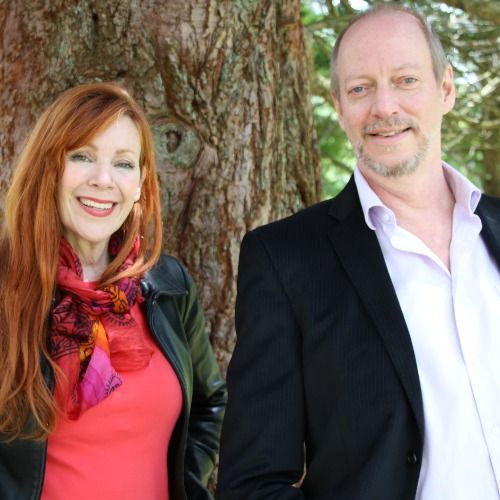
Co-Host Kat Stewart:Hi, I'm Kat. Today we're hopping into storytelling, theater, and what it really means to trust your voice.
Co-Host Kevin Ribble:Mm. And not just on stage. Hi, I'm Kev. This is about how we all show up, how we express and how we're interpreted.
Co-Host Kat Stewart:We're joined by theater artist Johnna Wright, and she brings such a grounded, honest perspective on the creative process.
Co-Host Kevin Ribble:We get into instinct, vulnerability, and that moment where you stop second guessing and just trust what you see.
Co-Host Kat Stewart:And also how every story changes depending on who's telling it and who's receiving it.
Co-Host Kevin Ribble:Yeah, that part's powerful.
Co-Host Kat Stewart:Let's get into it. Here's Jona.
Co-Host Kevin Ribble:Sometimes we don't think of our storytelling as a typical career.
Guest Johnna Wright:No, I think you're right. My mother was a writer, and she used to say, writing is not what you do, is what you are.
So even if you go and do some other profession for whatever reason, if you're a writer, you're still a writer because that's just, like, inside you. But I think, like, I mean, I've done some writing, but I don't really think of myself as a writer, but I think of myself as a storyteller.
So when I'm directing a play, that's what my job is, to tell that story. And so sometimes, sometimes I have told it by writing it, but more often by directing it. But in a way, it's the same job, right?
Connecting to people and thinking about, you know, what it's like to be a person. Great writer.
Co-Host Kevin Ribble:You're still bringing to life the story, right?
Guest Johnna Wright:Yeah, exactly.
Co-Host Kevin Ribble:Just from a slightly different perspective. That's interesting.
Co-Host Kat Stewart:Having worked with you, I was just so impressed by how you were able to really connect with us as actors and to help us find the deeper meaning within the character. And you did that so gently, and I. I wondered, like, how. How do you help actors do that?
Guest Johnna Wright:What was it?
Co-Host Kat Stewart:What do you see? What's underneath?
Guest Johnna Wright:Sometimes I see it in what the actor is already doing. I think that they are feeling that deeper thing, but they aren't recognizing it yet or they're not digging for it yet. So it's like just.
It's about just sort of pulling back the curtain and going, look, look, there's more. That's. It depends on the person. Right. And then other times it's that, I mean, especially.
And I was this way too, like as a younger actor when I started out that I'd be like, oh, this is a scene where my friend and I are chatting. And then the director would go like, why would, why would people sit in the audience for 20 minutes and watch two people chat?
There's always some reason why we need to hear this. So sometimes it's just about kind of like pushing people to think about that. And yeah, I think those are the main things.
I mean, I have my, certainly my areas where I'm confident and less confident. But one thing I think I do. I know exactly.
But one thing I think I do usually know how to do is figure out what's important in the play that needs to come through or a thing that's important. So then I'm always looking for where is that being reflected on the stage and if it's not, then we're missing something or I chose the wrong thing.
Co-Host Kevin Ribble:Are you choosing it from your view of what the main impact of the story is or the audience's view? I'm just kind of curious where that's coming from.
Guest Johnna Wright:Yeah, it's a good question. I think it took me a while to accept the fact that really as artists is really just us. Like we can't.
I don't think I can be successful by trying to guess what the audience will or won't care about. I just have to trust that if I think it's important, then other people will also think that.
Not everybody maybe, but you know, because I'm a person like everyone else. So you have to, I think you have to trust your own instincts and what you see in the story.
Co-Host Kevin Ribble:Yeah. You know what just struck me?
Co-Host Kat Stewart:Trust.
Co-Host Kevin Ribble:Because I heard on the weekend Shonda Rhimes say something very similar and I thought it's so different than the marketing world. Like marketing says, don't put yourself in at all. You just think of that particular 18 to 35 year old female or whatever and you, you hit them.
But, but really what we're talking artistically is so different than that, isn't it?
Guest Johnna Wright:Yeah, because I think, and I mean, I haven't really, I haven't done very much marketing, so I don't really know how that process works. But I think that if you're an Artist then it's your view of the world that you're offering to people.
You can't offer to people what you think their view of the world might be. That's for them to offer. So I remember actually the first time I directed a play and Sarah was in it. Sarah Rogers.
Co-Host Kat Stewart:Nice.
Guest Johnna Wright:And this is like 30 years ago. Oh my God, it is. It's 30 years.
Co-Host Kat Stewart:Stop.
Guest Johnna Wright:Anyway, so we did this play and it was a 59 seat theater that I don't think is there anymore. It was underneath Heritage hall at 16th and Main. There was this little. The Vancouver Little Theater.
Co-Host Kevin Ribble:I remember that vaguely.
Guest Johnna Wright:And I took the money I'd saved to go to grad school, which was $5,000.
Co-Host Kat Stewart:That's a lot of money.
Guest Johnna Wright:Yeah. Because they said you should direct a play because I'd never directed a play. And so they were like, if you're going to come and do a mat.
So I took my $5,000 and I used it to do this play and I thought, well, it's a co op and maybe I'll make the money back. So anyway, opening night comes and I'm like, I was so nervous because.
And this isn't always how I have felt but on this occasion I felt like, I love this so much. I love this play, I love this world, that and the view of life that we're showing people. So if people don't respond to this, I don't know what to do.
I don't know if I can. Then I can't be a director because this is really what had to say. So it was very nerve wracking. But it did people. I mean it was a tiny.
It wasn't super hard to sell out a house with 59ft in it, but it did, it was very well received and I made my $5,000 back and they each made $38. I want.
Co-Host Kat Stewart:But that trust in your intuition takes courage. But that's highly vulnerable, isn't it? Because you're in that situation and you don't know.
Guest Johnna Wright:Yeah.
Co-Host Kat Stewart:And that's a big risk.
Guest Johnna Wright:Yeah. Because every once in a while it just doesn't come off. Like, you know, that can happen. Of course. And then. Yeah.
I mean, I know as an actor when you're up on stage and you know, it's not. That's a horrible feeling.
So I do think directors have it a little bit easier because we don't have to get up and do it again the next night having kind of discovered that it's not really working. But yeah, it is. You're Right. Because you're saying, you know, here's a world, Here's a worldview, here's a story that I think is important.
And if people don't respond to it, then they're not responding to something that, you know is important to you.
Co-Host Kat Stewart:Oh, yeah, it's interesting. Is it the director's vision or the actor's vision? Because sometimes, you know, people don't look at. They just see what they see, which is the actors.
And they don't necessarily see the work that the directors put in to craft that vision, which.
Guest Johnna Wright:Yeah, well, yes, that's true, but also, it's. What winds up on the stage is not just what I pictured. Right. It's always going to be through the.
So there's the play, I guess, through the lens of my interpretation.
And then that goes through the lens of what the actor sees and whatever qualities they have, naturally, and whatever the skills they have to bring to it and the ideas that they bring. And sometimes the result is quite different than what I thought, but it's like getting to the same room but through a different door.
Co-Host Kevin Ribble:I'm sure the playwright would say the same thing, right?
Guest Johnna Wright:Well, they should, because they can go in a direction. I think that Kat's heard me say this.
I think that if you want to write something that your audience will receive exactly the way you pictured it, then you should write a book, because a play necessarily will be interpreted by multiple people. Even on one production, you've got your cast, your designers, your directors. Sometimes there's a dramaturg.
All of that is going to change what you wrote. Even if they don't change a word that's on the page, it's going to be different.
So if you don't like that idea, then theater isn't the right medium for you. Right. So the actor sees one thing and you see another, and you try to kind of join those two things together.
I also think, I will say about critics that in an ideal world, they are a really important part of the ecology of theater. And I have absolutely had reviews of my work that I read and went, oh, that's why that didn't work.
Like, this critic has actually articulated what I've been trying to figure out for the whole rehearsal period. Why wasn't this bit working? I get it, and that's great. It should be that way. But of course, it isn't always.
Co-Host Kevin Ribble:Well, I'm curious. Did you take that? Well, it seems like you took it as constructive criticism in a really good way, but it also could really hurt.
Guest Johnna Wright:Well, yeah, so I've read bad reviews of my work that I was like, they're right. I suck. Like, really, I. I didn't think I was good. They didn't think I was good. And I couldn't argue. They weren't being mean.
They were just stating the fact that I wasn't very good in the role. And that was definitely. There was no escape. And so that wasn't a good feeling.
But then I've had other times when, like, they were just kind of being mean because it's more interesting.
Co-Host Kat Stewart:You can feel the difference.
Guest Johnna Wright:Yeah. And. And also times when I really felt like they had missed the point or whatever.
But it's easier as the director for me to take that in, I guess, because I'm already more analytical. Like, I'm thinking about the play and what does and doesn't work in it already.
So I'm not up there spilling my guts on the stage and then being told my voice was whiny or whatever. You know, I've been told that I probably have to. That's much harder.
It's harder to learn from a review as the actor, because what you're doing is less intellectual. Right. Is more instinctive, and you have to be vulnerable. And so after someone says, that was bad, it's hard to get up and be vulnerable again.
Co-Host Kevin Ribble:Oh, you're fully exposed. Right.
Guest Johnna Wright:I mean, I don't read the reviews till at least a week after opening. And certainly if I'm in the show, I probably don't read them till after closing.
Co-Host Kevin Ribble:See, Cat, that's what you showed.
Co-Host Kat Stewart:Yeah, Well, I read one of our reviews in the. Midway through, and I forget, oh, it talked about my hair, and it talked about the clothing or something. I can't remember now.
I've already put it out of my mind. But I was kind of distraught because
Guest Johnna Wright:they didn't like your hair and clothing.
Co-Host Kat Stewart:They didn't like me.
Guest Johnna Wright:Right.
Co-Host Kat Stewart:Yeah.
Co-Host Kevin Ribble:That's how it feels by appearance.
Co-Host Kat Stewart:Right, Exactly. But, you know, I do recognize there is learning when somebody else has a counter opinion, but. But it's all in how you hear it.
And sometimes it's all how it's phrased, too.
Guest Johnna Wright:Yes. And also, I mean, over time, I find some critics often have something to say that I find enlightening and some do not.
So, you know, like, really, there are some critics that I don't really care what they say because I've read enough of their reviews, and I don't feel like there's no connection there.
Co-Host Kat Stewart:Right.
Guest Johnna Wright:I want to tell you something, though, Kat. So My sister, years ago, was in. Well, in the first year of Bart on the Beach. She was in that show, Midsummer Night's Dream. And. Great show.
That production or that play?
Co-Host Kat Stewart:Oh, just that play.
Guest Johnna Wright:Okay. Wow.
Co-Host Kat Stewart:I didn't see the show. Sorry.
Guest Johnna Wright:Well, in our minds, it was the most brilliant dream that was ever done. Who knows?
But I think, anyway, there was this one review that said she was playing Puck, and the reviews said that her choice of hairstyle made her look like Marie Osmond.
Co-Host Kat Stewart:Well, first, that's relevant. Okay.
Guest Johnna Wright:Choice of hairstyle. She's an actor. In the play, she wore the wig they gave her. So that was weird that they. But anyway, it wasn't.
You know, that was hurtful because that was the only comment about her as Puck.
So years later, she was working publicity for some show, and she had to call that guy and, you know, like, this is like 10, 15 years later, so it's not like a big deal. But she called him and said, blah, blah, blah, you know, can you come and review the show? And he said, are you the Katie Wright that was.
And she was like, yeah. And he said, you were so great in that. I loved what you did.
Co-Host Kat Stewart:Come on.
Guest Johnna Wright:Right. That's how he remembered it.
Co-Host Kat Stewart:Wow.
Guest Johnna Wright:I said, did you tell him, like, go look it up in your files?
Co-Host Kevin Ribble:You know, the damage you did.
Guest Johnna Wright:But I think that's something to also kind of keep in mind is they. They go. They watch the thing, they write the review, they send it in.
Co-Host Kat Stewart:Yeah.
Guest Johnna Wright:They don't go back over it and
Co-Host Kat Stewart:think, you know, am I hurting someone?
Guest Johnna Wright:Or have I been given an accurate description of all the feelings I had about this show? They just kind of go, bleh.
Co-Host Kat Stewart:When I was 18, I was in a master's theater production. It was my very first major play, and I got the lead role. And it was, you know, one of the long dresses and corsets and all that stuff.
And I couldn't breathe, and my voice, my pitch went up, and I couldn't work with it. I didn't have the tenacity. I didn't have the background that I have now. And one of the reviewers just roasted me. I'm now not 18.
I'm a lot older than 18. I still remember that. And that affected me personally.
I've learned to deal with criticism now, but as an actor, even as a person, criticism is really hard to take. You have to detach yourself from. From that. Because that criticism isn't me. It's a part of me. But, well, it affected me.
Guest Johnna Wright:One person opinion, one person's opinion, one person's really passing comment, but happened to be a person that wrote an article.
Co-Host Kevin Ribble:Something else that we do a lot is trained public speaking.
Co-Host Kat Stewart:Ironic.
Co-Host Kevin Ribble:Now for me, it always strikes me as fascinating, the trauma that just what everybody carries, you know, because they've taken something so personally that was just a off the cuff remark or something when they were public speaking in their youth or whatever. And it sticks with them for life, right?
Guest Johnna Wright:Oh yeah. Actually, when was it? Last summer. Okay. It would be two summers ago. Anyway.
Oh, I was casting the show for Bard on the beach and there's a, you know, a bunch of people in the room and they all give opinions and one of the people in the room said she always. I would get the actor to do whatever I wanted to see and then she would always ask them to do something vocally.
And she said to me, the thing is, I feel like it's really hard on young women when they get on the stage there. Cause it's a big stage and you have to fill it. And you know, if your voice sounds tight or high up, you get nailed for that. And it's not their fault.
They're young, they're still learning. They don't necessarily have tools yet. And they have a big deal. Eight shows a week. Eight.
And so she said, I just don't wanna see them be undermined because of this. So she always kind of was like, let's not put them on that stage until they can fill it. They're ready and have that.
Co-Host Kevin Ribble:Yeah. That way the trauma doesn't stick to them for forever for like it has for me, you know.
Guest Johnna Wright:But the voice is very personal, right? Yeah.
Co-Host Kevin Ribble:Oh yeah.
Guest Johnna Wright:I was told like by a voice teacher that I sounded like Minnie Mouse. And I'll like never. I'll never forget that.
Co-Host Kevin Ribble:Well, systemic issues, right. That we deal with a lot, that a lot of people don't see. The house of cards that's constructed, gender based or whatever that is under the surface.
I was interested. I read that you had said something about rethinking past assumptions. Is that related to bias to systems
Guest Johnna Wright: all went through it in around:One thing for me though was it's also a personality thing for me that I have always noticed about myself.
And I'm not sure, like I'm still trying to fix it, but it's like that thing of thinking that whatever I see is all there is to see or whatever I know is what there is to so thinking, like, I knew some things about the systemic issues that indigenous people deal with, but that doesn't mean I actually understand that world at all. So just not meaning that I should go out and learn it all, because I can never know that it would take a lifetime.
Co-Host Kat Stewart:Exactly.
Guest Johnna Wright:But it's more just like, okay, so let's just be less eager to say what I know and more eager to hear what other people know and have experienced, which just seems like, you know, kind of obvious. But it was a. It was a big shift for me just in kind of confronting that in myself.
Co-Host Kevin Ribble:Oh, yeah. Well, it's hard to work with in some ways. We just had international music star on our podcast, Ezra.
Co-Host Kat Stewart:Yeah.
Co-Host Kevin Ribble:Quizzera.
Co-Host Kat Stewart:Super cool guy.
Co-Host Kevin Ribble:He's from Rwanda. And of course, Rwanda's been through so many crises and stuff, and. And he's from a different culture who.
You know, we can think that we view genocide a particular way, but it's very different when you live through it. And so, you know, how do different cultures and people get together? When you're right, I can't live the experience.
So I don't know what you went through, but that's the same with you, to me. But if we're going to work together, somehow we've got to figure out a middle ground. Right. We got to work with that.
Even though it's, like you said, almost impossible.
Guest Johnna Wright:Yeah. I think that just for me, it was like, I had this idea that if I was just nice to people, then I was okay. Right.
But then I kind of came to realize that my idea of being nice to people is based in my life experience and my cultural assumptions. So what I wasn't doing, one of the many things I wasn't doing was thinking, well, what would be a.
What would be a thing that would make this person comfortable? Not just what do I always do to make people comfortable, but what.
You know, because one of the questions was in terms of, like, having a diverse group in your rehearsal hall or in your show. It's the idea of, like, well, what are we doing to make people feel comfortable and make people feel welcome?
Because again, are we just assuming that if we smile at them when we meet them, they're now comfortable?
Co-Host Kat Stewart:Yeah.
Guest Johnna Wright:And we said, you are welcome here. So now they feel welcome. Yeah, I don't.
Anyway, so it's like step one of just kind of realizing that maybe what you've been thinking is enough is not enough.
Co-Host Kevin Ribble:So how do you work with that? Do you try to see through the eyes a little bit of the different people that are in your room, or how do you approach that?
Guest Johnna Wright:Well, I think it's a bit of an imperfect solution. The one that I've been working with.
Well, because what I do is to tell people that I probably will not always be successful in making everyone feel comfortable and that I want to be told if I'm doing something. If the way I'm running the room somehow is not really working for you, I want to know that.
If I'm saying something that's kind of a bit off, then I want to know that. And I won't say sorry. I'll say thank you for telling me, because I don't consider it negative, and I really do feel that way.
The reason it's an imperfect solution is that I can say that to people, but I don't know if that makes everyone feel that that will turn out to be true.
Co-Host Kat Stewart:But you're trying.
Guest Johnna Wright:I'm trying.
Co-Host Kat Stewart:And you're being open about it.
Guest Johnna Wright:I am saying that I'm open about it.
Co-Host Kat Stewart:And good communication,
Guest Johnna Wright:it's the best I've come up with so far. But I'm sure that in a room full of people, there's going to be some people that have some skepticism to being told, hey, let me know.
I'm open, you know, because that's just words that I've said.
So then I think, hopefully, as the rehearsal process, or whatever the process is, goes on, trust will be built because of the way that we react to things. But it's like, you have to prove it, I think.
Co-Host Kevin Ribble:Oh, trust is built.
Guest Johnna Wright:Yeah, right.
Co-Host Kat Stewart:And everybody participates that in that. You're not the only one in the room. Everyone has to.
Guest Johnna Wright:No, it's true, but I can only be responsible for me. I can only be in charge of my own reactions. And I do think it's.
The problem too, is that there's a bigger system that we're working within, which I think is. Well, it has changed for sure, in the last five or six years, but it isn't necessarily finished, that process.
And so there's certainly like, there's built in things that happened along the way to getting into this room together, which I cannot change because they've already happened. Right.
Co-Host Kevin Ribble:And what. Just thinking, what about your own personality? What do you give up? I mean.
I mean, what if enough people in the room find the way you approach anything objectionable? Then what about you? You're going, well, this is me. Do I just drop everything? That is me?
Guest Johnna Wright:Well, sort of, kinda. I mean, that particular thing hasn't come up, but like Not. Not in globally, like, as you described it. But it's like. I mean, I'm the director.
If I'm the director, it is my job to create an environment where everyone can do their best work. So if everyone feels I'm not creating that environment, then I have to change it, because that is my job. But it would be difficult, actually.
And really way more likely is that the way I'm running things suits 60, maybe 70% of the people, which is great. But then 30% not, because sometimes people's needs are opposite.
Co-Host Kevin Ribble:Oh, yeah. It's hard to. Yeah, it's hard to judge. I'm even thinking of writing humor, you know, it's so tricky. Are you going to put somebody off with the humor?
Yeah, probably.
Co-Host Kat Stewart:But you're right.
Co-Host Kevin Ribble:There's no way to do it without.
Co-Host Kat Stewart:You can only control what you can control. And being true to yourself without hurting or meaning to hurt anybody, that's all you can really do.
Co-Host Kevin Ribble:Well, I guess it's a negotiation, isn't it?
Guest Johnna Wright:Yeah.
Co-Host Kat Stewart:I'm just thinking about personal relationships. We're talking about acting, but how do you do that?
Like in a relationship with another person, your partner, your friend, to create an environment where you have that trust and being open to hearing what they have to say, which might be counter to what you want. And what do you give up in a relationship? Oh, I see your eyes.
Guest Johnna Wright:I'm just smiling because I'm thinking, like, probably my husband won't hear this, but
Co-Host Kevin Ribble:we'll play it for him.
Guest Johnna Wright:Well, yeah. I mean, that's like the challenge of living with anybody. Like. Okay, what is it? Oh, my gosh. I met my husband 31 years ago. Wow. Yeah. That's wild.
So obviously we were in elementary school,
Co-Host Kevin Ribble:of course.
Guest Johnna Wright:Yeah.
I mean, what I think is so interesting is the way it evolves over time and that I think if you stay together for a long time, it's kind of a crapshoot, because I think if you stay together for a long time, it's because you've both changed, luckily, in ways that can still fit together. Because you don't. Like when you're 25, you don't really know what you're going to be like when you're 55. So quite possibly you'll change this way.
I guess I should. Shouldn't use the gestures on this audio
Co-Host Kat Stewart:going left or right.
Guest Johnna Wright:You know what I mean? So then after 10 years, you're not compatible anymore because. But.
But then you just kind of have to hope that that's what will happen, that you'll change.
Co-Host Kat Stewart:But still, I've heard it's that you're in different canoes but paddling in the same direction. Something like that.
Co-Host Kevin Ribble:But, you know, let's be real. If you do grow apart, then you leave.
Co-Host Kat Stewart:Great.
Co-Host Kevin Ribble:Well, we got to change everything around us, right?
Co-Host Kat Stewart:Yeah.
Co-Host Kevin Ribble:Just thinking about Bubbles, you know, and technology and algorithms and the fact that we don't seem to talk as well as we once did, that we otherize a whole lot, and we seem to be moving more in that direction.
Guest Johnna Wright:You know, I did see. I was gonna say that I read an article, but then I was like, jona, you didn't read it? Saw it, though. About. About like some.
See, I can't say Gen Z because that's an American thing. Gen Z, yes, yes. Some Gen Zers are like, turning their backs on the whole, like, communicate through technology thing.
And I. I'm like, wow, that would be revolution. I would love that because I totally agree with you. It's all about that. What you will say online versus what you would say to somebody's face.
Totally different. Right. And yes, I have. I just don't. I don't engage in that way online. I will post like, happy birthday, so and so. But I'm not arg. I will not.
Because I don't think you actually can argue productively in an environment where you don't have to look at somebody in the face. Yeah. So it's really. I don't know where that's headed.
Co-Host Kat Stewart:Well, and then with the AI, and
Guest Johnna Wright:that might not even be arguing with a person.
Co-Host Kat Stewart:Exactly.
Co-Host Kevin Ribble:And we talked about.
You talked about reaching out and trying to see other perspectives, because what you consider common sense may not be the same to others, but the algorithms that feed us the information we're exposed to tends to feed us what we like, what we know. And so then we don't even get exposed in any way to other thinking. Right. So it's going in the wrong direction.
Not only so narrow, not willing to reach out. We don't even see it.
Guest Johnna Wright:No, we don't see.
Co-Host Kevin Ribble:In the algorithmic world.
Guest Johnna Wright:Well, they changed the algorithm on YouTube. Right. What was that about 10 years ago? Because it used to be. I listened to a podcast about it.
Co-Host Kevin Ribble:So you're an expert.
Guest Johnna Wright:Yeah, I did listen to it all the way through. It used to be like, you know, if you're. If you're watching a lot of one thing, the algorithm would say, hey, why don't you look at this?
Which is kind of a different, you know, perspective from another side. And then they figured Out, I guess that you could keep people on Hooked longer. Yeah. By doing the opposite. But it is.
I did have this idea, like, maybe this is probably unrealistic, but maybe, like, theater will have a resurgence because, hey, that's definitely real people.
Co-Host Kat Stewart:Yeah.
Guest Johnna Wright:Like right now, you mean you could. You could watch a whole movie made with not one single human being in it?
I mean, aside from animation, but, like, it could be written by AI, the voice, everything, and it could look like people.
Co-Host Kat Stewart:But theater's still real, and it brings out real. It brings out real feelings as an actor. At the end of the play, when I went back and talked to people, people said, thank you, and they meant it.
And they. They felt touched by the play overall. It wasn't just the acting. It was the directing. It was the writing. It was everything.
It was immersive experience, and they felt connected. What a great experience that is.
And we're missing that somehow in our daily lives, you know, because we're just connected to our phones and that's a false connection.
Guest Johnna Wright:Yeah.
Co-Host Kevin Ribble:What I saw something interesting about storytelling, and one person was arguing. You know, it's so great that the kind of movies that can unfold where you.
Or the shows, you have an option to adjust the storyline based on what you want.
Co-Host Kat Stewart:Some live theater that does that too.
Co-Host Kevin Ribble:And then another person was arguing, well, wait a minute. Isn't there an initial story within the storyline that the author wants to finish?
There's a story here that's trying to have impact in a particular way. And by you intervening and changing it to what you like or what's nice or whatever. That's not story. That's gaming.
Guest Johnna Wright:Yeah, that's a really good point. I think those are interesting. I've seen them too. The sort of choose your own adventure kind of. But you're right, in a way. If you.
The audience can make it end however you want, then it's kind of like the YouTube algorithm. It's just gonna. You're gonna show yourself that thing that you want to see instead of being shown the thing you didn't expect.
That is why it's maybe moving or sticks with you, is because you didn't think it was gonna come. There used to be. Well, I guess there still is a few plays.
Like, Alan Ackborne wrote a bunch of plays where, like, at the end of the first act, they flip a coin on stage, and then the result of the coin toss determines which second act they're gonna do. Because it's like, should I go with you or should I go with you? I'll flip it. Oh, it's.
And then the second, halfway through act two, I think there's another. So there's like, four possible endings.
Co-Host Kat Stewart:Wow.
Guest Johnna Wright:Which is kind of cool, but it's
Co-Host Kat Stewart:not for the actors.
Co-Host Kevin Ribble:Well, it's kind of cool, but I don't know if I like that.
Guest Johnna Wright:Well, I think part of the ideas. It's also creativity. It's just fate. Like, what? You know, but there's still. The playwright has written these. The audience is not determining it.
Yeah, if the audience is determining it. But if one. So is it, like each person can choose?
Co-Host Kevin Ribble:Yep.
Guest Johnna Wright:But it's not a play then. Because you'd have to have one person in the audience.
Co-Host Kevin Ribble:No, it's more like a game in that there's just a thousand different potential plots, and it just adjusts every time that you choose. No, the character is going to do this instead, and it just keeps moving.
Guest Johnna Wright:Right. Can you imagine what kind of data they're collecting on people with? You know what I mean? Yeah.
Co-Host Kevin Ribble:Well, you know what? That's the house of cards under the surface. I would argue that what's driving all of that approach is data.
I'm just finding a sneaky way to get more data.
Co-Host Kat Stewart:They're entertaining.
Co-Host Kevin Ribble:The story doesn't matter.
Guest Johnna Wright:And what are the endings that. That people. What are the things that people choose?
Actually, that play that I did, where I made the $38, was actually a bunch of short plays by the same playwright. And the way we did it was like you were at a cafe and the menu was these plays. And so you had to order.
Like, the audience had to order what they wanted. So then it would be like a vote. So how many people ordered the Simmering Medallions of Revenge or whatever?
Because we would have, like, a little description of each play as if it was food. And so the actors didn't know what we would go, like, put it up in the dressing room after we counted the vote.
See, that's why you couldn't do that if you had more than 59 people in the audience. I guess it would take too long, but anyway. Yeah, so it would be slightly different every night.
So that was kind of interesting because you could see which were the descriptions that would get people's attention, but really they didn't know what they were ordering. And it wasn't like they were going, I'll take the happy ending.
Co-Host Kevin Ribble:A question we ask our guests towards the end of the conversation is we want to put you as the king or queen of the world and go, okay, we've talked about issues and things that need fixing. We've talked about trying to get people to collaborate better, to live in an AI algorithmic driven bubble less and make our world a little better.
Anything in particular that you would suggest how we move towards that world more effectively?
Guest Johnna Wright:Yeah, it's just. It's not really a practical. So I read this book, I really did, and I'm not gonna give the title because people should read it. It's really good.
Sometimes it comes all wrong. But I'm gonna say.
Because I'm gonna say how it ends, because it was a science fiction thing and what happened at the end is that through much plotting and scheming, the human race was. The DNA of the human race was changed. And the way that it was changed was an increase in empathy. And it was of the nature that it would be passed on.
So it was permanent. Human beings have more empathy. And so apparently there's a. I gotta read the. There's a sequel. Like, what do we do now? Now that we actually feel.
Co-Host Kat Stewart:Now that we have tragedy of others.
Co-Host Kevin Ribble:Did that become a perfect world?
Guest Johnna Wright:Yeah. Who know knows. But I guess that's the thing. Like I feel like in. That is something that is lacking and you know, it's been.
I mean, I don't mean just in our culture now. I mean like really, human beings largely, I think we do tend to lack it or at least leave it at the door sometimes.
So when I wouldn't be interested in doing a play that didn't make people feel because of that. Because I think that's what we need to do is feel.
Not feel anger about things, but feel for things, feel for people and be willing to let other people's feelings affect us. And the more we.
Like you were saying, Kat, the more that we spend time on our phones and on social media instead of looking at people, the less we actually empathize. And that is what I would want us to do. But there's probably other ways of doing that, but I don't know what they are.
So that's probably why I shouldn't be the queen. I don't have the answer, but I could be an advisor to the queen and be like, this is what we need.
Co-Host Kevin Ribble:I think that's beautiful because humans have flaws built right into our DNA. Yeah, but maybe a way around that.
What you're describing is empathy is a tool that can be taught and we have to continually, every generation, teach ourselves it. Because that tool's not properly embedded in the DNA. So what's the way around that? Teach it.
Guest Johnna Wright:Yeah.
Co-Host Kevin Ribble:Well, give the tool.
Guest Johnna Wright:Tell stories.
Co-Host Kevin Ribble:You're right.
Co-Host Kat Stewart:Storytelling is such a kindergarten preschool. Keep on building that into curriculum and so that it becomes a part of our DNA. Well, art theater, yeah, but not everybody goes.
Not everybody wants to go. Not everybody appreciates that.
Co-Host Kevin Ribble:We force everyone to go to theater.
Co-Host Kat Stewart:That is so empathetic. We've just defined empathy. Yeah. Force feet. Okay.
Co-Host Kevin Ribble:Force feed our approach what we consider common sense.
Guest Johnna Wright:No, but you're right. There's of course lots of ways of building empathy.
Co-Host Kevin Ribble:You know, that was such a real conversation. What stood out for me is how much courage it takes to put something out there and not control how it lands.
Co-Host Kat Stewart:And trusting that if it matters to you, it's worth sharing. That really stayed with me and that idea that storytelling is never one sided.
Co-Host Kevin Ribble:You bring your lens, the audience brings theirs. Exactly. It's not about being perfect.
Co-Host Kat Stewart:It's about being honest and staying open, even when it's uncomfortable. Thanks for listening to Ignite My Voice.
Co-Host Kevin Ribble:Finding your way through pitfalls of self doubt and self awareness. That's where Ignite My Voice can support you.
Co-Host Kat Stewart:Our upcoming retreat in Mexico is just the place to do it. More information coming soon for our December program.
Co-Host Kevin Ribble:Keep an eye out for details on ignitemyvoice.com
Show Intro Announcer:Ignite My Voice. Becoming unstoppable. Your voice is your superpower.
Show Intro Announcer:Use it.